
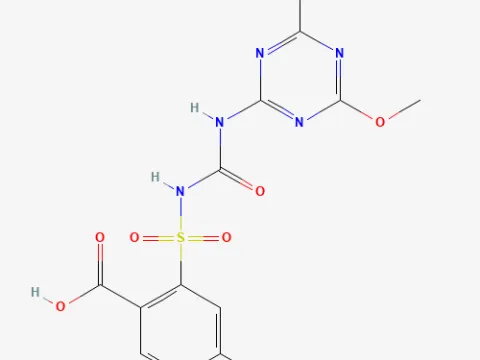
Iodosulfuron-methyl-sodium
Iodosulfuron-methyl-sodium is a potent active ingredient belonging to the sulfonylurea chemical class, widely used as a systemic post-emergence herbicide.
What the section contains
Iodosulfuron-methyl-sodium
The core mechanism of action involves the inhibition of the acetolactate synthase (ALS) enzyme, which is essential for the biosynthesis of branched-chain amino acids.
Once absorbed by the foliage, the compound translocates rapidly via the phloem and xylem to the plant's meristematic tissues, halting cell division.
Visible symptoms, such as chlorosis and necrosis at the growing points, typically appear within several days after the application of the herbicide.
Commercial formulations often incorporate a safener to ensure crop tolerance, allowing the cereal plants to metabolize the herbicide safely while weeds perish.
This herbicide is primarily utilized to manage a broad range of broad-leaved weeds in cereal crop production systems.
It provides effective control against several problematic weed species that often prove difficult to manage with traditional hormone-type herbicides.
The substance is particularly effective during the early growth stages of weeds, though it maintains activity against larger, more developed plants.
By effectively competing for nutrients and water, it helps secure optimal yields for wheat and other small grain cereals.
- Common lambsquarters (Chenopodium album)
- Wild buckwheat (Fallopia convolvulus)
- Shepherd's purse (Capsella bursa-pastoris)
- Field pennycress (Thlaspi arvense)
Recommended application rates are determined based on the weed spectrum present and the specific development stage of the host crop.
The optimal timing for treatment is when weeds are in the active growth phase, generally ranging from the cotyledon stage to the four-to-six leaf stage.
In cereals, applications are ideally scheduled during the tillering phase to maximize weed competition control before canopy closure.
It is crucial to maintain an appropriate volume of spray solution to ensure thorough coverage of weed foliage for optimal absorption.
Environmental conditions, particularly warmth and humidity, significantly influence the efficacy of the herbicide and the speed of weed mortality.
Application should be avoided if the crop is under stress from drought, extreme temperatures, or severe pest and disease pressure.
While the substance has a relatively favorable degradation profile in soil, users must respect crop rotation restrictions to prevent potential carryover.
Spray drift management is critical to protect sensitive neighboring crops that are highly susceptible to ALS-inhibiting compounds.
To mitigate the risk of developing herbicide-resistant weed populations, it is recommended to rotate the use of this compound with other modes of action.
Always utilize personal protective equipment (PPE) during handling and application to prevent skin exposure or inhalation of the product.