
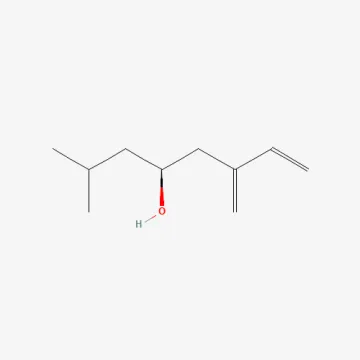
Ipsenol
Description
Mode of action
Ipsenol is a naturally occurring terpenoid alcohol used as an synthetic aggregation pheromone in forest management and agricultural pest control.
The mode of action involves the slow release of the compound from specialized dispensers, which mimics the natural chemical signals emitted by bark beetles upon colonizing a suitable host tree.
By creating this synthetic olfactory plume, the substance triggers a positive chemotactic response in adult beetles, inducing them to fly toward the source of the pheromone.
This technique allows managers to concentrate pest populations into monitoring or capture devices, thereby preventing the dispersal of insects to healthy timber stands.
As a highly specific biological signal, ipsenol does not harm non-target species, predators, or parasitoids, making it an environmentally responsible choice for forest health management.
What it targets
Ipsenol is primarily utilized to target various species of bark beetles, with a specific focus on the European spruce bark beetle (Ips typographus).
It is effectively deployed in coniferous forests where early detection and population suppression are critical to preventing massive outbreaks after windthrow or drought events.
The target stage of the pest life cycle is the adult beetle in its dispersal phase, during which it actively seeks fresh host material for reproduction.
By using this pheromone, foresters can effectively assess the density of pest populations and the timing of their emergence throughout the vegetative season.
It is specifically intended for use in professional silviculture and nursery operations where protection of high-value timber is a priority.
Rates and timing
The dosage is determined by the concentration of the pheromone within the dispenser and the expected longevity of the active chemical release period.
Deployment schedules are aligned with the insect life cycle, typically requiring installation before the first spring flight, when air temperatures consistently reach appropriate levels for beetle activity.
Optimal trapping density usually ranges from 1 to 3 traps per hectare, depending on the historical pest pressure and the density of host trees in the area.
Maintenance involves replacing pheromone dispensers at specific intervals to ensure that the atmospheric concentration of ipsenol remains sufficient to attract target beetles.
Careful planning of trap placement is essential to ensure that the pheromone plumes do not overlap, which could result in inefficient capture rates or uneven pressure distribution.
Restrictions
A significant operational risk with ipsenol is the potential for attracting too many beetles to a localized area, which may lead to secondary infestation of nearby healthy trees if traps are not managed correctly.
Trap placement should never occur in or immediately adjacent to healthy, high-value stands; a buffer zone of at least 20–30 meters is recommended to mitigate risks.
Operators must handle the concentrated pheromone with care, using protective gear to avoid skin contact and the lingering odor associated with the chemical.
Storage conditions must be strictly controlled, keeping the product in airtight, cool, and dark environments to prevent the degradation of the active components.
Ipsenol should be viewed as part of an Integrated Pest Management (IPM) program and must be supported by sanitation measures like the removal of infested logs and thinning operations.
Status in the European Union
Not approved in the EU
- CAS number
- 35628-05-8
EU status is for reference only and does not replace national registration in your country.