
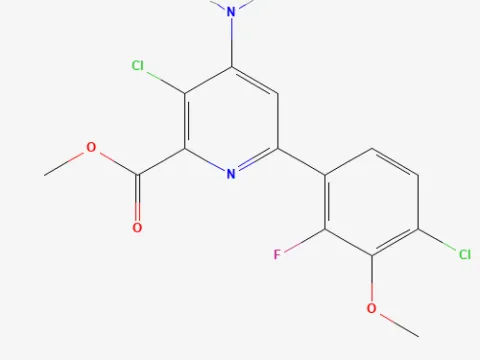
Halauxifen-methyl
Halauxifen-methyl is a cutting-edge active ingredient belonging to the innovative chemical class known as arylpicolinates, which act as synthetic auxins.
What the section contains
Halauxifen-methyl
The mechanism of action involves binding to specific auxin receptors within plant tissues, leading to a disruption of normal growth and development processes.
The substance exhibits systemic activity, allowing it to penetrate plant foliage rapidly and translocate to the meristematic zones, where it effectively halts growth.
Affected weeds display characteristic symptoms including leaf curling, chlorosis, stem deformation, and eventually complete tissue necrosis and plant death.
Due to its high selectivity, the compound is well-tolerated by crops, allowing for targeted weed control while ensuring the health of the cultivated plants.
This active ingredient is designed for the effective management of a broad spectrum of broadleaf weeds in various agricultural crop systems.
It provides excellent control against hard-to-kill weeds, including species such as Galium aparine, Papaver rhoeas, and various Chenopodium species.
Halauxifen-methyl is particularly noted for its ability to control weed species that have developed resistance to other traditional herbicide classes.
The chemical is highly effective against major families of weeds, including Asteraceae and Polygonaceae, which are common in cereal and oilseed fields.
The compound's reliability remains consistent under various environmental conditions, providing a robust solution for professional weed management programs.
Halauxifen-methyl is widely applied in crops such as winter and spring wheat, barley, rye, triticale, and sunflower as part of integrated pest management.
Application rates are typically low, measured in grams of active ingredient per hectare, depending on the weed spectrum and growth stage of the crop.
The optimal timing for application usually ranges from the tillering stage to the flag leaf stage of cereals, ensuring maximum weed coverage.
It is frequently combined in tank mixes with other selective herbicides to broaden the spectrum of controlled weeds and prevent potential field infestations.
Success in field application is highly dependent on timing: targeting weeds at their early, actively growing stages yields the best agronomic results.
While the substance has minimal soil persistence, adherence to standard crop rotation guidelines is recommended for sustainable farm management.
Application should be avoided when the target crops are under stress due to extreme temperatures, drought, or waterlogging to prevent potential injury.
Resistance management strategies are essential; growers should rotate this herbicide with other active ingredients that have different modes of action.
Care must be taken to prevent spray drift during application, especially when adjacent fields contain sensitive crops or non-target vegetation.
Operators must adhere to safety protocols, including the use of protective clothing and respirators, to prevent direct exposure to the chemical concentrate.