
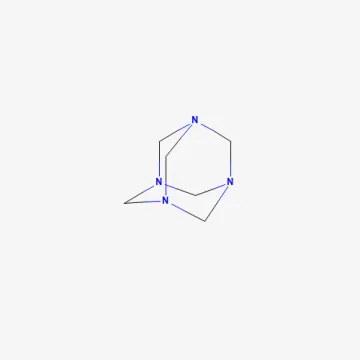
Hexamethylenetetramine
Description
Mode of action
Hexamethylenetetramine, also known as methenamine, is a heterocyclic compound that possesses strong antiseptic properties.
The mechanism of action is based on its ability to release formaldehyde in an acidic environment, which has a lethal effect on various pathogens.
This compound disrupts metabolic processes in bacterial and fungal cells, denaturing protein structures and inhibiting cellular division.
In agronomy, it is primarily used as an auxiliary disinfecting agent for sanitizing farming equipment, storage containers, and greenhouse structures.
Due to its ability to slowly release the active component, it provides a prolonged protective effect against various infection agents.
What it targets
The substance is mainly used to combat bacterial and fungal pathogens affecting various agricultural facilities.
It is effective against pathogens that persist on the surfaces of greenhouses, storage rooms, and agricultural tools.
The spectrum of action includes a wide range of pathogens capable of causing rots and bacteriosis in vegetable crops during storage or in greenhouses.
Using this substance helps to significantly reduce the infectious background in areas where seedlings are grown or seeds are stored.
- Vegetable crop bacteriosis
- Fungal mold spores
- Pathogenic microflora on equipment
Rates and timing
The concentration of hexamethylenetetramine working solutions is selected based on the type of treated surface and the level of contamination.
For the disinfection of greenhouses and hotbeds, water-based solutions are applied evenly to the frame and internal equipment.
Timing of the operations is planned in advance, prior to the planting season or during technological breaks between cycles.
It is essential to ensure a sufficient exposure time for the solution to complete chemical reactions and suppress target pathogens.
Repeat treatments are recommended in cases of high risk of infection spread following the detection of contamination foci.
Restrictions
The use of the substance requires strict adherence to personal protective equipment protocols, including respirators, gloves, and safety goggles.
Direct contact of the working solution with the vegetative parts of cultivated plants is prohibited, as formaldehyde can cause chemical burns.
Work should be carried out in well-ventilated areas to prevent the accumulation of vapors released during the decomposition of the compound.
Storage of the preparation must be in tightly closed containers, away from strong acids that could trigger premature reactions.
Disposal of solution residues and packaging must comply with local regulations regarding chemical waste management.
Status in the European Union
Not approved in the EU
- CAS number
- 100-97-0
EU status is for reference only and does not replace national registration in your country.