
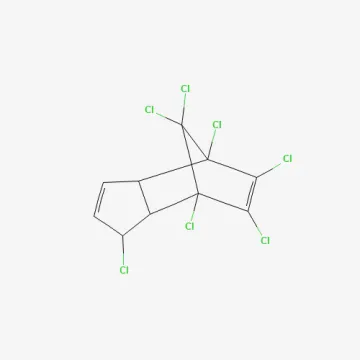
Heptachlor
Description
Mode of action
Heptachlor belongs to the class of organochlorine compounds, specifically the cyclodiene insecticide group. It is a contact and stomach poison with high persistence in the environment.
Its mechanism of action is based on a pronounced neurotoxic effect. Upon entering the pest's organism, the substance disrupts the conduction of nerve impulses by blocking ion channels in nerve cell membranes.
As a result, muscular paralysis occurs, followed by the death of the insect due to the failure of vital physiological functions.
The substance is characterized by an extremely low metabolic degradation rate in soil and plant tissues, which provides a long residual protection period but creates significant ecological risks.
Heptachlor activity remains stable even at low temperatures, which previously allowed its use for soil treatment during the early stages of the sowing season.
What it targets
The main purpose of heptachlor was to combat a wide range of soil-dwelling pests of agricultural crops.
It was most effective against the larvae of scarab beetles, including wireworms and false wireworms that damage plant roots.
The preparation was also used to control populations of cutworms, root maggots, and other pests inhabiting the upper soil layers.
In some regions of the world, the substance was used to control locusts and ants that establish colonies within agroecosystems.
Due to its high toxicity, the chemical was successfully utilized to eradicate insects that had developed resistance to less persistent products of that era.
Restrictions
Today, the use of heptachlor is globally banned or strictly regulated under the Stockholm Convention on Persistent Organic Pollutants.
The primary reason for the ban is the substance's capacity for bioaccumulation in food chains, which poses a direct threat to birds, mammals, and human health.
Heptachlor possesses carcinogenic properties and has an extremely negative impact on the reproductive function of many living organisms.
The application of this product is strictly prohibited on all crop fields, orchards, and forestry areas due to the risk of toxic residue accumulation in food products and soil.
In modern agronomy, preference is given to biological control methods and selective insecticides with a short degradation period.
Status in the European Union
Not approved in the EU
- CAS number
- 76-44-8
EU status is for reference only and does not replace national registration in your country.