
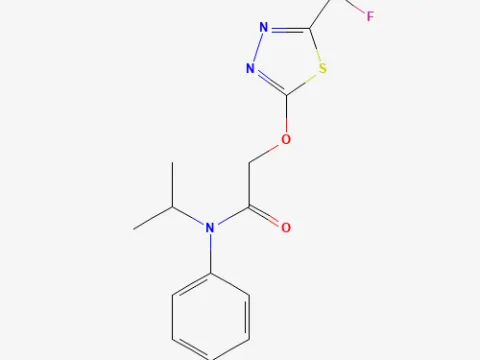
Flufenacet
Flufenacet belongs to the oxyacetamide chemical class. It is a highly effective active ingredient that functions as a selective systemic herbicide.
What the section contains
Flufenacet
The mechanism of action is based on the inhibition of cell division and the suppression of growth in meristematic tissues of weed plants. The substance blocks the synthesis of very long-chain fatty acids, leading to weed mortality during germination.
The product exhibits significant soil activity. It is primarily absorbed through the shoots and root systems of weeds that are in the germination phase, ensuring high reliability in crop protection.
The active ingredient is characterized by high resistance to leaching into deeper soil layers, allowing it to remain in the seed germination zone for an extended period.
The product's effectiveness largely depends on the soil moisture level. Adequate moisture in the seedbed is a critical factor for the activation and expression of the herbicide's biological activity.
Flufenacet is primarily used to control a wide spectrum of annual grass weeds and certain broadleaf weeds in various agricultural crops.
Key targets for this active ingredient include dangerous weeds such as blackgrass, silky bentgrass, annual bluegrass, as well as various species of brome and barnyard grass.
The product effectively suppresses weed populations during early growth stages, preventing competition with crops during the critical period of development.
The spectrum of action also includes the suppression of certain species of amaranth, common lambsquarters, and black nightshade when used in complex tank mixtures.
- Blackgrass (Alopecurus myosuroides)
- Silky bentgrass (Apera spica-venti)
- Annual bluegrass (Poa annua)
- Brome species
- Barnyard grass
Application rates vary depending on soil type, weed pressure in the field, and the specific crop being treated.
Application is generally recommended before crop emergence (pre-emergence) or at the very early stages after emergence, which guarantees maximum control efficiency.
For winter cereals, application can be performed in both autumn and spring, though autumn application is considered more advantageous for controlling grass weeds.
It is important to distribute the working solution evenly over the soil surface to ensure high-quality coverage for creating a reliable herbicidal barrier.
Application rates must comply with manufacturer regulations, as exceeding permitted dosages can lead to phytotoxicity for the cultivated plants.
When using flufenacet, soil type must be taken into account; on light sandy soils with low organic matter, the risk of active ingredient leaching increases.
Treatment should not be carried out on fields where the soil is waterlogged or prone to flooding, as this can negatively affect the product's selectivity.
Avoid application during drought conditions, as moisture deficiency reduces the ability of roots and shoots to absorb the herbicide, significantly lowering protection efficiency.
Treatment should not be performed during strong winds to prevent spray drift onto neighboring crops that are sensitive to oxyacetamide exposure.
Personal protective equipment is mandatory when handling the product: gloves, respirators, and protective clothing must be used to prevent contact with skin and mucous membranes.