
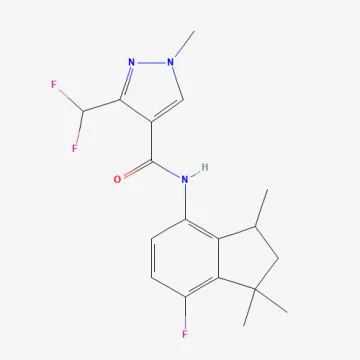
Fluindapyr
Description
Mode of action
Fluindapyr is a powerful active ingredient belonging to the pyrazole-carboxamide chemical class, functioning as a Succinate Dehydrogenase Inhibitor (SDHI).
The mode of action targets the fungal mitochondrial respiration process by inhibiting the Complex II enzyme within the pathogen's respiratory chain.
This disruption prevents the fungus from producing ATP, which effectively stops spore germination and mycelial growth in treated crops.
Fluindapyr exhibits excellent translaminar and systemic properties, allowing it to move within the plant tissue and provide deep protection against infections.
Due to its high affinity for fungal enzymes, even low concentrations of this active ingredient are capable of providing a long-lasting protective and curative effect.
What it targets
Fluindapyr is specifically formulated to control a broad range of Ascomycetes and Basidiomycetes that threaten cereal production globally.
It is highly effective against various rust species, including stripe rust and leaf rust, which can drastically reduce photosynthetic efficiency.
The substance also provides strong control over leaf spot diseases, such as Septoria tritici blotch and tan spot, which are common in temperate climates.
Additionally, it is utilized for managing powdery mildew in wheat and barley, preventing the spread of the disease during critical growth stages.
- Wheat leaf rust
- Septoria leaf blotch
- Tan spot (Pyrenophora)
- Barley net blotch
Rates and timing
The application rates for Fluindapyr depend on the specific crop stage, the severity of the disease pressure, and local agronomic practices.
Typically, dosage rates range from 75g to 150g of active ingredient per hectare to ensure adequate coverage and biological efficiency.
Applications are most effective when timed with the early stages of disease development or as a preventative measure during canopy closure.
Proper spray calibration is essential to achieve a uniform distribution of the fungicide, ensuring the product reaches the target areas of the plant.
When mixing with other pesticides, operators must confirm chemical compatibility to prevent tank mix instability and ensure efficacy.
Restrictions
To prevent the development of fungicide resistance, it is critical to limit the use of Fluindapyr to a maximum of two applications per growing season.
Resistance management strategies require rotating this active ingredient with fungicides that utilize different modes of action, such as triazoles or strobilurins.
Strict adherence to safety protocols is required, including the use of certified personal protective equipment during mixing and application processes.
Storage should be in a cool, ventilated area, kept away from direct sunlight, food sources, and environmental water runoff zones.
Always follow the specific label instructions provided by the manufacturer regarding pre-harvest intervals and environmental restrictions in your local region.
Status in the European Union
Pending
- CAS number
- 1383809-87-7
EU status is for reference only and does not replace national registration in your country.