
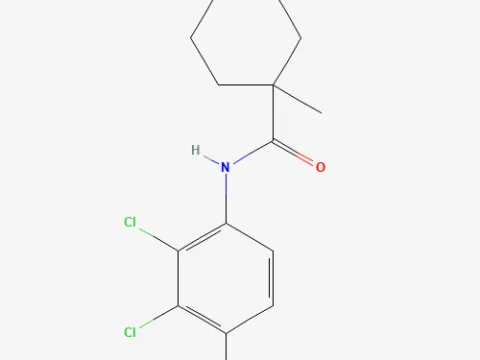
Fenhexamid
Fenhexamid belongs to the hydroxyanilide chemical class. It is a specialized fungicide with significant local-systemic activity aimed at suppressing pathogenic fungi.
What the section contains
Fenhexamid
The mechanism of action involves the inhibition of ergosterol biosynthesis within fungal cells. Unlike many other fungicides, it targets 3-ketoreductase, which leads to the disruption of the pathogen's membrane integrity.
The compound exhibits high prophylactic activity. It prevents spore germination, blocks the development of germ tubes, and hinders the penetration of mycelium into plant tissues.
Fenhexamid is characterized by excellent resistance to wash-off by rain. Upon application, the substance becomes fixed in the plant's cuticular layer, creating a robust protective barrier.
Due to its specific mechanism, fenhexamid does not show cross-resistance with other fungicide groups, such as dicarboximides or phenylpyrroles.
The primary use of fenhexamid is the control of grey mould (Botrytis cinerea) pathogens across a wide range of crops.
It is most widely applied in viticulture, effectively protecting grape bunches from grey mould during the ripening period, which is critical for crop quality and marketability.
The product is actively used for protecting greenhouse and field vegetable crops, including tomatoes, cucumbers, eggplants, and lettuce, which are susceptible to fungal rot.
Fenhexamid is also used in berry farming, providing protection for strawberries and raspberries against botrytis during the flowering and fruiting stages.
It is also effective in ornamental and flower crop treatments, preventing spots and rots caused by Botrytis.
Application timing for fenhexamid depends on disease forecasts and the plant's phenological stage. It is generally recommended to apply treatments at critical moments: flowering, bunch closure, and the pre-ripening phase.
Application rates vary depending on the formulation and crop type, typically ranging from 0.6 to 1.5 kg/ha of the finished product.
Intervals between applications range from 10 to 14 days. It is vital to perform spraying before the mass spread of infection to achieve maximum prophylactic effect.
When used in tank mixtures, a physical-chemical compatibility test must be performed, although fenhexamid is generally compatible with many insecticides and fungicides.
Ensuring thorough coverage of leaves and fruits with the spray solution is important, as the fungicide exhibits maximum effectiveness when uniformly distributed.
Fenhexamid has low toxicity to bees and beneficial insects, allowing it to be included in integrated pest management (IPM) programs.
Strict adherence to pre-harvest intervals (PHI) is necessary, which range from 3 to 21 days depending on the crop species.
When handling the product, standard personal protective equipment must be worn, including protective suits, gloves, and respirators, to avoid contact with skin and mucous membranes.
It is recommended to rotate the use of fenhexamid with products from other chemical classes to minimize the risk of developing resistant pathogen strains.
- Prevent spray drift into water bodies.
- Follow storage guidelines for pesticides in dry, cool conditions.
- Apply during calm weather to ensure optimal coverage.