
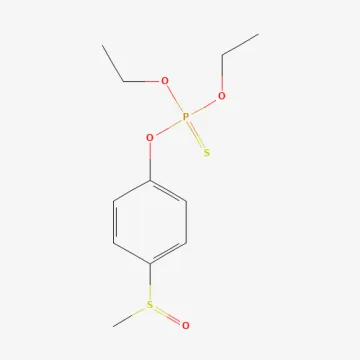
Fensulfothion
Description
Mode of action
Fensulfothion is a broad-spectrum organophosphate compound primarily used for its insecticidal and nematicidal properties in agricultural soil treatments.
It acts by inhibiting the enzyme acetylcholinesterase, which is essential for the normal functioning of the nervous system in insects and nematodes.
The chemical interferes with neurotransmission, leading to rapid paralysis and subsequent death of the targeted soil-borne pests upon contact or ingestion.
Due to its systemic nature, it is absorbed by the roots of plants, providing protection against pests attempting to feed on the root system or the lower stem.
Its persistence in the soil allows for a sustained effect, safeguarding developing crops during the vulnerable early stages of their growth cycle.
What it targets
The compound is mainly employed to manage soil-dwelling pests that cause significant damage to the roots and underground parts of cultivated crops.
It is specifically effective against parasitic nematode populations which are often difficult to control with standard contact pesticides.
The chemical also targets various soil-inhabiting insect larvae that feed on germinating seeds and root systems of vegetables and field crops.
- Root-knot nematodes
- Wireworms
- Click beetle larvae
- Soil-dwelling insect larvae
Effective management of these targets helps in maintaining crop vigor and preventing yield losses caused by underground feeding behavior.
Restrictions
Fensulfothion is classified as a highly toxic substance, necessitating rigorous safety protocols and specialized training for agricultural handling.
Environmental regulations strictly control its usage due to its stability in soil and potential risks to non-target organisms and groundwater quality.
Application must be performed with extreme caution to avoid runoff into aquatic environments, where the chemical exhibits high toxicity to aquatic life.
The use of full personal protective equipment (PPE) is mandatory to prevent inhalation, skin contact, or accidental ingestion during the mixing and application process.
Strict pre-harvest intervals must be followed to ensure that pesticide residues in the harvested crops remain within safe and legally established limits.
Status in the European Union
Not approved in the EU
- CAS number
- 115-90-2
EU status is for reference only and does not replace national registration in your country.