
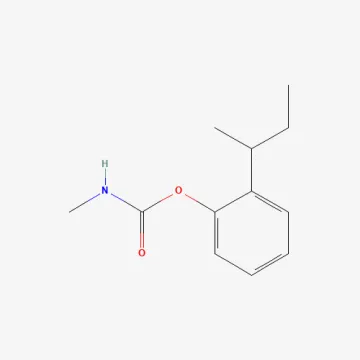
Fenobucarb
Description
Mode of action
Fenobucarb belongs to the carbamate chemical class. It is a contact insecticide that exhibits high biological activity against a wide spectrum of insect pests in various agricultural crops.
The mechanism of action of the substance is based on the inhibition of the acetylcholinesterase enzyme in the insect nervous system. This leads to the disruption of nerve impulse transmission, causing paralysis and rapid death of the pest.
The product has a pronounced knockdown effect, which allows for effective reduction of pest population numbers in a short time after field treatment.
Due to its chemical structure, fenobucarb is capable of penetrating plant tissues, providing a certain period of residual protective action against sucking and chewing insects.
Unlike some systemic products, fenobucarb primarily acts upon direct contact with the pest, so it is critical to ensure thorough coverage of the entire plant surface during spraying.
What it targets
The primary use of fenobucarb is for the protection of rice crops against dangerous pests, such as rice leafhoppers and various species of bugs.
The substance also shows high efficacy against aphids, thrips, psyllids, and certain species of beetles that affect vegetable and industrial crops.
The product is actively used to control pest populations in intensive farming conditions where rapid threat mitigation to the harvest is required.
It is effective against insects that have developed resistance to certain organophosphate insecticides, making it a valuable tool in anti-resistance programs.
Its broad spectrum of action allows fenobucarb to be used for protecting both field and horticultural crops from a complex of sucking pests.
Rates and timing
Fenobucarb application rates vary depending on crop type, infestation level, and plant growth stage, typically ranging from 0.5 to 1.5 liters of product per hectare.
The timing of treatments is determined by phytosanitary monitoring results once pests reach the economic injury threshold.
When using the product, it is necessary to strictly follow the regulations specified by the manufacturer of the specific formulation to avoid phytotoxicity.
Intervals between repeat treatments should be at least 10–14 days to prevent the accumulation of chemical residues in marketable produce.
The working solution must be prepared immediately before use, complying with requirements regarding water hardness and pH levels to ensure maximum active ingredient stability.
Restrictions
Fenobucarb is a moderately toxic compound, so the use of personal protective equipment for skin, respiratory organs, and eyes is mandatory when handling it.
The product poses a high risk to bees and other beneficial pollinating insects; therefore, treatments are strictly prohibited during the crop flowering period.
Drift of the working solution onto neighboring fields, water bodies, and pastures must be avoided, considering the substance's toxicity to aquatic organisms and fish.
Adherence to pre-harvest intervals (PHI) from the last treatment to harvest is a mandatory condition to ensure consumer safety of food products.
It is recommended to rotate the use of fenobucarb with insecticides from other chemical groups to prevent the development of resistant pest populations in the agrocenosis.
Status in the European Union
Not approved in the EU
- CAS number
- 3766-81-2
EU status is for reference only and does not replace national registration in your country.