
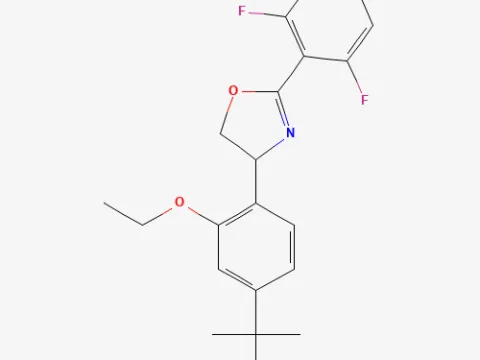
Etoxazole
Etoxazole is a specialized acaricide belonging to the oxazoline class, widely recognized for its high selectivity and efficacy against phytophagous mites.
What the section contains
Etoxazole
The primary mechanism of action involves the inhibition of chitin biosynthesis, which disrupts the molting process and halts the development of larval stages.
Beyond its lethal effect on immatures, etoxazole possesses a strong ovicidal effect and causes sterilization in adult female mites, preventing the hatching of viable eggs.
The compound exhibits translaminar activity, which allows it to move into the leaf tissue, ensuring protection even on foliage surfaces not directly contacted by the spray.
It remains stable under various environmental conditions, including exposure to sunlight, providing long-lasting residual protection for treated crops.
Etoxazole is used to control various species of the Tetranychidae family, commonly known as spider mites, which are major pests in intensive horticulture.
Key target pests include the European red mite, two-spotted spider mite, and other related species that damage vegetables, fruits, and ornamental plants.
The substance effectively interrupts the life cycle of these pests at the egg, larval, and nymphal stages, preventing severe plant damage and yield losses.
Its use is highly encouraged in integrated pest management (IPM) programs due to its low toxicity profile toward beneficial predator mites and bees.
By protecting the leaf surface from feeding damage, etoxazole ensures that photosynthesis remains optimal throughout the growth phase.
Application rates are determined based on the specific crop, pest population density, and the guidelines provided by the manufacturer of the formulation.
Effective management typically requires an application at the initial onset of infestation or when the first mite colonies appear on the underside of leaves.
Uniform coverage of the entire plant canopy is essential to achieve the desired control, especially in dense foliage or greenhouses.
To avoid the buildup of pest resistance, it is advised to rotate etoxazole with acaricides that feature different modes of action.
Strict adherence to the recommended pre-harvest intervals is mandatory to ensure food safety and regulatory compliance.
Personnel handling the product should wear appropriate personal protective equipment (PPE), including gloves, goggles, and respiratory masks.
Storage should be limited to original containers in a secure, cool, and dry location away from fertilizers, food, and animal feed.
Care must be taken to prevent environmental contamination, particularly near water bodies, as the product may be harmful to aquatic life.
Mixing etoxazole with other agrochemicals requires a compatibility check to prevent chemical reactions that may reduce efficacy or cause phytotoxicity.
Disposal of empty containers and unused spray mixtures must be conducted according to local environmental regulations and agricultural waste disposal protocols.