
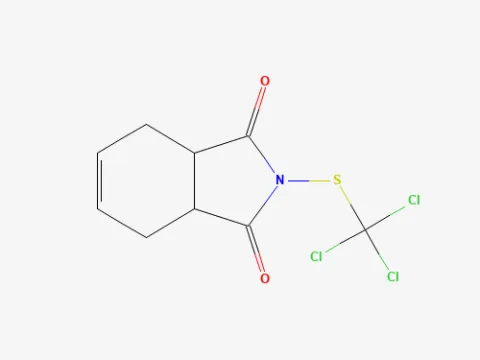
Captan
Captan belongs to the chemical class of dicarboximides. It is a broad-spectrum contact fungicide that does not penetrate into the plant system but instead creates a protective barrier on the surface of leaves, stems, and fruits.
What the section contains
Captan
The mechanism of action is based on the inhibition of metabolic processes within pathogen cells. Captan interferes with the activity of enzymes containing sulfhydryl groups, which disrupts energy metabolism and cell division in fungi.
Due to its multi-site action on fungal metabolism, the substance effectively prevents the development of resistance in pathogens. This makes it a crucial component of anti-resistance strategies in modern intensive horticulture.
The product is highly effective as a preventative measure. It inhibits the germination of pathogen spores before they can penetrate plant tissues, which is critical for protection during periods of high infection risk.
Captan also provides an auxiliary stimulating effect on fruit tissues, contributing to better shelf life and marketability. It is also used for seed disinfection, protecting seedlings from soil-borne infections.
Captan is primarily used to control a complex of fungal diseases in fruit crops, grapes, and vegetables. It effectively manages scab, various types of rot, anthracnose, and leaf spot diseases.
The product yields excellent results against storage diseases, such as brown rot (moniliosis). Applications performed before harvest significantly reduce fruit losses during transport and long-term storage.
In vineyards, this active ingredient is actively used to control downy mildew, gray mold, and black rot. It provides reliable protection for grape clusters, especially under high humidity conditions and infection pressure.
For field crops and vegetable plants (such as tomatoes and potatoes), Captan is effective against a wide range of pathogens, including early blight and late blight during early growth stages, serving as an effective partner for systemic fungicides.
Furthermore, the substance is successfully used as a seed treatment agent. It protects the seeds of cereals, legumes, and vegetable crops from mold, root rot, and Fusarium, ensuring uniform and healthy emergence.
Captan application rates depend directly on the crop, the infection pressure, and the plant's growth stage. Typically, the spray solution is prepared at a rate of 1.5 to 2.5 kg of product per hectare for orchards and vineyards.
When treating vegetable crops, rates may be reduced depending on the application method (spraying or seed dressing). It is essential to achieve uniform coverage of the entire leaf surface to ensure maximum protective efficiency.
The timing of applications should be aligned with periods of active plant growth or the conditions most favorable for pathogen development. Initial sprays are conducted preventatively before visible disease symptoms appear.
Intervals between repeat applications typically range from 7 to 14 days, depending on weather conditions. In conditions of heavy rainfall, intervals may need to be shortened because the contact substance gradually washes off the leaves.
When used in tank mixtures, Captan is compatible with most systemic products. However, before mixing, it is necessary to check for physical and chemical compatibility, avoiding combinations with alkaline-reacting compounds.
Captan is a moderately toxic substance, so strict adherence to personal hygiene rules is required during use. The use of personal protective equipment (PPE) for the skin, respiratory tract, and eyes is mandatory.
The product should not be mixed with highly alkaline products, such as Bordeaux mixture, as this leads to rapid decomposition of the active ingredient and loss of its fungicidal properties.
Pre-harvest intervals can vary from 20 to 40 days depending on the crop and local regulatory requirements. Adhering to these intervals is critical for ensuring food safety.
The product should be stored in its original packaging in a dry, cool place, inaccessible to children and animals. Contamination of open water bodies must be avoided, as the substance is toxic to fish and certain aquatic organisms.
In case of contact with mucous membranes, the substance causes severe irritation. In the event of exposure, immediately wash the affected area with plenty of water and seek medical assistance, keeping the product label on hand.