
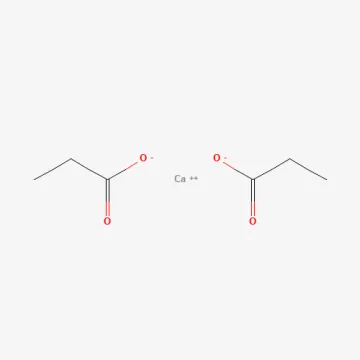
Calcium propionate
Description
Mode of action
Calcium propionate belongs to the class of organic propionate salts. In agricultural practice, this compound acts as a fungicidal agent and bacteriostat, suppressing the growth of microscopic fungi and pathogenic microorganisms.
The mechanism of action is based on the ability of propionate ions to penetrate the cell membranes of pathogens. Once inside the cell, the substance disrupts energy metabolism processes by inhibiting enzyme systems necessary for fungal spore growth and reproduction.
An important feature is that the effectiveness of calcium propionate depends directly on the pH level of the environment. The best fungistatic effect is achieved in a slightly acidic environment, where the molecule transitions into an undissociated form that possesses maximum bioavailability.
The substance is not a systemic product, so it acts mainly through contact, creating a protective barrier on the surface of plant tissues or treated produce. It does not accumulate in fruits, ensuring the ecological safety of the harvest.
The use of calcium propionate helps create conditions under which pathogens cannot develop resistance, which distinguishes it favorably from many traditional synthetic systemic fungicides.
What it targets
The main focus of calcium propionate use in agronomy is the control of mold in grain and seed material during storage. The preparation effectively suppresses the growth of fungal genera such as Aspergillus, Penicillium, and Fusarium.
In crop production, the compound is used to prevent the development of fruit and vegetable rots after harvest, ensuring product preservation during long-term storage in warehouses and storage facilities.
The preparation is also used as a treatment for growing crops as an additional source of calcium, which indirectly strengthens plant cell walls and increases their overall resistance to infection.
- Mold fungi of the genus Aspergillus
- Fungi of the genus Penicillium
- Fusarium pathogens
- Surface rots of vegetable crops
Calcium propionate works effectively under high humidity conditions, when the risk of fungal disease damage increases significantly, making it an indispensable component in post-harvest treatment systems.
Rates and timing
Application rates for calcium propionate depend on the intended use and the type of crop being treated. For the preservation of forage grain, dosages are calculated based on the moisture content of the product, usually ranging from 0.1% to 0.5% of the total grain mass.
When used as a foliar fertilizer with a fungicidal effect, working solutions are prepared in concentrations from 0.2% to 1% by active ingredient. Treatments should be carried out in the evening or on cloudy days to avoid leaf burn.
The frequency of treatments when protecting vegetables and fruits during the growing season is 10–14 days, depending on the phytosanitary situation in the field and air humidity levels.
It is not recommended to exceed the maximum permissible dosages, as an excess of calcium in the solution can lead to crystallization on the leaf surface, which reduces the plant's photosynthetic activity.
When preparing tank mixes, it is necessary to check compatibility with other pesticides, as calcium propionate can change the pH of the working solution, which may deactivate some sensitive components.
Restrictions
Calcium propionate is recognized as a safe compound; however, when working with powdered forms, standard protective measures must be followed: use a respirator and gloves to avoid irritation of the mucous membranes.
Storage of the product requires dry, ventilated rooms protected from direct sunlight. The substance is hygroscopic, so damage to the original packaging leads to a rapid loss of physical properties.
A limitation for use is an ambient temperature below 5°C, at which the speed of chemical reactions slows down, and the effectiveness of the fungicidal action drops significantly.
The preparation is not a full substitute for systemic fungicides in cases of severe epiphytotics, so it is best used within integrated protection systems as a preventative or maintenance agent.
Disposal of packaging and product residues must be carried out according to local environmental regulations, as excessive release of calcium salts into open bodies of water can locally change water hardness levels.
Status in the European Union
Not approved in the EU
- CAS number
- 4075-81-4
- Category (EU)
- FU - Fungicide
EU status is for reference only and does not replace national registration in your country.