
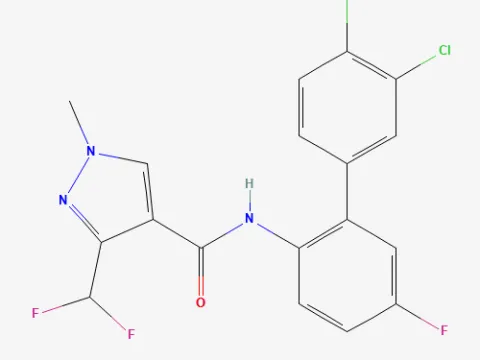
Bixafen
Bixafen belongs to the pyrazole-carboxamide chemical class and is a highly effective systemic fungicide. It acts as a succinate dehydrogenase inhibitor (SDHI), blocking the function of complex II in the mitochondrial respiratory chain of fungi.
What the section contains
Bixafen
Due to its lipophilic nature, the substance possesses a unique ability to redistribute across the leaf surface and penetrate the cuticular wax layer. This provides long-lasting protection for the plant, as bixafen is retained in the epidermal tissues and released gradually during the growing season.
The product exhibits both curative and preventative activity. It effectively suppresses mycelial growth and spore development, while also preventing sporulation, which is critical for halting the infectious process at early stages.
Bixafen is frequently used in complex formulations combined with triazoles. Such combinations allow for a broader spectrum of controlled diseases and help prevent the development of resistance within fungal populations.
The compound also demonstrates positive physiological effects on crops, contributing to improved nitrogen utilization and increased resilience against abiotic stressors, such as drought or high temperatures.
The primary area of bixafen application is the protection of small grain cereals, such as wheat and barley. It delivers outstanding results in controlling a wide range of pathogens, including various species of Ascomycetes and Basidiomycetes.
The product is highly effective against various types of leaf spots, particularly septoria leaf and glume blotch. It also successfully suppresses the development of barley net blotch and rhynchosporium, which can significantly reduce overall crop yields.
Bixafen demonstrates high activity against rust pathogens, including brown rust and yellow rust of wheat. Its ability to quickly arrest infection development helps keep the leaf surface healthy until the end of grain filling.
Furthermore, bixafen-based fungicides are used to control powdery mildew. The systemic action of the substance allows it to effectively combat this disease even in cases of severe crop infection.
The substance is successfully used as a component of anti-resistance strategies when treating fields with high infection pressure, assisting agronomists in achieving stable yields under challenging climatic conditions.
Bixafen application rates depend on the specific formulation available on the market. Typically, bixafen-based fungicides are applied at dosages that ensure reliable pathogen control during active growth stages of the crop.
Optimal application timing falls within the period from the beginning of stem elongation to flowering. Preventative applications help avoid primary infection, whereas curative applications serve to stop the spread of an epidemic.
The number of applications per season is usually limited to one or two to minimize resistance risks. It is essential to ensure uniform spray coverage on all parts of the plant, especially the lower leaf tiers.
When preparing tank mixes, compatibility tests must be performed. Bixafen is generally compatible with most insecticides and herbicides, but requires strict monitoring of the spray solution's pH and concentration.
For maximum efficacy, it is recommended to apply the product at air temperatures between +12 and +25 degrees Celsius and under normal humidity conditions, avoiding application during peak solar radiation hours.
Despite its high efficacy, bixafen requires strict adherence to safety protocols. When handling the concentrate, personal protective equipment for skin, eyes, and respiratory organs is mandatory to prevent chemical exposure.
The product is categorized as hazardous to aquatic organisms. It is crucial to maintain buffer zones around water bodies to prevent spray drift during field operations.
Storage must occur in dry, well-ventilated facilities at temperatures between 0 and +30 degrees Celsius. Freezing or overheating of packaging is strictly prohibited, as this leads to the degradation of active components.
Following application, any leftover spray solution must be disposed of according to local environmental regulations. Empty containers must be triple-rinsed and handed over to designated hazardous waste collection points.
Pre-harvest intervals vary depending on the specific crop and local regulations. Agronomists must strictly follow the label instructions to ensure that no harmful residue levels remain in the harvested grain.