
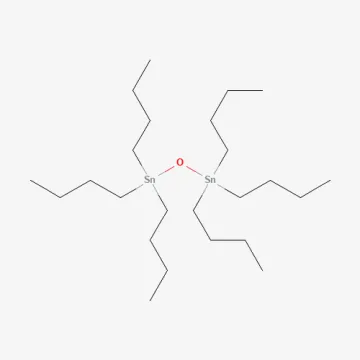
Bis(tributyltin) oxide
Description
Mode of action
Bis(tributyltin) oxide is an organotin compound that acts as a powerful broad-spectrum fungicide and biocide in various applications.
The mode of action involves the inhibition of oxidative phosphorylation within the mitochondria, which effectively disrupts the ATP synthesis process.
By preventing the production of energy at a cellular level, the compound causes rapid mortality in target microorganisms and prevents the spread of spores.
The substance exhibits high penetrating properties, allowing it to provide deep protection to treated surfaces and structural materials.
Its cumulative activity ensures a long-lasting residual effect, making it highly effective for prophylactic treatments against biological degradation.
What it targets
This compound is primarily used to control fungal growth, mold development, and various wood-destroying organisms in agricultural facilities.
It is employed for the disinfection of storage containers, farm tools, and specialized warehouses where humidity promotes the growth of pathogens.
The substance effectively combats micro-fungi that cause damage to harvested crops and planting material during storage periods.
It also serves as an anti-fouling agent for protecting agricultural structures and technical equipment from biological growth in damp environments.
The efficacy against a wide range of pathogens makes it a significant tool for maintaining sanitary conditions in agricultural post-harvest handling.
Restrictions
Bis(tributyltin) oxide is classified as a highly toxic substance, posing significant risks to aquatic life and terrestrial ecosystems.
Due to its high potential for bioaccumulation and environmental persistence, the use of this compound is strictly regulated in many jurisdictions.
Personnel handling the substance must use comprehensive personal protective equipment, including respirators, gloves, and protective clothing.
Discharge of the compound into water sources or soil is strictly prohibited to avoid long-term ecological disruption and poisoning of fauna.
Waste management must strictly adhere to hazardous materials protocols, requiring professional disposal services to prevent environmental leakage.
Status in the European Union
Not approved in the EU
- CAS number
- 56-35-9
- Category (EU)
- FU - Fungicide
EU status is for reference only and does not replace national registration in your country.