
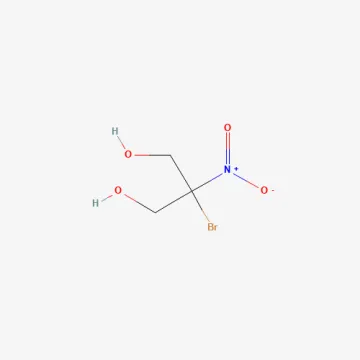
Bronopol
Description
Mode of action
Bronopol (2-bromo-2-nitropropane-1,3-diol) belongs to the class of aliphatic halogenated nitroalcohols. It acts as a highly effective broad-spectrum bactericide and preservative, widely utilized in both agricultural and industrial settings.
The mechanism of action involves the oxidation of thiol groups within the microbial cells. This process interferes with the normal respiratory metabolism of bacteria, leading to the inhibition of growth and eventually cell death.
Bronopol is particularly effective against a wide range of gram-negative and gram-positive bacteria. Its ability to act rapidly makes it an ideal choice for protecting agricultural seeds from bacterial pathogens.
The substance functions by creating a stress environment that is lethal to pathogens but, at regulated concentrations, remains safe for the plant tissue. This selectivity is crucial for its agricultural application.
An important characteristic of bronopol is its environmental profile. While effective, it undergoes chemical and biological degradation, which helps prevent its long-term accumulation in soil environments.
What it targets
In agriculture, bronopol is primarily used to combat bacterial diseases affecting various crops. It is effective against seed-borne and soil-borne pathogens that cause rot, vascular wilts, and other bacterial infections.
It is frequently applied in the treatment of seeds to prevent common issues such as blackleg, bacterial rots, and damping-off disease in vegetables and tubers. By disinfecting the seed surface, it ensures a healthier start for seedlings.
Bronopol is often incorporated into fungicide formulations. This combination provides a holistic protection strategy, shielding crops from both fungal infections and bacterial attacks simultaneously.
Beyond direct crop protection, it is used for the sanitation of irrigation systems in greenhouses. By eliminating biofilm formation, it prevents the spread of bacteria through the water supply system.
The compound also plays a role in the stability of liquid pesticide formulations. It acts as an in-can preservative, preventing microbial degradation of the product and ensuring shelf-life stability.
Rates and timing
Application rates for bronopol are strictly defined by the specific formulation and the target crop. Precision is essential; users should follow the manufacturer’s instructions to ensure the efficacy of the treatment without causing plant injury.
For seed treatment, the substance is usually applied in aqueous suspensions. The timing of the application is typically synchronized with pre-sowing preparation to ensure the maximum protective window during germination.
When used in tank mixes, it is vital to account for the chemical compatibility with other active ingredients. Bronopol efficacy can be influenced by the pH level of the solution, requiring careful water quality management.
In irrigation applications, the dosing is calculated based on the water volume and the severity of the bacterial contamination. Regular maintenance treatments are more effective than high-dose shock treatments for system sanitation.
Manufacturers determine the dosage for preservative purposes based on the stability requirements of the specific pesticide product. These rates are calculated to inhibit microbial growth without interfering with the active agrochemical ingredient.
Restrictions
Personal safety is paramount when handling bronopol. It can cause skin irritation and eye damage; therefore, the use of appropriate personal protective equipment (PPE), such as gloves and goggles, is mandatory for all operators.
Users must avoid overdosing, as high concentrations of bronopol can exhibit phytotoxic effects. This may result in chlorosis, reduced vigor, or stunted growth in sensitive plant varieties.
Storage should be in a cool, dry, and well-ventilated area, away from direct sunlight. Exposure to high temperatures or UV radiation can lead to the degradation of the active ingredient, rendering the treatment ineffective.
Disposal of unused product or container rinsate must be done in compliance with local environmental regulations. Even though it is biodegradable, discharging concentrated solutions into natural water bodies must be strictly prohibited.
Always consult the Material Safety Data Sheet (MSDS) for the specific commercial product. Different formulations may have unique handling requirements that must be followed to ensure both safety and optimal performance.
Status in the European Union
Not approved in the EU
- CAS number
- 52-51-7
- Category (EU)
- FU - Fungicide
- ADI
- 0.02 mg/kg bw/day
EU status is for reference only and does not replace national registration in your country.