
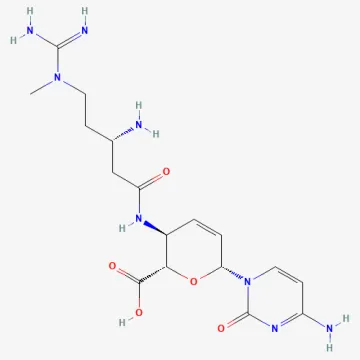
Blasticidin-S
Description
Mode of action
Blasticidin-S is a nucleoside antibiotic that functions as a systemic fungicide. Produced by the fermentation of the actinomycete Streptomyces griseochromogenes, it is highly effective against specific fungal pathogens in agricultural crops.
The primary mode of action involves the inhibition of protein synthesis within fungal cells. By targeting the ribosomal function during translation, the substance halts the growth of mycelium and disrupts the development of infectious spores.
Due to its systemic nature, Blasticidin-S is absorbed by the leaves and can be transported within the plant tissues. This systemic movement provides long-lasting protection and allows for the treatment of existing early-stage fungal infections.
The fungicide is particularly valued for its high biological activity, which enables the use of lower doses compared to conventional chemicals while maintaining excellent control over disease development in field conditions.
By preventing protein synthesis, it quickly stops the metabolic pathways essential for the fungus's survival, providing both a curative effect when applied post-infection and a protective barrier against future pathogen attacks.
What it targets
The main agricultural use for Blasticidin-S is the control of rice blast, caused by the fungus Pyricularia oryzae. This disease is one of the most devastating threats to global rice production, leading to significant yield losses if not properly managed.
The substance effectively targets all stages of the blast pathogen's life cycle, including spore germination and mycelial spread. It is instrumental in protecting the crop during the most susceptible growth stages, such as heading and flowering.
Beyond rice, research into its antibiotic properties suggests effectiveness against other fungal pathogens that cause severe leaf spotting and blights in various crops, making it a versatile tool in the hands of agronomists.
Its efficacy against resistant strains of pathogens makes it a valuable component in integrated pest management (IPM) programs, helping to maintain crop yields where other chemical classes may have failed.
Application of this fungicide helps maintain the vigor of the plant, ensuring that nutrients are directed towards grain filling rather than being consumed by pathogen-induced damage, which significantly increases harvest quality.
Rates and timing
Application rates for Blasticidin-S are strictly determined by the severity of the blast infection and the physiological stage of the rice crop. Early intervention is key to preventing the rapid spread of the disease.
Precise calibration of application equipment is essential to ensure full coverage of the foliage. The concentration of the active ingredient in the spray mixture must be strictly maintained according to the manufacturer's technical specifications.
A mandatory pre-harvest interval (PHI) is specified for this fungicide. Adherence to this timeframe is crucial to ensure that residue levels in the grain remain well within safety limits for human consumption.
To minimize the risk of pathogen resistance, it is recommended to limit the number of applications per season. Rotating with different classes of fungicides is standard agricultural practice to maintain efficacy over the long term.
- Perform applications during calm weather to minimize spray drift.
- Use professional-grade nozzles to ensure fine droplet distribution.
- Record all application details, including date and dosage, for crop management history.
Restrictions
Safety is a priority when handling Blasticidin-S. Users must wear appropriate Personal Protective Equipment (PPE), including gloves, goggles, and respirators, to prevent dermal, ocular, or respiratory exposure.
The substance is toxic to aquatic life, so applications near rivers, lakes, or drainage systems are strictly prohibited. Buffer zones must be established to prevent environmental contamination through runoff.
Storage must be performed in a cool, dry, and well-ventilated location, kept away from food, animal feed, and water supplies. The containers must remain tightly sealed when not in use to maintain product integrity.
Do not mix the product with strongly alkaline solutions or other incompatible pesticides, as this can lead to chemical degradation and a significant reduction in the fungicide's overall efficacy.
Disposal of empty containers and unused spray solutions must comply with all local and national environmental regulations. It is essential to treat waste as hazardous material to protect the ecosystem.
Status in the European Union
Not approved in the EU
- CAS number
- 2079-00-7
- Category (EU)
- FU - Fungicide
EU status is for reference only and does not replace national registration in your country.