
Eucalyptus gall wasp
Ophelimus eucalypti
The eucalyptus gall wasp (Ophelimus eucalypti) is a tiny insect belonging to the order Hymenoptera and the family Eulophidae. These insects are microscopic wasps, with adult individuals rarely exceeding 1 mm in length.
What the section contains
Eucalyptus gall wasp
The adults are typically dark brown or black with a distinct metallic sheen. Females use an ovipositor to inject their eggs into the leaf tissues of host eucalyptus species, triggering a physiological response from the plant.
The life cycle is intimately linked to the development of plant galls. Larvae develop entirely within these pathological growths, which provide them with both protection from environmental factors and a concentrated food source.
The spread of this species is largely attributed to wind dispersal and the movement of infested nursery stock. Due to their minute size, early-stage infestations often go unnoticed by plant growers.
Originally from Australia, Ophelimus eucalypti has become a significant invasive pest in many parts of the world, particularly in Mediterranean climates where eucalyptus trees are widely planted.
The primary hosts of the eucalyptus gall wasp are various species within the Eucalyptus genus. They specifically target young leaves and tender growth, which are the most susceptible parts of the tree.
As larvae feed within the leaf tissue, they cause the formation of galls. These structures physically disrupt the leaf anatomy, interfering with nutrient transport and photosynthetic efficiency, leading to leaf stress.
Heavy infestations result in significant defoliation, which severely drains the energy reserves of the tree. In nursery settings, this can lead to the stunting of seedlings or even total mortality of young plants.
For ornamental trees, the cosmetic damage is severe. The presence of numerous galls and the resulting leaf deformation make the trees look unhealthy and reduce their value in landscapes and urban forestry.
Trees weakened by gall wasp activity are often more susceptible to secondary stressors, including drought, nutrient deficiency, and opportunistic fungal infections that enter through the exit holes.
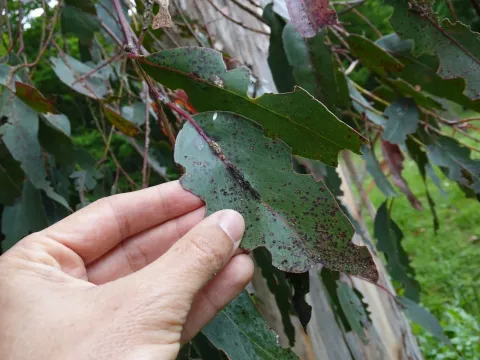
The initial signs of an infestation are small, subtle swellings on the leaf surface. These eventually develop into clearly visible, rounded galls that may change color as they mature, often turning yellow or reddish-brown.
Upon close inspection, one can find tiny circular holes on the surface of the galls. These are the exit points through which adult wasps emerge after completing their pupal stage, indicating an active or recent infestation.
Leaves affected by the gall wasp often show signs of yellowing (chlorosis) around the galls and may become twisted, curled, or misshapen as the leaf surface area is restricted by the swellings.
- Small, raised galls on the leaf blades.
- Premature leaf drop and canopy thinning.
- Distortion and curling of young, tender leaves.
- Visible emergence holes on the surface of the galls.
In cases of severe infestation, the tree's overall vigor declines, with visible patches of browning and a sparse crown becoming common during the peak growing season.
Biological control is the most effective and sustainable strategy for managing Ophelimus eucalypti. Introducing specific parasitoid wasps, such as Closterocerus chamaeleon, has proven successful in reducing gall wasp populations in several countries.
Sanitation practices involving the removal and proper disposal of infested plant material are essential to curb the spread. Clipped branches should be burned or buried to kill the larvae inside the galls.
Chemical control is challenging because larvae are protected inside the leaf tissue. When necessary, systemic insecticides may be used, but these must be applied strategically during the adult flight period to be effective.
Implementing a regular monitoring program allows for early detection, which is crucial for successful management. Checking new growth in the nursery phase helps prevent the introduction of the pest into new areas.
Combining biological controls with good cultural practices, such as adequate watering and soil fertility management, helps trees build resilience and mitigates the overall impact of the gall wasp.