
Epichrysocharis
Epichrysocharis
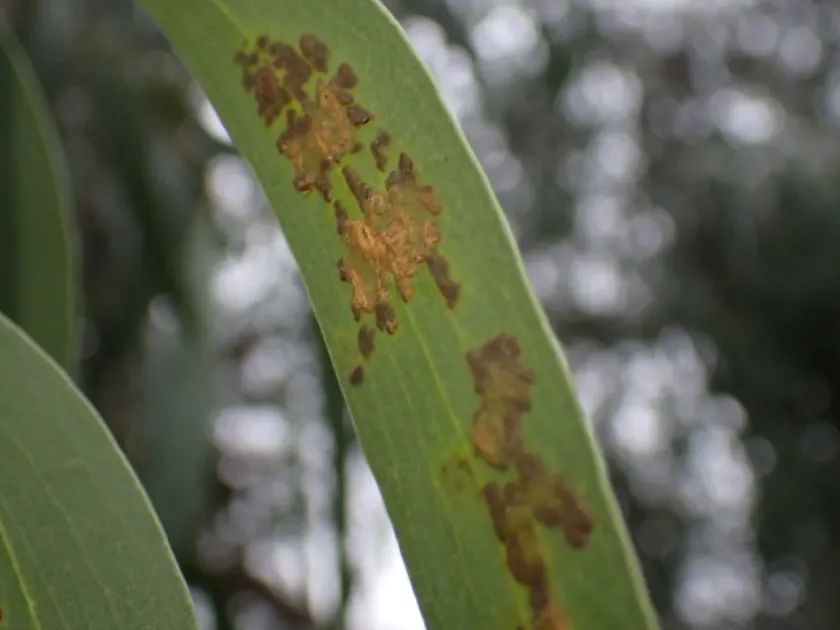
Description
How to identify
Epichrysocharis (Epichrysocharis burwelli) is a minute insect belonging to the order Hymenoptera and the family Eulophidae. It is a highly specialized gall-forming wasp that has adapted to complete its life cycle within the tissues of specific Eucalyptus tree species.
Adults are extremely small, typically measuring 1 to 2 millimeters in length. Their metallic body coloration and tiny size make them difficult to detect in the field without the use of specialized yellow sticky traps or microscopic examination.
Unlike most Eulophid wasps, which are typically parasitoids of other insects, Epichrysocharis has evolved to become a phytophagous species. This evolutionary shift makes it a unique object of entomological study regarding host-plant interaction.
The identification process usually involves examining the characteristic galls found on the leaves. These galls provide a protected environment for the developing larvae, making them difficult to target with conventional chemical treatments.
Taxonomically, the genus is well-recognized in regions where eucalyptus plantations have been established, and accurate identification often requires professional diagnostic tools to differentiate it from other gall-inducing insects.
What it damages
This pest primarily affects various Eucalyptus species, causing significant stress to young seedlings and nursery stock. The larvae induce the formation of galls, which are pathological outgrowths on the leaf surface.
The formation of these galls diverts essential nutrients from the plant's normal growth processes. As a result, the tree experiences reduced photosynthetic capacity, which directly correlates with stunted growth and poor biomass production.
In cases of heavy infestation, the leaves may become severely deformed and show signs of chlorosis. This weakened state makes the eucalyptus trees susceptible to secondary pathogens and environmental stressors.
Prolonged damage leads to premature leaf drop, which can significantly impact the survival rate of young plantations. This effect is particularly detrimental in the nursery stage, where maintaining healthy foliage is critical.
Economic damage is largely measured by the loss of marketable nursery stock and the increased costs associated with management, treatment, and potential replanting in severely affected areas.
Signs of infestation
The primary symptom of infestation is the appearance of small, raised bumps on the leaves, which develop into distinct galls. These galls may appear light green, yellow, or reddish depending on the maturity of the infestation.
Looking at the underside of the leaf, one can observe small, circular exit holes once the adult wasps have emerged. These exit holes are a clear indicator that the population has completed a generation and is potentially spreading.
Leaves affected by high numbers of galls often appear contorted, curled, or stunted. This change in leaf architecture is a visual warning of a high pest density that requires immediate intervention.
The accumulation of sooty mold on the leaf surface can also be a telltale sign of an infestation, as this fungus often grows on the sugary secretions produced by the insects or damaged plant tissues.
A noticeable thinning of the tree canopy, particularly during the active growing season, serves as a late-stage diagnostic indicator that the Epichrysocharis population has reached levels requiring pest control.
Control measures
Management of Epichrysocharis is challenging due to the protected nature of the larvae within the galls. Systemic insecticides are the most effective chemical option, as they are translocated into the leaf tissue to reach the pests.
Sanitation practices, such as the pruning and immediate destruction of infested plant material, are essential for limiting the spread of the insect within a nursery or plantation setting.
Biological control programs, which focus on introducing specific parasitoids that hunt these gall wasps, show promise as a long-term strategy for managing populations in large-scale forest environments.
Maintaining optimal tree health through proper fertilization and irrigation helps improve the eucalyptus tree's ability to withstand pest pressure and recover from the damage caused by larval feeding.
Regular monitoring using sticky traps and periodic canopy inspection allows foresters to detect early arrivals, enabling targeted and efficient intervention before the pest population explodes.
Taxonomy
- Latin name
- Epichrysocharis
- Order
- Hymenoptera
- Family
- Eulophidae
- EPPO code
- EPCRSP
Discussion
No discussions yet — be the first.