

Pest · Diptera (flies) · affects Sweet cherry, Tomato, Potato
Especially harmful
European cherry fruit fly
Rhagoletis cerasi
Description
How to identify
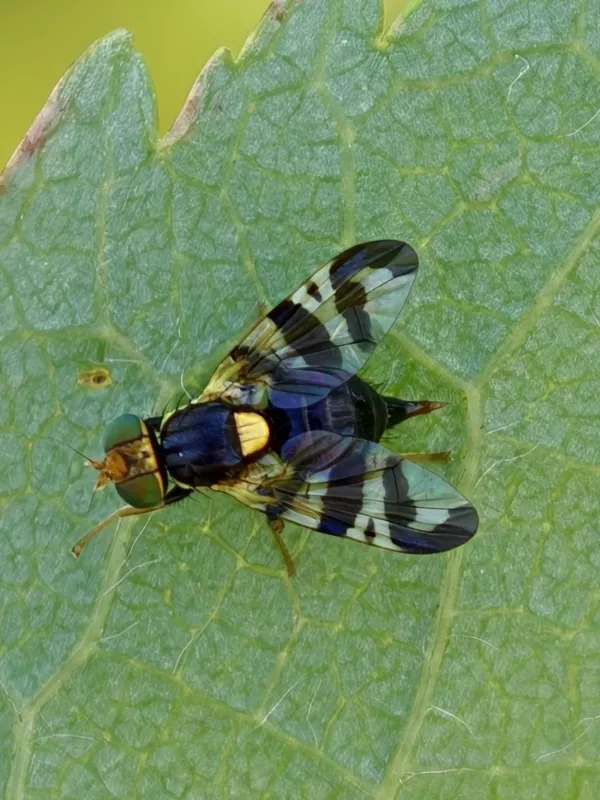
The European cherry fruit fly (Rhagoletis cerasi) is a member of the Tephritidae family, well-known for its characteristic patterns on the wings.
Adult flies are small, measuring approximately 3–5 mm in length, with a shiny black body and a distinctive yellow scutellum on the thorax.
The wings are clear but decorated with four dark transverse bands, which is the most reliable feature for identifying this specific pest species.
Larvae are legless, creamy-white maggots that grow up to 6 mm long and are usually found inside the ripening fruit near the pit.
The insect spends the winter in the pupal stage, buried in the soil under the canopy of host trees, emerging as adults in late spring.
What it damages
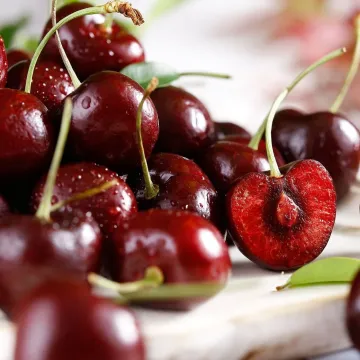
Rhagoletis cerasi primarily targets cherries and sweet cherries, making them its main host plants for reproduction.
The female fly uses her ovipositor to pierce the skin of ripening fruit and deposit a single egg, which eventually develops into a feeding larva.
Larval feeding destroys the fruit flesh around the stone, causing the cherries to soften, rot, and lose their commercial and culinary value.
While some reports suggest potential hosts like honeysuckle or rare occurrences on other fruits, the primary economic impact is felt in cherry orchards.
Heavy infestations can lead to massive premature fruit drop, causing significant yield losses for growers who fail to implement timely control measures.
When it appears
Adult emergence typically occurs from May through June, synchronized with the fruit ripening process and rising soil temperatures.
After emergence, adult flies require a protein-rich diet, which they obtain from aphid honeydew and other plant secretions on leaves.
Mating occurs about a week or two after emergence, followed by the egg-laying phase, which continues until the fruit is harvested.
The larval stage inside the fruit lasts for about three to four weeks, depending on ambient temperature and fruit variety.
Upon completing their development, larvae exit the fruit and burrow into the soil to pupate, preparing for the next year's cycle.
Signs of infestation
The first sign of infestation is the appearance of tiny puncture marks on the skin of the ripening cherries, representing egg-laying sites.
As the larva grows, the area around the puncture often becomes discolored, sunken, and soft, indicating the internal rot caused by larval feeding.
Visual inspection of the fruit will reveal tunnels within the pulp, and in advanced stages, the presence of the maggot itself near the pit.
Premature fruit drop is a classic indicator that the population of fruit flies has reached an economic threshold in the orchard.
Yellow sticky traps hung in trees are a highly effective tool for detecting the presence of adults before significant damage occurs.
Control measures
Chemical control focuses on applying insecticides during the period between adult emergence and the start of egg-laying to prevent infestation.
Sanitation is critical; all fallen fruit must be collected and removed from the orchard daily to break the life cycle of the pest.
Tilling the soil under the trees in late autumn can expose pupae to frost and predators, significantly reducing the overwintering population.
Monitoring with sticky traps allows for precise timing of spray applications, ensuring that chemicals are used only when necessary.
- Choose early-ripening varieties that mature before the peak fly population.
- Maintain orchard hygiene by destroying infested fruit.
- Utilize biological control agents where appropriate to suppress larval development.
In brief
10
Damages crops
Content graph
Damages crops · 10
Content graph
Connections · European cherry fruit fly
Most often together:
Marketplace
Products · 19




Biology
Taxonomy
- Latin name
- Rhagoletis cerasi
- Order
- Diptera (flies)
- Family
- Tephritidae
- EPPO code
- RHAGCE
Community
Discussion
No discussions yet — be the first.