
Celery fly
Acidia cognata
Description
How to identify
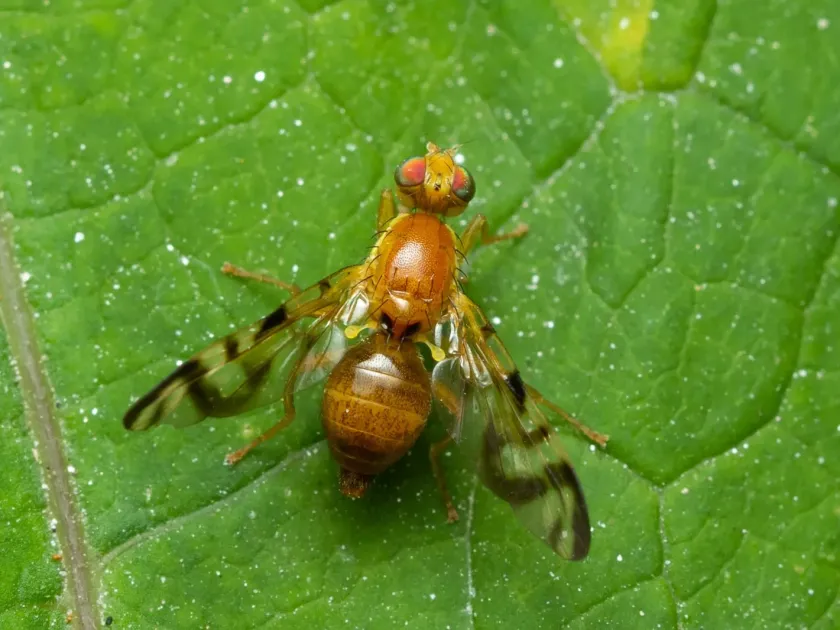
The celery fly (Acidia cognata) belongs to the Tephritidae family, also known as fruit flies. It is a small insect characterized by patterned wings, which is a common diagnostic feature for this family.
Adult flies are approximately 5–6 mm long with a yellowish-brown body. They are most active during warm, sunny weather and are frequently seen flying near host plants.
The larvae are legless, yellowish-white maggots that live inside the leaves. Because they spend their entire larval stage inside the leaf tissue, they are protected from many external environmental factors.
Pupation occurs in the soil, where the insects remain as brown, barrel-shaped pupae. This stage allows the fly to survive through the winter until the next spring emergence.
Depending on the latitude, this species can produce multiple generations per year, making it a persistent threat to vegetable production in various climate zones.
What it damages
The celery fly primarily infests plants in the Apiaceae (umbelliferous) family. Celery is the most significant host, followed by parsley, parsnip, and lovage.
Wild relatives such as hogweed (Heracleum) and angelica often act as reservoirs, allowing the pest to maintain populations in the vicinity of cultivated gardens.
Larvae consume the leaf mesophyll, creating unsightly tunnels known as mines. This feeding behavior disrupts the plant's photosynthetic capacity, leading to reduced growth and vigor.
Severe infestations can result in total loss of foliage quality, making the greens unmarketable for fresh consumption and stressing the plant to the point of stunted root development.
The damaged leaf surface often collapses, creating ideal conditions for secondary infections such as powdery mildew or various bacterial soft rots.
When it appears
The first adult flies typically emerge in late spring (May to June), synchronizing their activity with the emergence of young celery seedlings or transplanted plants.
Subsequent generations follow throughout the summer months. Mid-summer is often when the pressure is highest due to the cumulative effect of previous generations.
Adults are attracted to lush, tender leaves, where they deposit their eggs beneath the epidermis. This makes the timing of preventative sprays critical.
As autumn approaches, the last generation of larvae drops into the soil to pupate. They remain dormant in the ground until the cycle resets in the following year.
Monitoring for adult flight patterns using yellow sticky traps is a recommended strategy to predict and manage the timing of potential damage.
Signs of infestation
The earliest symptom is the presence of small, pale, or blister-like spots on the leaf surface, which mark where eggs have been deposited or early mining has begun.
As the larvae feed and grow, these spots develop into prominent, winding, whitish-brown tunnels that clearly show the insect's path through the leaf tissue.
In many cases, the tunnels turn brown and brittle. Heavily mined leaves eventually lose their green color, shrivel, and die off prematurely.
When observing a leaf against the light, one can often see the larvae within the tunnels, accompanied by small accumulations of dark frass (droppings).
- Pale blistered spots on leaves.
- Distinct winding tunnel patterns.
- Premature yellowing and desiccation of foliage.
- Reduced plant growth and vigor.
- Collapsed, necrotic leaf tissue.
Control measures
Crop rotation is the most effective cultural method to break the pest life cycle. Avoid planting celery or related crops in the same spot for several consecutive years.
Physical barriers, such as lightweight row covers or insect netting, prevent adult females from reaching the leaves to lay eggs, which is highly effective in small gardens.
Removing wild Apiaceae weeds near the growing area reduces the overall population pressure and eliminates alternative hosts for the flies.
Deep cultivation of the soil after harvest helps to expose pupae to freezing temperatures and natural predators, significantly reducing the overwintering population.
If chemical control is necessary, use systemic insecticides specifically approved for the target crop, always strictly adhering to the pre-harvest interval (PHI) labels.
Taxonomy
- Latin name
- Acidia cognata
- Order
- Diptera (flies)
- Family
- Tephritidae
- EPPO code
- ACIDCO
Discussion
No discussions yet — be the first.