
White garden snail
Theba pisana
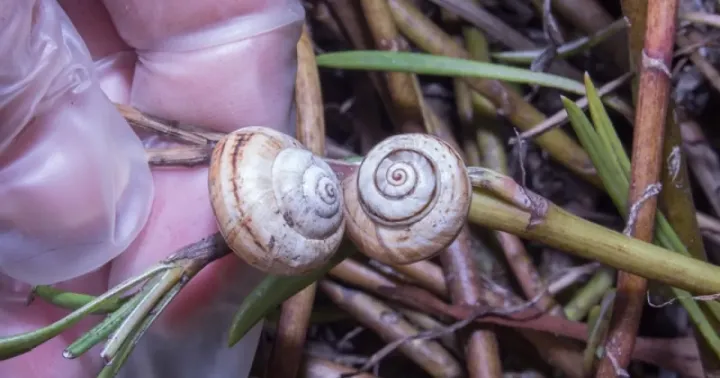
Description
How to identify
The white garden snail (Theba pisana) is a land snail belonging to the family Helicidae. Its shell is globular, measuring 12–25 mm, and is typically white or cream-colored with distinct brown spiral bands.
This species is highly adapted to arid environments. The light-colored shell helps reflect intense sunlight, protecting the snail from overheating and dehydration during dry periods common in its native Mediterranean habitats.
The snail's body is generally gray-brown. As an invasive species, Theba pisana spreads rapidly, often being transported across long distances via agricultural produce, vehicles, and gardening machinery.
Taxonomically, it is classified under the order Stylommatophora. Its resilience makes it a persistent challenge for farmers, as it can endure dry conditions that are lethal to many other mollusk species.
Identifying this pest correctly is the first step in crop management. Agronomists often look for the distinct banded shell pattern which helps distinguish it from other local snail species present in the field.
What it damages
The white garden snail is a generalist pest that feeds on a wide range of crops. It causes significant damage to citrus, vineyards, cereal crops, legumes, and various ornamental garden plants.
These snails consume plant foliage, young shoots, and reproductive organs. Heavy infestations can cause total loss of seedlings, leading to reduced plant density and significant economic hardship for producers.
In cereal fields, snails often climb to the top of stalks, causing major issues during harvesting by contaminating grain with mucus and feces, which significantly lowers the quality and market value.
Feeding damage creates entry points for secondary pathogens, such as fungi and bacteria, which can cause rotting and disease outbreaks that further exacerbate the impact of the initial snail damage.
In vineyards and orchards, they may strip bark from young trees and consume buds, potentially impacting long-term tree health and yield productivity for multiple seasons.
When it appears
Activity levels of Theba pisana are heavily influenced by climate conditions. They exhibit distinct seasonal behavior, entering a state of estivation (summer dormancy) during hot, dry months.
During summer dormancy, snails gather in large colonies on fences, walls, or the tops of dry plants to wait for the arrival of humid, cooler weather, which triggers their re-emergence.
The most active periods for feeding and reproduction are during the spring and autumn rainy seasons. Moist conditions allow them to move across the soil surface to seek food and mating partners.
The reproductive cycle involves laying eggs in moist soil. New generations hatch when humidity is sufficient, leading to a rapid population surge if conditions remain favorable for a few consecutive months.
Monitoring should be most intense following the first autumn rains, as this is when the adult snails emerge from dormancy and become highly mobile and receptive to bait treatments.
Signs of infestation
The most common sign of infestation is the presence of irregular, ragged holes in leaf tissue, typically starting from the edges or creating large voids in the center of the leaves.
Shiny, dried slime trails left on soil surfaces, stems, and infrastructure are clear indicators of mollusk presence and indicate the pathways they use to travel between feeding sites.
During the summer, finding large clusters of white shells attached to the tips of dry stalks or posts is a definitive sign of a high snail population in the immediate vicinity.
Inspecting the soil at the base of plants or under thick mulch often reveals juvenile snails hiding from the midday sun, confirming the success of the current year's breeding cycle.
In fruit crops, such as tomatoes or soft berries, look for deep, irregular excavation marks. These wounds often show early signs of decay due to the moist environment and microbial growth.
Control measures
Effective management requires an integrated approach. While manual collection can work in small home gardens, commercial operations rely on more robust chemical and cultural methods.
Applying molluscicides based on iron phosphate or metaldehyde in the evening is the primary chemical control method. These should be applied when the soil is damp and snails are active.
Cultural practices include deep plowing of the soil during the off-season, which destroys eggs and exposes snails to unfavorable surface conditions, significantly reducing the next generation.
Removing weeds and plant debris is essential to minimize shelter and food sources, which effectively forces snails into more exposed areas where they can be controlled more easily.
Promoting a healthy ecosystem that supports natural predators, such as hedgehogs, ground beetles, and birds, serves as a sustainable way to suppress snail populations over the long term.
Taxonomy
- Latin name
- Theba pisana
- Order
- Molluscs
- Family
- Helicidae
- EPPO code
- THEBPI
Discussion
No discussions yet — be the first.