
Roman snail
Cryptomphalus
Description
How to identify
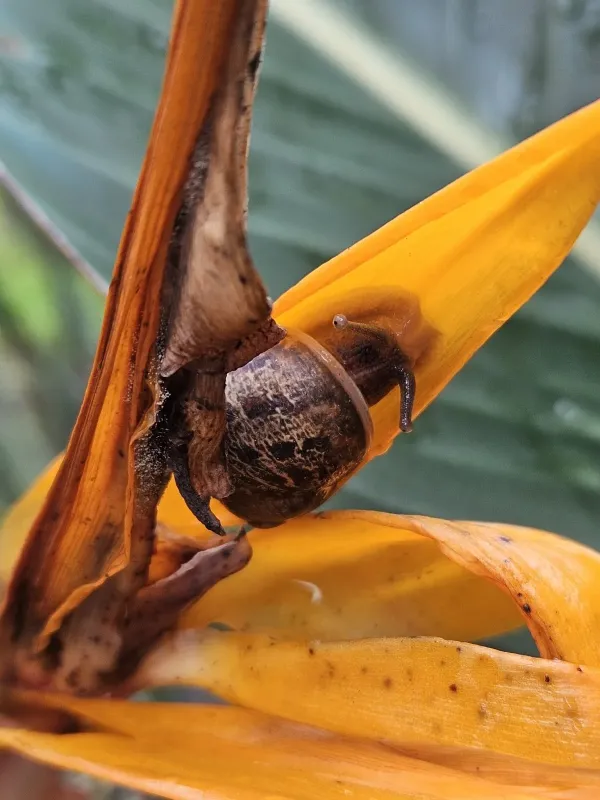
The Roman snail (Cryptomphalus pomatia) is a large land snail belonging to the family Helicidae. It is characterized by its robust, globular shell, which typically has a light brown or yellowish color with distinct darker spiral bands, providing camouflage in woodland environments.
The snail's anatomy consists of a soft body that produces mucus to reduce friction during movement. They possess a radula, a structure in the mouth covered in thousands of microscopic chitinous teeth, which allows them to rasp away plant tissue with high efficiency.
What it damages
As a polyphagous pest, the Roman snail feeds on a wide variety of plant species. They pose a significant threat to horticultural crops, including vines, leafy greens like lettuce and cabbage, strawberries, and tender vegetable seedlings, often causing severe defoliation.
Damage is not limited to leaves; the snails frequently consume the fruits and stems of young plants. This feeding pattern stunts plant growth, reduces the crop's market value, and creates entry points for various fungal and bacterial infections that can finish off the weakened plants.
When it appears
The activity cycle of this pest is heavily dependent on moisture. They emerge from winter hibernation when temperatures exceed 10–12°C and humidity levels remain high, typically during wet spring and summer weather.
They are primarily nocturnal or active during overcast, rainy days. In periods of drought or excessive heat, the Roman snail practices aestivation, retreating into its shell and sealing the opening with a dry mucus layer to retain body moisture until favorable conditions return.
Signs of infestation
Signs of an infestation include ragged, irregular holes in the centers of leaves or along the leaf margins. Unlike insects, snails consume larger sections of the tissue, leading to highly irregular damage patterns that progress quickly.
The most distinctive signature of a snail infestation is the shiny, silvery trail of dried mucus left behind on leaves, stems, and the surrounding soil. The presence of small, dark, granular feces near the base of the plants is another reliable indicator of their activity.
Control measures
Effective management starts with cultural practices that reduce favorable habitats. Clearing leaf litter, pruning low-hanging branches, and maintaining clear borders around garden beds help limit the places where snails can hide and reproduce during the daylight hours.
Physical barriers such as copper tape, crushed eggshells, or coarse sand can be placed around sensitive plants to create an uncomfortable surface for the mollusks to cross. Regular hand-picking during damp evenings is also highly effective for smaller garden plots.
Chemical control may be necessary in severe infestations. Bait pellets containing metaldehyde are commonly used, though they must be applied with caution. Always place pellets in containers or shielded areas to prevent accidental ingestion by pets, birds, or non-target wildlife.
Taxonomy
- Latin name
- Cryptomphalus
- Order
- Molluscs
- Family
- Helicidae
- EPPO code
- CRPPSP
Discussion
No discussions yet — be the first.