
White-lipped snail
Cepaea nemoralis
Description
How to identify
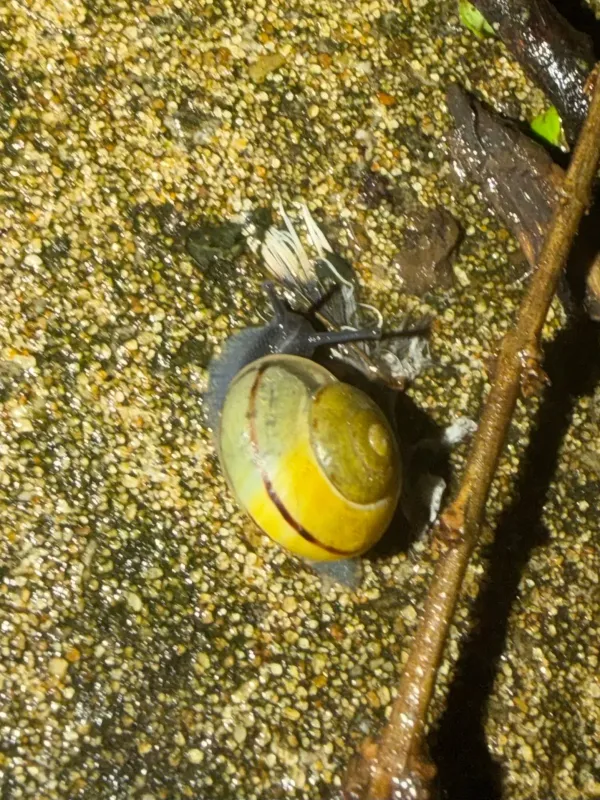
The white-lipped snail (Cepaea nemoralis) belongs to the Helicidae family. Its shell is highly variable in color, ranging from yellow to pinkish or brown, often featuring dark spiral bands.
Adult snails have a shell diameter of about 20–25 mm. The most distinct diagnostic feature is the dark, brownish-black lip at the aperture of the shell, which separates it from the similar brown-lipped snail.
These mollusks are hermaphroditic and highly adaptive to various environments. They lay clusters of eggs in moist soil or under dense vegetative cover.
They are primarily nocturnal, preferring dark and humid conditions for movement and feeding. During the day, they remain sheltered under stones, logs, or dense foliage.
This species is a common inhabitant of gardens, woodland edges, and urban parks across Europe and has been introduced to many other parts of the world.
What it damages
The white-lipped snail is a generalist herbivore that consumes a wide variety of plant material, often causing significant damage to gardens and vegetable patches.
Young seedlings and succulent plants are particularly vulnerable. The snails rasp away leaf tissue, leading to holes, ragged edges, or complete defoliation of the crop.
Decorative plants such as hostas, lilies, and various salad greens are often severely affected, resulting in both cosmetic damage and reduced plant vigor.
In addition to foliage damage, they can scar the skins of fruits and vegetables, reducing their marketability and making them prone to secondary rot infections.
Excessive mucus secretion on plants can inhibit growth and make the affected produce aesthetically unpleasant and unsuitable for consumption.
When it appears
Snails are most active from late spring through early autumn, particularly during periods of high humidity and rainfall which facilitate their movement.
Breeding typically occurs throughout the warm months. Eggs are laid in moist soil, and juveniles emerge within a few weeks, growing slowly throughout the season.
During prolonged dry spells, snails enter a state of dormancy called aestivation. They seal their shell aperture with a mucus layer to prevent desiccation.
As temperatures drop in late autumn, they seek out deep shelter in the soil or under insulating garden debris to hibernate through the winter months.
Their life cycle is highly dependent on environmental moisture; consistent garden irrigation during summer often mimics rainy conditions, keeping them active longer.
Signs of infestation
The most telltale sign of a snail infestation is irregular, ragged holes in leaves, often found on plants growing close to the ground.
A silvery, shimmering trail of dried mucus left on plant stems, walkways, or leaves is a definitive indicator of snail or slug activity in the area.
Searching at night or during overcast, rainy days will often reveal the snails themselves feeding directly on plants or resting on the undersides of leaves.
Accumulations of plant debris, boards, bricks, or large rocks are common daytime hiding spots where large colonies of these snails can be found.
In fruit crops like strawberries, the presence of snails is often signaled by small bites in the ripening fruit accompanied by sticky residue and dark droppings.
Control measures
Cultural control is key; keep the garden tidy by removing weeds, clearing leaf litter, and thinning out dense vegetation to eliminate moist hiding places.
Hand-picking snails in the early morning or evening is an effective control measure for smaller garden plots, especially after rain or irrigation.
Install physical barriers such as crushed eggshells, coarse grit, or copper tape around high-value plants to deter the snails from reaching the foliage.
Use traps like containers filled with beer or fermented fruit juice, buried level with the soil, to lure and drown the snails effectively.
Encourage natural predators such as hedgehogs, songbirds (thrushes), toads, and ground beetles to maintain a balanced ecosystem that suppresses snail populations.
Taxonomy
- Latin name
- Cepaea nemoralis
- Order
- Molluscs
- Family
- Helicidae
- EPPO code
- CEPANE
Discussion
No discussions yet — be the first.