
Garden snail
Cantareus
Description
How to identify
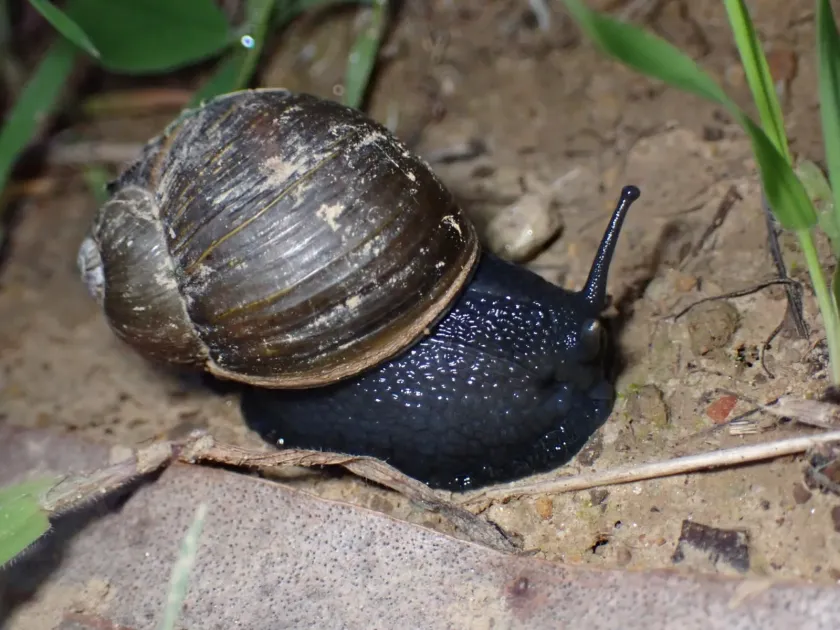
The garden snail (Cantareus aspersus, formerly Helix aspersa) is a common terrestrial gastropod mollusk. It belongs to the Helicidae family and is known for its coiled, globular shell.
The shell features a yellow or brown color with distinct dark brown bands or patches, providing camouflage against soil and foliage. Adult snails typically measure 30 to 40 mm.
They possess a soft, mucus-covered body that allows for movement over various surfaces. They rely on high moisture levels for physiological maintenance and locomotion.
During extreme heat or dryness, the snail seals its shell opening with a hardened mucus layer, known as an epiphragm, to prevent dehydration while in dormancy.
They are hermaphroditic, and a single snail can lay up to a hundred small, round, white eggs in the soil, which hatch within a few weeks under favorable conditions.
What it damages
Garden snails are generalist feeders, meaning they consume a wide array of plant tissues. They pose a major threat to home gardens, commercial vineyards, and vegetable farms.
Young seedlings of leafy greens like lettuce and cabbage are particularly vulnerable, often being completely consumed by a small infestation overnight.
In vineyards, snails can damage both the foliage and the developing berries. This reduces the photosynthetic capacity of the vines and significantly ruins the commercial value of the crop.
Ornamental garden plants, especially those with large leaves like Hostas, often suffer from irregular holes and leaf tissue destruction, which diminishes their aesthetic appeal.
Snails contribute to the spread of plant diseases, as their movement across surfaces transfers pathogens and spores that exploit the wounds they leave on leaves.
When it appears
Snails are most active during the growing season, particularly in spring and autumn when soil and air moisture levels remain high and temperatures are moderate.
Activity peaks after rainfall or irrigation, as the increased humidity allows snails to move freely and feed during the day, whereas they usually avoid direct sun.
They are primarily nocturnal, retreating into dark, damp, and sheltered areas during the day to avoid desiccation. Common refuges include under stones, mulch, or dense weed patches.
Development is ongoing throughout the warmer months. As temperatures drop toward winter, the snails retreat deeper into the soil to hibernate until the following spring.
Population density often spikes in late summer after the hatchlings emerge from eggs, resulting in increased pressure on late-season vegetable crops.
Signs of infestation
The most recognizable sign of snail damage is the presence of large, irregular holes within the leaf blades, often leaving the main veins intact in a skeletal fashion.
A shiny, silvery trail of dried mucus left on plant stems, foliage, or the soil surface serves as a definitive indicator of recent snail activity in the area.
Direct sightings of snails in the morning or evening hours, especially near the base of plants or in dense foliage where the microclimate is moist.
Young seedlings might be found severed at the soil line, which is a common occurrence during the early stages of a garden infestation.
The presence of clusters of empty shells or egg masses in the soil during cultivation or weeding operations is a sign of a breeding population.
Control measures
Cultural control practices, such as removing debris, leaf litter, and weeds, are essential to eliminate the moist hiding spots that snails rely on during the day.
Manual collection is a highly effective method for small-scale gardens. Searching by flashlight at night or early in the morning allows for quick population reduction.
Barriers such as copper tape, crushed eggshells, or diatomaceous earth can be placed around sensitive plants to irritate the snail's foot and deter it from crossing.
Beer traps or bait stations containing fermented fruit juice are effective at luring snails away from crops, allowing them to be gathered and disposed of efficiently.
Chemical control involving molluscicides, specifically those based on iron phosphate (which is safer for pets and wildlife), should be used strictly according to label instructions.
Taxonomy
- Latin name
- Cantareus
- Order
- Molluscs
- Family
- Helicidae
- EPPO code
- CNTASP
Discussion
No discussions yet — be the first.