
Cepaea
Cepaea
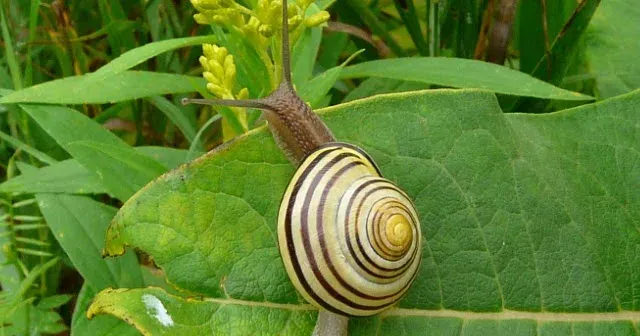
Description
How to identify
Cepaea is a genus of land snails belonging to the family Helicidae. The most common species are the grove snail (Cepaea nemoralis) and the white-lipped snail (Cepaea hortensis).
The shells of these mollusks are globular, and the height is roughly equal to their width. The surface is smooth and often decorated with distinct dark spiral bands.
The coloration ranges from yellow and pink to brown, which provides camouflage in garden environments. This diversity aids their survival against predators.
The body of the snail is typically grey or light brown. Adult specimens usually reach 20–25 mm in height, making them quite visible when inspecting garden beds.
A key identification feature for Cepaea nemoralis is the dark lip around the aperture, while Cepaea hortensis typically features a white lip.
What it damages
Cepaea snails are polyphagous, meaning they feed on a wide range of vegetation. They cause significant damage to both ornamental and vegetable crops.
They pose a high threat to young seedlings such as lettuce, cabbage, cucumbers, and zucchini. Snails consume delicate leaf tissue, leaving behind large, irregular holes.
In ornamental gardens, hostas, lilies, and marigolds are particularly susceptible. The damage reduces the aesthetic value and overall vigor of these plants.
Beyond consuming foliage, snails often feed on strawberry fruits, creating deep ulcers that make the harvest unsuitable for storage or sale.
Heavy infestations weaken the plants' immunity, making them more susceptible to secondary infections like fungal diseases and bacterial rots.
When it appears
Activity begins in early spring as temperatures rise and soil moisture increases. The peak of infestation usually occurs during June and July.
These mollusks are primarily nocturnal or active during overcast, rainy weather. During hot, dry days, they seek shelter in moist soil or dense weed patches.
The life cycle involves laying eggs in moist soil patches. The young emerge after a few weeks and begin feeding immediately, growing rapidly.
In autumn, as temperatures drop, snails enter a state of dormancy by burrowing into the soil or hiding under garden debris to survive the winter.
A generation develops in one year, but their high reproductive rate allows the population to recover quickly even after partial control efforts.
Signs of infestation
The first sign of infestation is the presence of irregular holes in leaves. Unlike insects, snails often devour entire sections of leaves, leaving only veins.
Dried, shiny slime trails on leaves and stems are a reliable indicator of snail presence. These trails often glisten when exposed to sunlight.
Small granular excrement found near feeding sites confirms snail activity. Snails themselves can often be found under leaves or in shady spots early in the morning.
During the evening, clusters of snails can be observed near the base of plants, especially in areas with thick mulch or heavy weed cover.
Damaged fruits show deep, eaten patches, which quickly become sites for rot and decay due to the moist environment created by the snail activity.
Control measures
Cultural methods include regular weeding and soil cultivation to disrupt snail habitats and destroy egg clusters located in the topsoil.
Creating physical barriers using abrasive materials such as lime, superphosphate, or wood ash around flowerbeds can deter snail movement.
Beer traps are highly effective: burying containers filled with beer or fermented kvass attracts snails, which can then be collected and removed manually.
Chemical control involves the use of specialized molluscicides based on metaldehyde, applied in areas of heavy infestation according to local regulations.
Reducing overhead irrigation and avoiding heavy organic mulch near delicate seedlings helps remove essential hiding spots for the snails.
Taxonomy
- Latin name
- Cepaea
- Order
- Molluscs
- Family
- Helicidae
- EPPO code
- CEPASP
Discussion
No discussions yet — be the first.