
Copse snail
Arianta arbustorum
Description
How to identify
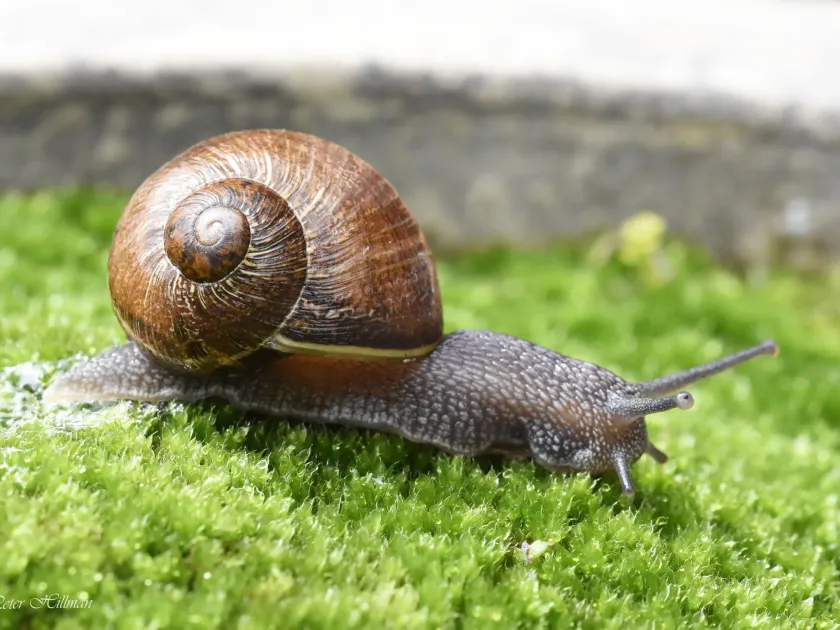
The copse snail (Arianta arbustorum) is a species of land snail belonging to the family Helicidae. Adult snails possess a globular-conical shell measuring between 15 and 25 mm, typically brown or yellowish with a characteristic dark spiral band.
The soft body of the snail is grayish or brownish. A key diagnostic feature for this species is a distinct whitish or brownish thickened lip at the shell aperture, which indicates that the individual has reached maturity.
These snails favor humid and shaded habitats. In agricultural settings, they are commonly found in dense shrubbery, damp lowlands, and areas with tall weeds, where constant moisture levels are maintained.
Reproduction involves laying eggs in moist soil. From these eggs, juvenile snails emerge, which resemble the adults but have much thinner and more fragile shells, making them susceptible to environmental conditions.
The life cycle lasts for several years. The snails survive winter by hibernating in the topsoil, under leaf litter, or within piles of organic debris, allowing them to withstand cold temperatures and resume activity in early spring.
What it damages
The copse snail is a generalist herbivore (polyphage) that damages a wide variety of agricultural and ornamental plants. Vegetables, particularly leafy greens like lettuce, spinach, and cabbage, are frequently targeted.
In gardens and flower beds, the pest actively feeds on young shoots, leaves, and flower buds of perennials such as Hostas, Asters, and Delphiniums. In cases of high population density, they can completely destroy young seedlings.
Fruit crops are also at risk; snails frequently damage ripe strawberries resting on the soil, rendering the harvest unsuitable for consumption or market sale.
Damage appears as large, irregular holes on leaf blades. During severe infestations, snails can skeletonize leaves, leaving only the primary veins of the plant intact.
Beyond direct tissue destruction, snails act as vectors for various plant pathogens, including fungal spores and bacteria, which often lead to secondary rot in the damaged parts of plants.
When it appears
The activity of the copse snail is directly dependent on environmental humidity and temperature. The highest levels of damage occur during spring and summer, particularly during rainy periods.
During daylight hours, snails seek refuge in shaded, cool areas, such as under clumps of soil or dense foliage, to prevent dehydration. Peak activity occurs during twilight and night hours.
In spring, shortly after the soil warms up, the snails emerge from hibernation and immediately start feeding on fresh young shoots, causing significant damage to newly planted crops and seedlings.
During the summer months, activity levels may decrease significantly if dry weather conditions prevail. In such instances, the snails burrow deeper into the soil or retreat into dark, moist niches.
Autumn brings a second peak of activity as the snails feed intensively to accumulate nutrients for the upcoming winter, making this season a critical time for monitoring and control efforts.
Signs of infestation
The first and most obvious sign of infestation is the presence of characteristic irregular holes in plant leaves. Unlike insects, snails often graze on the entire surface of the leaf.
The presence of silvery, dried slime trails on leaves, stems, or the surrounding soil is a definitive indicator of the presence of gastropod pests.
Inspecting the base of plants or the underside of leaves during early morning hours often reveals the snails themselves, as they prepare to settle in for their daily rest.
Damaged berries or vegetables lying on the ground, accompanied by eaten-out cavities, are a common sign that snails have been feeding on the fruit.
A noticeable decline in the health and vigor of plants, despite the absence of obvious insect pests, can be a symptom of nocturnal feeding by copse snails.
Control measures
Mechanical control involves the manual collection and destruction of snails, especially during early morning or evening hours, and after rainfall when the snails are most active.
Agrotechnical measures include keeping the garden tidy: regular weeding, removal of plant debris, and clearing piles of organic matter that serve as shelters for the snails.
Creating physical barriers can be an effective way to protect garden beds. Sprinkling materials such as wood ash, lime, or crushed eggshells around plants creates a barrier that irritates the snail's foot.
Biological control includes the use of nematode-based products (Phasmarhabditis hermaphrodita), which are natural parasites of snails and provide an eco-friendly solution for suppression.
Chemical control involves the use of molluscicides, such as those containing metaldehyde or iron phosphate. These should be applied carefully according to instructions, ensuring they are placed away from edible plant parts to maintain food safety.
Taxonomy
- Latin name
- Arianta arbustorum
- Order
- Molluscs
- Family
- Helicidae
- EPPO code
- ARIAAR
Discussion
No discussions yet — be the first.