
Mediterranean snail
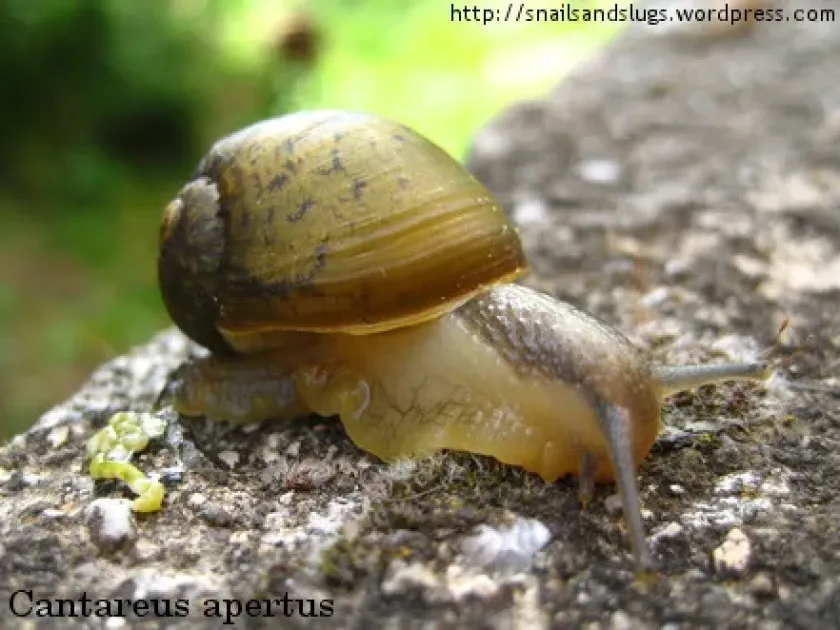
Cantareus apertus
Description
How to identify
The Mediterranean snail (scientific name: Cantareus apertus) belongs to the order Stylommatophora and the family Helicidae. Adult individuals possess a distinctive globular shell measuring approximately 30-40 mm in diameter, often featuring a light to brownish smooth texture.
This mollusk is well-adapted to arid environments, possessing a unique biological strategy known as aestivation. During dry or hot periods, the snail seals its shell aperture with a calcified mucus barrier (epiphragm) and burrows deep into the soil to survive.
The body is soft and typically grey-brown in color, facilitating movement across damp surfaces. Activity is predominantly nocturnal or restricted to periods of high humidity and rainfall, which are essential for its metabolic processes.
Reproduction occurs sexually, and the species is hermaphroditic. They lay eggs in moist soil pockets, ensuring that offspring can access the necessary resources upon hatching when environmental conditions improve.
Their ability to hide underground for extended periods makes detection difficult. They are often found in clusters, particularly in loose, moisture-retentive soil, which serves as a sanctuary during their dormant phases.
What it damages
The Mediterranean snail is a significant polyphagous pest capable of causing substantial damage to various agricultural crops. Seedlings and young plants are particularly vulnerable to their feeding habits, which can lead to total crop loss.
Target crops include vegetables such as tomatoes, cucumbers, cabbage, and lettuce. The snails consume tender foliage and stems, often removing the entire above-ground part of the plant in a single night.
Beyond vegetable crops, they also affect orchards and vineyards. They feed on buds and young shoots, weakening the plant's structure and reducing its overall productivity during the growing season.
Root crops are also prone to damage. The snails can penetrate the upper soil layers to consume potatoes, carrots, and other tubers, creating entry points for secondary fungal and bacterial infections.
The economic impact is severe, not only due to direct yield reduction but also because of the decrease in the commercial value of damaged produce, rendering it unsuitable for sale.
When it appears
The activity cycle is strictly synchronized with rainfall patterns. The primary active phase typically begins with the onset of autumn rains, which soften the soil and initiate the emergence of snails from their aestivation sites.
Winter months are peak periods of feeding activity in Mediterranean and subtropical climates. If temperatures remain moderate, the snails continue to forage and reproduce actively throughout the winter season.
As spring transitions into summer, the rising temperatures and decreasing soil moisture signal the end of the activity cycle. Snails prepare to burrow into the ground to enter their summer dormancy.
Summer is a period of inactivity. During these months, the population remains below the surface, where the microclimate is stable, protected from the lethal effects of high temperatures and low air humidity.
Agricultural monitoring should be intensified during autumn and winter. Understanding this seasonality allows farmers to apply control measures exactly when the snails are most vulnerable and active on the surface.
Signs of infestation
The most evident sign of infestation is irregular, ragged holes in the leaves of host plants. Unlike insect feeding, snail damage often presents as large, uneven patches that can consume nearly the entire leaf area.
Silvery, dried mucus trails on leaves, stems, or the soil surface are definitive indicators of recent snail activity. These trails are usually most visible in the morning after a night of foraging.
The presence of empty or occupied shells at the base of plants is a key indicator. During inspections, checking under debris, mulch, or low-hanging leaves often reveals the presence of resting snails.
Seedling destruction, where plants are eaten down to the soil line, is a classic sign of high population pressure. Snails often concentrate on the most succulent plants, leading to rapid localized damage.
Small, dark, granular excrement observed on the plant surface or surrounding soil confirms that the snails have been actively feeding in the area for a prolonged period, requiring immediate intervention.
Control measures
Effective management requires an integrated approach that combines cultural, mechanical, and chemical control measures. Consistent monitoring is essential for maintaining control over the pest population.
- Deep soil cultivation to disrupt burrowing sites and destroy egg clusters.
- Use of baited traps, such as containers with beer or specialized attractants, to capture snails.
- Installation of physical barriers like wood ash, gravel, or lime around sensitive crop beds.
- Application of molluscicides, including metaldehyde or iron phosphate, following local regulations.
- Regular removal of garden debris, weeds, and mulch where snails find shelter during the day.
Chemical treatments should be applied strategically, typically in the evening when the snails are actively emerging to feed, ensuring maximum efficacy while minimizing environmental impact.
Encouraging natural predators, such as birds, toads, and hedgehogs, can provide biological regulation, especially in smaller garden settings where chemical use is restricted.
Managing irrigation practices to prevent excessive moisture accumulation in the evening can significantly reduce the attractiveness of the garden environment to these pests.
Taxonomy
- Latin name
- Cantareus apertus
- Order
- Molluscs
- Family
- Helicidae
- EPPO code
- HELXAP
Discussion
No discussions yet — be the first.