
Theba
Theba
Description
How to identify
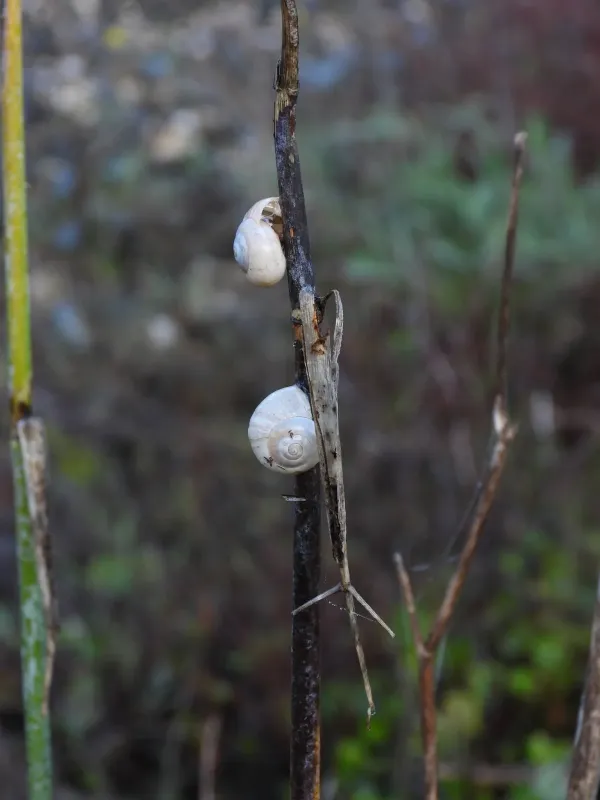
Theba, specifically the species Theba pisana (commonly known as the white garden snail), is a terrestrial mollusk belonging to the Helicidae family. The shell is globular and conical, measuring roughly 20–25 mm in height.
The shell color ranges from white to pale cream, often marked with distinct brown spiral bands that vary in thickness. A defining characteristic of this species is the pinkish or yellowish tint often visible at the aperture or lip of the shell.
The soft body of the snail is grayish-yellow with a granulated skin texture. These snails are highly resilient, having evolved to survive in arid environments where they often aggregate in high numbers on vegetation or vertical structures.
They are known as generalist herbivores, meaning they can thrive on a vast range of plant types, making them a significant concern for both home gardeners and large-scale agricultural producers.
Theba snails are highly gregarious and can rapidly colonize new areas, especially in regions with mild coastal climates where winter temperatures do not drop significantly.
What it damages
The Theba snail is a destructive pest that affects a broad spectrum of agricultural and ornamental crops, including leafy greens, vegetables, legumes, and even fruit trees.
They cause severe damage by feeding on young foliage, seedlings, and buds. In severe infestations, they can strip entire plants of their leaves, leaving only the primary veins intact, which significantly reduces plant vigor.
Fruit crops such as tomatoes, strawberries, and grapes are particularly vulnerable if they are in contact with the ground, as snails will bore holes into the fruit, rendering them unsalable.
Furthermore, their presence leaves behind excessive amounts of slime and feces, which not only ruins the appearance of the produce but also promotes the growth of secondary bacterial and fungal pathogens.
Agricultural exports are frequently disrupted by Theba snails, as these pests often hitchhike on produce containers, leading to strict quarantine measures in many countries.
When it appears
The life cycle and activity of the Theba snail are highly dependent on environmental moisture. They are most active during the cooler, wetter months of the year, typically spring and autumn.
During hot, dry summer months, they undergo estivation, a state of dormancy where they attach themselves to stems, fence posts, or building walls to avoid desiccation on the warm soil surface.
Reproduction occurs during periods of adequate soil moisture, during which snails lay clusters of eggs in the topsoil or under dense leaf litter where humidity remains stable.
The juvenile snails emerge after a short incubation period and immediately begin feeding, allowing populations to explode within a single growing season if conditions remain favorable.
The synchronicity between rainfall and snail activity means that management efforts should be intensified immediately following wet weather events to prevent large-scale population increases.
Signs of infestation
The most prominent sign of a Theba infestation is the presence of irregular, ragged holes in leaves. Unlike chewing insects, snails consume entire leaf sections with a raspy radula.
Silvery, dried slime trails left on leaves, stems, or soil are unmistakable indicators of recent snail movement throughout the affected area.
You may also observe high concentrations of snails resting on vertical surfaces during the daytime, which is a clear sign that the population density is high.
Rotting spots on fruits that lie close to the soil often indicate that snails have been feeding on the produce, introducing pathogens that speed up the decomposition process.
Seeing adult snails or clusters of eggs in the soil during cultivation or weeding activities confirms their presence and the need for immediate intervention.
Control measures
Effective management of the Theba snail requires an integrated pest management (IPM) strategy that combines physical, cultural, and chemical controls to minimize damage.
Cultural control involves maintaining a clean garden by removing weeds and plant debris that provide hiding spots for snails, as well as proper irrigation scheduling to avoid excess surface moisture.
Chemical control with molluscicides, particularly those based on iron phosphate (which is safer for pets and wildlife) or metaldehyde, is highly effective for reducing large populations.
Physical barriers such as copper tape around pots or raised beds can deter snails, while hand-picking during evening hours remains the most direct way to reduce numbers in small gardens.
- Regular soil tilling to destroy egg clusters and disturb hiding places.
- Setting beer or yeast-based traps to lure and drown snails.
- Encouraging natural predators like ground beetles and hedgehogs in the ecosystem.
- Harvesting crops promptly to prevent contact with the ground.
- Using abrasive mulches like crushed shells or sand around sensitive plants to discourage crawling.
Taxonomy
- Latin name
- Theba
- Order
- Molluscs
- Family
- Helicidae
- EPPO code
- THEBSP
Discussion
No discussions yet — be the first.