

Pest · Lepidoptera (butterflies) · affects Turnip, Winter wheat, Eggplant
Japanese cabbage white
Pieris melete
Description
How to identify
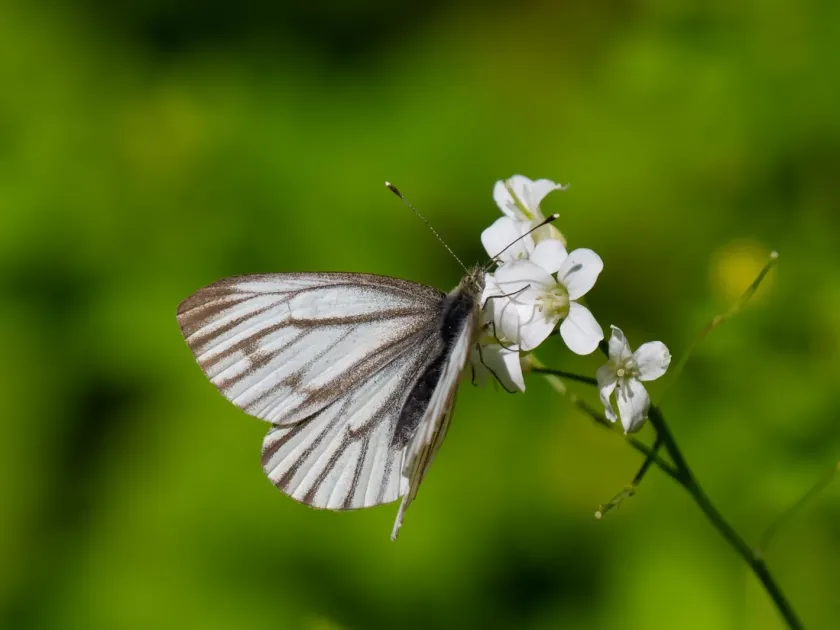
The Japanese cabbage white (Pieris melete) is a butterfly species belonging to the Pieridae family. Adults typically have white wings with distinct black markings on the tips of the forewings, which are diagnostic features for this species.
Physically, the adult wingspan ranges from 45 to 60 mm. The pattern of dark markings helps differentiate it from related species such as the small white butterfly. Females generally exhibit a more pronounced dark wing pattern compared to males.
The larvae, or caterpillars, are cylindrical in shape and typically matte green with tiny light-colored dots and faint lateral stripes. They are covered in short, fine hairs, allowing them to blend into the foliage of their host plants.
Pupae are angular and are often attached to stems, leaves, or nearby structures using a silk thread. They possess a camouflaging color, usually shifting between grayish-green and brownish, which aids in survival during the dormant phase.
This species is native to East Asia, including Japan, Korea, and parts of Russia. It thrives in various temperate habitats, including agricultural landscapes where its host plants are abundantly available.
What it damages
The primary damage is caused by the larval stage, which feeds on the leaves of various plant species. Cruciferous crops are the most frequent targets for this pest, leading to significant economic losses.
Key agricultural crops affected include various types of cabbage, broccoli, cauliflower, radish, turnip, and other Brassicaceae members. In garden settings, the pest may also attack ornamental plants belonging to the same family.
Larvae consume leaf tissue, starting with small holes and progressing to extensive defoliation. As they grow larger, they can skeletonize the entire leaf, leaving only the primary veins, which severely hampers the plant's photosynthetic capacity.
Heavy infestation leads to stunted plant growth and reduced head formation in cabbages. If plants are young, severe feeding can result in the complete death of the crop if not managed promptly.
Furthermore, the damage creates open wounds on the leaves, which serve as entry points for secondary pathogens, such as bacterial soft rot, potentially causing the decay of the entire vegetable.
When it appears
The life cycle of Pieris melete begins in the spring, typically appearing from April to May, depending on regional temperature patterns. Adult butterflies are active during sunny, daylight hours.
The species can produce multiple generations within a single growing season. This overlapping of generations often means that different life stages—from eggs to larvae—are present on crops simultaneously throughout the summer.
Females lay eggs in small clusters or singly on the underside of host leaves. The incubation period varies with temperature, generally taking about 7 to 14 days before the larvae emerge to begin feeding.
The larval stage passes through several instars before reaching the pupal stage. Growth is rapid during warm weather, allowing the population to build up quickly if left unchecked by natural enemies or management.
Overwintering occurs as a pupa. These pupae can remain in a state of diapause on dried stalks, fences, or other debris, emerging as adults only when spring temperatures reach the threshold for development.
Signs of infestation
One of the earliest signs of infestation is the observation of white butterflies flying over the garden. Their presence is a clear indicator that egg-laying is likely occurring or about to begin.
Visually inspecting the underside of leaves will reveal the presence of small, light-colored eggs. Detecting these early allows for simple removal before the damage caused by hatching larvae starts.
Leaf damage manifests as irregular holes or missing margins on leaves. In advanced cases, the accumulation of frass (caterpillar excrement) on the plant surfaces is a visible confirmation of larval presence.
The presence of larvae of varying sizes indicates a continuous infestation cycle. Growers should also look for pupae attached to plant stems, weeds, or nearby structures as the season progresses.
Monitoring for damaged leaves is essential. A sudden increase in moth activity in the field is a signal to intensify crop scouting and prepare for potential intervention.
Control measures
Mechanical control is effective in small-scale gardens. This includes hand-picking larvae and eggs, as well as installing fine mesh netting over crops to prevent adult butterflies from laying eggs on the leaves.
Cultural management practices include deep plowing after the harvest. This helps bury and destroy pupae that are overwintering on crop residues, reducing the starting population for the next season.
Biological control agents, particularly microbial insecticides like Bacillus thuringiensis, are highly effective against larvae. These are safe for the environment and do not leave harmful residues on produce.
Chemical control should be used judiciously, targeting the early larval stages when they are most vulnerable. Always follow label instructions and ensure compliance with pre-harvest intervals for safety.
Weed management is a crucial preventive measure. Removing wild cruciferous weeds like shepherd's purse from around the perimeter of the field eliminates alternate food sources for the pest.
Content graph
Connections · Japanese cabbage white
Most often together:
Marketplace
Products · 2
Biology
Taxonomy
- Latin name
- Pieris melete
- Order
- Lepidoptera (butterflies)
- Family
- Pieridae
- EPPO code
- PIERME
Community
Discussion
No discussions yet — be the first.