
Spotted snail
Otala punctata
Description
How to identify
The spotted snail (Otala punctata) belongs to the Helicidae family, order Stylommatophora. It is a land gastropod mollusk well-adapted to Mediterranean and similar climates.
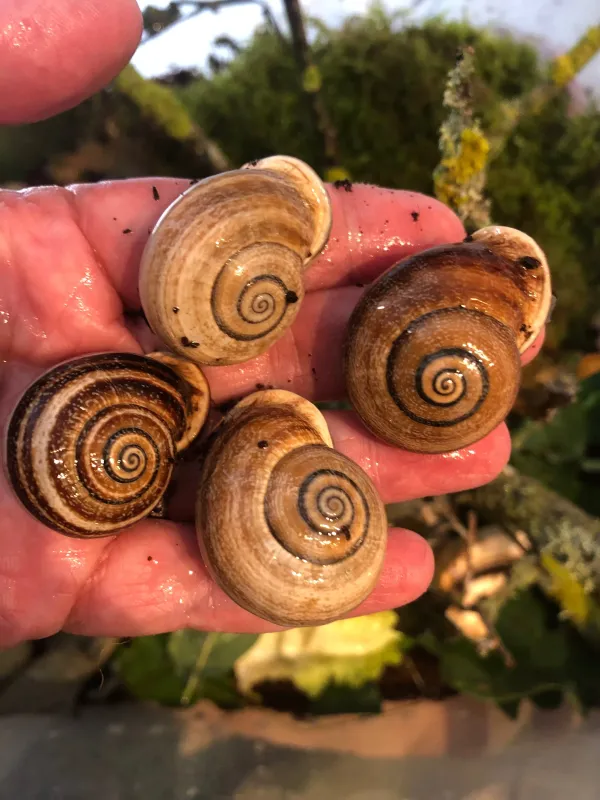
Its shell is globular, reaching a diameter of 30–40 mm, featuring a characteristic pattern of dark spots and streaks on a lighter background, providing camouflage.
The soft body is usually light gray or cream-colored. The species is highly resistant to drought and can seal its shell aperture with a mucous membrane to survive dry spells.
These snails are primarily nocturnal. During the day, they remain hidden in shady, damp areas, beneath organic debris, or in the soil to avoid dehydration.
The life cycle involves egg-laying in the upper soil layers. Development is fast under favorable conditions, with populations capable of increasing rapidly in a single season.
What it damages
As a polyphagous pest, the spotted snail feeds on a wide variety of cultivated plants, including vegetables, fruits, and ornamental crops.
It causes significant damage to leafy greens such as lettuce and cabbage, as well as legumes, strawberries, and young seedlings, which are often entirely consumed.
In vineyards, these snails damage both the leaves and the developing grape clusters, which leads to reduced yield and poor quality of the fruit.
The damage is not limited to physical consumption; the mollusks also transport fungal and bacterial pathogens that further weaken the plants and cause disease.
In cases of high infestation, spotted snails can cause severe economic losses, particularly in greenhouses or irrigated field crops where conditions are ideal for their activity.
When it appears
The activity of the spotted snail begins in early spring with the first rains and persists through autumn, as long as temperatures remain moderate.
Infestation peaks occur during periods of high humidity, particularly following rainfall or intensive irrigation, which facilitates the movement of the snails.
During hot summer months, the snails may enter estivation (dormancy). However, they quickly resume activity if moisture levels are increased by gardening practices.
Autumn is a critical period for feeding and breeding before the onset of winter dormancy, making protection of late-season crops a priority for agronomists.
The snail's life cycle is strictly dependent on moisture availability, making effective water management a key component in controlling their population density.
Signs of infestation
The most evident sign of snail activity is the presence of irregular-shaped holes in leaf blades, often found near the edges of the foliage.
Dried, silvery trails of mucus found on soil, stems, and leaves are definitive indicators of snail movement within the area.
Direct observation at night using a flashlight allows for the identification of active snails feeding directly on the plant tissue.
Fruit damage usually appears as shallow excavations or cavities, which are often the entry points for secondary pathogens and rot.
Clusters of snails found hiding under mulch, stones, or garden debris are strong indicators of a localized infestation that requires immediate attention.
Control measures
Integrated control starts with good agricultural practices, such as removing weeds and garden debris that provide shelters for the snails during the day.
Mechanical traps, such as containers filled with beer or specialized baits, are highly effective in reducing population levels without the use of toxic chemicals.
Creating physical barriers using materials like crushed shells, wood ash, or lime around sensitive crop beds can effectively deter snails from reaching the plants.
Chemical control involves the use of molluscicides, typically formulated as pellets (metaldehyde or iron phosphate) applied in areas where snails congregate.
- Manual collection during damp weather;
- Promoting the presence of natural predators like hedgehogs and frogs;
- Mulching with sharp materials that irritate the snail's foot;
- Optimizing irrigation to keep foliage and surface soil drier.
Taxonomy
- Latin name
- Otala punctata
- Order
- Molluscs
- Family
- Helicidae
- EPPO code
- OTALPU
Discussion
No discussions yet — be the first.