
Milk snail
Otala lactea
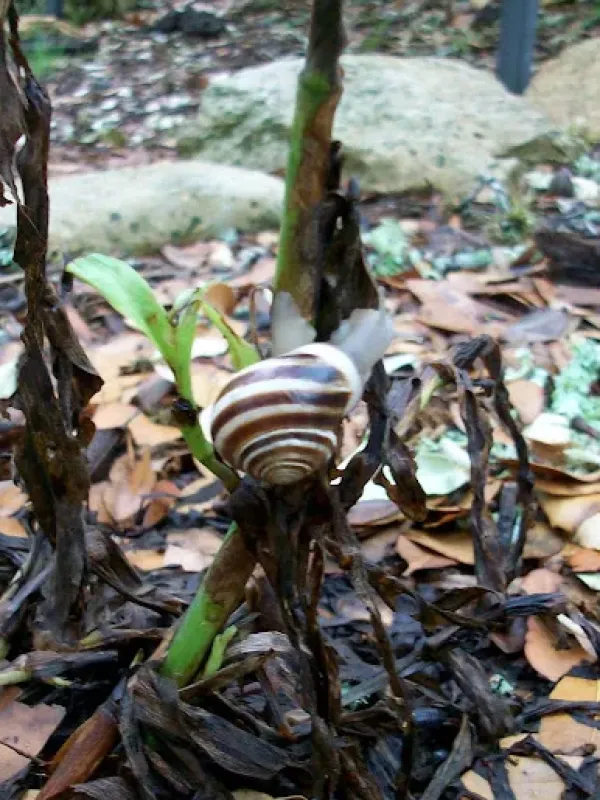
Description
How to identify
The milk snail, Otala lactea, belongs to the family Helicidae, order Stylommatophora. It is a terrestrial gastropod mollusk often found in warm and temperate climates.
Its shell is relatively thick, round, and slightly flattened, typically measuring between 25 and 35 millimeters in diameter, with a distinct cream color and dark brown spiral bands.
The body of the snail is soft and produces a protective mucus layer that helps maintain moisture levels during periods of environmental stress, allowing for survival in arid conditions.
A key biological trait of this species is its ability to aestivate, where it remains dormant for long periods during hot, dry weather by attaching to substrates with an epiphragm.
Because of this high adaptability, the milk snail can establish itself in various environments, including agricultural fields, parks, and home gardens, becoming a nuisance for growers.
What it damages
The milk snail is a polyphagous pest, meaning it consumes a wide variety of plants. This versatility makes it a major threat to commercial crops and horticultural settings.
Vegetables such as lettuce, cabbage, tomatoes, and beans are particularly susceptible. The snails feed on seedlings and mature leaves, often causing severe defoliation.
Besides immediate foliage loss, these snails can damage fruit and flower buds, significantly reducing the market value and yield potential of the harvested produce.
Feeding wounds created by the snails serve as entry points for pathogens, potentially leading to bacterial or fungal infections that further degrade plant health.
- Leafy greens and vegetables
- Ornamental garden flowers
- Young tree shoots and vines
When it appears
Activity levels of Otala lactea are strictly regulated by humidity and temperature. They are most active during the cooler, rainy seasons of spring and autumn.
During summer heat or drought, the snails enter aestivation, hiding under mulch, debris, or buried deep within the soil profile until favorable conditions return.
The reproductive cycle is synchronized with rainfall; snails lay eggs in damp soil, ensuring that the moisture is sufficient for the development and hatching of the offspring.
Young snails are highly voracious and begin feeding immediately upon emergence, often coinciding with the early growing stages of many agricultural crops.
These mollusks are nocturnal, preferring to forage at night or during overcast, rainy days, which often makes them difficult to detect during standard daytime inspections.
Signs of infestation
Signs of infestation include irregular holes in foliage, often appearing on the edges of leaves, and in severe cases, the entire leaf blade may be consumed.
Silver-colored, dried slime trails left on leaves, stems, and soil surfaces are unmistakable indicators that snails have been present in the area recently.
Presence of adult snails in shaded, cool spots during the day, such as under logs, planters, or within the base of dense foliage, confirms their existence on the site.
Evidence of fecal matter near the feeding sites is another common sign that allows growers to estimate the density and activity level of the snail population.
Stunted plant growth and missing seedlings in a garden bed without signs of insect pests usually point to night-time grazing by gastropods like the milk snail.
Control measures
Effective management of the milk snail requires an integrated approach that focuses on habitat modification and the use of targeted molluscicides.
Cultural control involves removing debris and dense vegetation where snails hide during the day, which helps keep population levels under control throughout the growing season.
Mechanical barriers, including copper tape or grit barriers around susceptible crops, can deter snails from reaching plants, acting as a non-toxic defense mechanism.
Chemical control options include baits formulated with iron phosphate or metaldehyde, which are highly effective when applied in the evening near suspected nesting areas.
By combining sanitation, physical barriers, and baiting, farmers can effectively protect their crops from significant milk snail damage throughout the year.
Taxonomy
- Latin name
- Otala lactea
- Order
- Molluscs
- Family
- Helicidae
- EPPO code
- OTALLA
Discussion
No discussions yet — be the first.