

Pest · Orthoptera (locusts) · affects Vegetables, Fruit crops, Fodder beet
Especially harmful
Bush crickets
Tettigoniidae
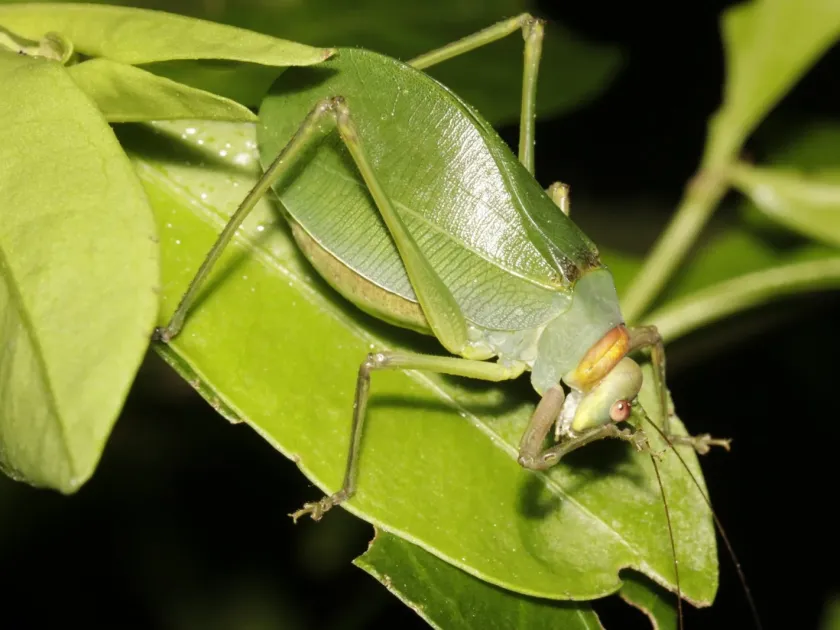
Description
How to identify
Bush crickets (family Tettigoniidae) belong to the order Orthoptera. They are distinguished by their long, thread-like antennae that often exceed the length of their own bodies.
Adult crickets are usually green or brown, which serves as effective camouflage among foliage, making them difficult to spot during the daytime.
They possess powerful hind legs designed for jumping, which allows them to move quickly between plants to forage or escape predators.
Females are equipped with a prominent sword-shaped ovipositor, which they use to deposit eggs into the soil or plant tissues.
Unlike grasshoppers, bush crickets are nocturnal or crepuscular, meaning they are most active and audible through their stridulation during evening hours.
What it damages
Bush crickets are omnivorous insects, but they can become significant agricultural pests when their population density increases rapidly in crop fields.
They cause substantial damage to young vegetable seedlings, cereal crops, legumes, as well as vineyards and fruit trees in commercial nurseries.
By consuming leaves, buds, flowers, and immature fruits, they significantly reduce the quality and marketable yield of various agricultural products.
In cases of heavy infestation, they can gnaw on the bark of young saplings, which may lead to plant stress, disease susceptibility, or even death.
Their feeding activity often creates wounds in plant tissue, which can serve as entry points for secondary fungal and bacterial infections.
When it appears
The life cycle begins with eggs overwintering in the upper layers of soil or within plant debris, which provides protection from harsh winter temperatures.
Nymphs emerge in the spring once soil temperatures reach the threshold required to trigger development and the availability of fresh forage.
Throughout the summer, nymphs undergo multiple molts, increasing in size and feeding voraciously on the available green vegetation.
Adults appear in mid-summer and remain active until the onset of autumn frosts, causing the most severe damage during the peak of the growing season.
Hot and dry summers often accelerate the developmental stages of bush crickets, frequently leading to localized outbreaks that require immediate intervention.
Signs of infestation
Typical signs of infestation include large, irregular holes in leaves where the tissue has been chewed away, often leaving only the primary veins intact.
The presence of loud stridulation (chirping) in the evenings is a primary indicator of a high population density that warrants closer crop inspection.
Discovery of dark, small granular frass (excrement) on the leaves or on the soil surface confirms that insects are actively feeding in the area.
Damage to the reproductive parts of plants, such as flower buds and developing fruits, is a clear indicator that the population is expanding.
Visible scarring or stripped bark on young twigs and shoots indicates that crickets are seeking nutrients beyond basic foliage consumption.
Control measures
Cultural control involves deep plowing or soil cultivation in late autumn to destroy egg pods buried in the topsoil, reducing the following season's population.
Maintaining clear field margins by removing weeds and tall grasses is essential, as these areas provide ideal breeding and hiding spots for crickets.
Biological control methods, including the use of entomopathogenic fungi or bacteria, are effective tools for managing populations without harming beneficial species.
If economic damage thresholds are exceeded, targeted applications of approved insecticides may be necessary to protect high-value crops from mass damage.
Encouraging biodiversity by providing habitats for natural predators like insectivorous birds, ground beetles, and lizards helps maintain natural population balance.
Reference
Connections · Bush crickets
Most often together:
Marketplace
Products · 1
Biology
Taxonomy
- Latin name
- Tettigoniidae
- Order
- Orthoptera (locusts)
- Family
- Tettigoniidae
- EPPO code
- 1TETTF
Community
Discussion
No discussions yet — be the first.