
Anabrus longipes
Anabrus longipes
Description
How to identify
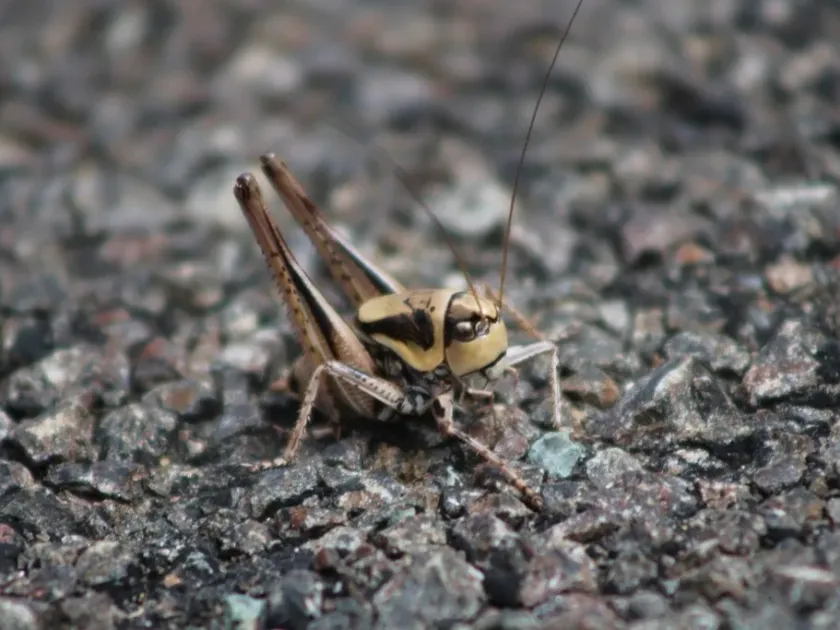
Anabrus longipes is a species of insect belonging to the order Orthoptera and the family Tettigoniidae, commonly known as bush crickets. It is a large insect with a robust appearance, well-adapted to life in agricultural and arid environments.
The adult insect features powerful hind legs, which enable it to move efficiently across soil surfaces and vegetation. Its wings are poorly developed, which limits its ability to fly and makes the pest primarily a ground-dwelling threat.
The coloration of this species varies from olive to dark brown, allowing it to blend seamlessly into dry grasses and crop residues. Females are equipped with a long, sword-like ovipositor used for laying eggs deep into the soil.
Biology of this species is closely linked to environments with significant temperature fluctuations. They are highly resilient and capable of thriving in areas where other species might struggle due to drought conditions.
The lifecycle includes the egg, nymph, and adult stages. The insect overwinters exclusively as an egg within the soil, and mass hatching of nymphs occurs in the spring as the soil warms up.
What it damages
This species is a generalist feeder capable of damaging a wide variety of cultivated crops. It feeds on both weeds and essential agricultural plants, posing a threat to various stages of plant development.
Cereal crops like wheat and barley are particularly vulnerable. The pests often consume seedlings, chew on stems, and can even destroy developing grain heads, leading to significant yield losses in affected fields.
Forage crops, such as alfalfa and clover, are also frequently attacked. Feeding by large populations of these insects significantly reduces the quality and quantity of forage available for livestock production.
In garden settings, this pest can devastate vegetable crops. Young plants are especially susceptible, with damage often manifesting as shredded leaves or completely consumed stems during the early growth stages.
The damage pattern is characterized by rough consumption of tissue, often leaving only the main veins of leaves or bare stalks. This feeding behavior stunts plant growth and, in severe cases, leads to total plant mortality.
When it appears
The season of activity begins in the early spring, coinciding with the warming of the ground, which triggers the hatching of nymphs. Early spring feeding is critical for the development of the first nymphal instars.
Peak damage usually occurs during the late spring and early summer months as the nymphs reach their mature stages. During this period, the appetite of the insects is at its highest, leading to rapid defoliation of crops.
Adult insects engage in mating and egg-laying activities in the mid-to-late summer. This is when the foundation for the next year's population is laid as females deposit eggs into the soil.
There is typically only one generation per year, making the seasonal window of activity quite predictable for farmers. This allows for scheduled monitoring and timely intervention during the crucial growth stages.
By autumn, the activity levels drop as the weather cools, and the adults perish. The eggs remain dormant in the soil throughout the winter, providing a safe harbor against cold weather until the next spring.
Signs of infestation
The most obvious sign of infestation is the appearance of shredded leaves with ragged edges on the crops. If plants show signs of rapid foliage loss, it is often a sign of high pest activity.
During the evenings, one can often hear the distinct sound produced by the males. This acoustic activity is a strong indicator of a high population density in the vicinity of the field.
The presence of insect frass, which appears as dark granular droppings, is a tell-tale sign of active feeding sites. These droppings are typically found on the ground directly beneath the damaged plant parts.
Large bare patches in a field, where young crops have been consumed almost entirely, are a clear indicator of an established colony of this pest. These spots often start at the field edges and spread inward.
Visible movement of large insects across the ground during the day, especially during hot weather, indicates that the population has reached levels that require immediate management actions.
Control measures
Effective management requires an integrated approach. Deep plowing of the fields in the autumn is one of the most effective mechanical methods to expose and destroy eggs buried in the topsoil.
Maintaining clean field margins by removing weeds reduces the available shelter and secondary food sources for the pests, effectively discouraging them from settling near valuable crop areas.
Insecticide applications should be reserved for periods of high infestation where there is a risk of economic loss. Treating the field perimeter often provides a sufficient barrier against migrating nymphs.
- Constructing physical barriers or trenches to block the migration of nymphs into fields.
- Utilizing biological control agents, such as entomopathogenic fungi, where applicable.
- Implementing early harvesting practices to minimize the duration crops are exposed to the pests.
Regular monitoring is essential throughout the growing season. By identifying clusters early, farmers can utilize spot treatments rather than broad-spectrum spraying, preserving beneficial insects in the ecosystem.
Taxonomy
- Latin name
- Anabrus longipes
- Order
- Orthoptera (locusts)
- Family
- Tettigoniidae
- EPPO code
- ANABLO
Discussion
No discussions yet — be the first.