
Antaxius
Antaxius
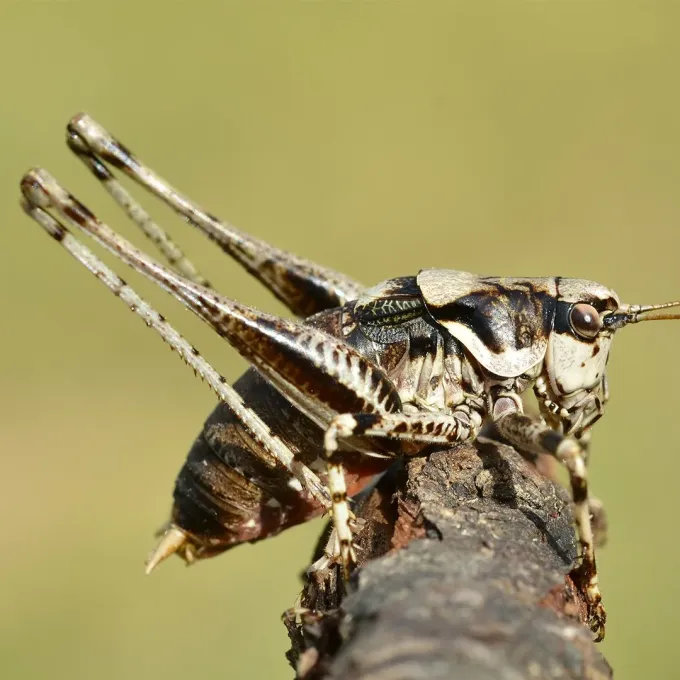
Description
How to identify
Antaxius is a genus of bush-crickets belonging to the family Tettigoniidae (order Orthoptera). These insects are medium-sized and possess the classic body shape of bush-crickets, including powerful hind legs for jumping.
Adults typically feature brown, greenish, or mottled camouflage coloration that blends in perfectly with vegetation. Females are easily identified by their long, sword-like ovipositors, which they use to insert eggs into plant tissues or soil.
They are equipped with robust chewing mouthparts designed for feeding on various plant parts, although they are generally omnivorous. Their antennae are thread-like and often longer than the entire length of their bodies.
Unlike locusts, these insects are solitary and do not form large swarms. They are predominantly nocturnal or crepuscular, often hiding deep within dense foliage during the hottest parts of the day.
Specific identification of species within this genus requires a detailed examination of the male cerci and subgenital plate morphology. In agricultural settings, they are found sporadically, preferring areas with high humidity and vegetation cover.
What it damages
Antaxius species are polyphagous, meaning they consume a wide range of crops. They pose a significant threat to cereal crops, vegetables, and ornamental plants, particularly during dry seasons when natural forage is scarce.
The insects damage plants by feeding on leaves, buds, and flowers, which significantly reduces the photosynthetic capacity of the plant. High populations can cause structural damage to young stems, resulting in stunted growth.
Feeding on reproductive structures, such as developing ears of corn or flower heads, is especially detrimental, as it leads to direct yield losses. In fruit orchards, they may scrape the skin of fruits, creating entry points for secondary infections.
Given their diverse diet, these insects easily move from field edges into crops. This behavior makes them opportunistic pests that can cause localized but severe economic damage in small-scale agriculture.
While mass outbreaks are rare compared to other Orthoptera, their continuous feeding activity weakens the overall physiological status of the plants, leaving them susceptible to environmental stress and diseases.
When it appears
The lifecycle of Antaxius follows a typical pattern for temperate bush-crickets: egg, nymph, and adult. Eggs are usually laid in the soil or within plant debris in late summer or autumn and serve as the overwintering stage.
Nymphs emerge in the spring once soil temperatures reach a critical threshold. The nymphal development involves several molting stages, with the insects becoming increasingly voracious as they grow in size.
The peak of adult activity is typically observed during the second half of summer, particularly in July and August. During this period, the adults engage in intense feeding and reproductive behavior.
Adults persist until early autumn, at which point mating occurs. The females then focus on finding suitable oviposition sites to ensure the survival of the next generation through the winter months.
Environmental factors, especially soil moisture and temperature during early spring, are the primary drivers of egg hatching success and subsequent population density for the growing season.
Signs of infestation
The most common sign of infestation is irregular, ragged-edged damage on leaf margins, which is characteristic of the mandibles of bush-crickets. Unlike the smooth cuts of some caterpillars, these edges often appear rough.
Direct observation is possible during evening surveys, as the insects are most active at night. Their presence is also indicated by dark, pellet-like frass (excrement) found on leaves or near the base of plants.
Damage to developing fruits or vegetables often appears as surface scarring or deep pits. Significant injury to floral parts often results in premature abscission or malformation of the crop.
The persistent, rhythmic chirping (stridulation) of males during the evening hours serves as a strong acoustic indicator that an Antaxius population is present in the vicinity.
- Ragged leaf margins due to chewing.
- Destroyed flower buds and reproductive parts.
- Presence of insect droppings on plant surfaces.
- Audible stridulation (chirping) in the evenings.
- Physical damage or scarring on ripening fruits.
Control measures
Effective management begins with cultural practices, such as maintaining clean field borders and removing dense weed vegetation that provides shelter and breeding grounds for these insects.
Deep autumn tillage is a highly recommended practice, as it disrupts the soil, killing eggs and exposing them to predators or harsh weather conditions, significantly reducing the following year's population.
If population thresholds are exceeded, targeted application of insecticides may be necessary. It is critical to apply these during the early nymphal stages, as younger insects are more susceptible to chemical treatments.
Biological control relies on preserving natural predators such as birds, small insectivorous mammals, and predatory beetles. Maintaining diverse landscapes can help keep populations below economically damaging levels.
Implementing a proper crop rotation strategy and ensuring optimal plant nutrition can help crops recover faster from minor herbivore damage, mitigating the overall economic impact.
Taxonomy
- Latin name
- Antaxius
- Order
- Orthoptera (locusts)
- Family
- Tettigoniidae
- EPPO code
- ANXISP
Discussion
No discussions yet — be the first.