
Antaxius pedestris
Antaxius pedestris
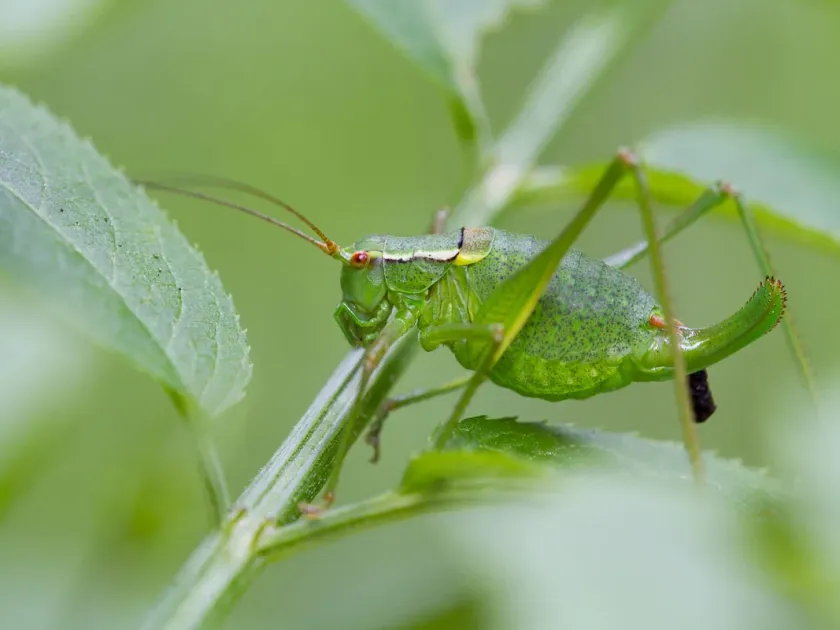
Description
How to identify
Antaxius pedestris is a species of bush cricket belonging to the family Tettigoniidae, order Orthoptera. This insect is characterized by a medium-sized body typical of its family, yet it displays significantly reduced wings, rendering it incapable of active flight.
The coloration of this pest usually ranges from brown to grayish-green, allowing for effective camouflage against dried vegetation and soil. Females possess a distinctive saber-shaped ovipositor, which is used to deposit eggs into plant tissues or the soil substrate.
The head is relatively large and features powerful chewing mouthparts, enabling the insect to feed on both soft foliage and tougher plant structures. Its hind legs are strongly developed and adapted for jumping, which often complicates its detection during field inspections.
These insects generally lead a secretive life, becoming most active during twilight and nighttime. Adults typically prefer staying in the lower layers of the plant canopy, where humidity is higher and the risk of being spotted by predators is significantly lower.
To accurately identify the species, one should pay attention to the specific stridulation (chirping) of males, which serves as their primary mating call. Field scouting should ideally be conducted during early morning hours when the insects are less mobile.
What it damages
This pest is a polyphage capable of inflicting significant damage on a wide variety of agricultural crops. The most affected types include cereal grains, legumes, and various technical crops grown in open field conditions.
Both adults and nymphs cause damage to the aerial parts of plants by gnawing holes in leaves and stems. Under high population density, they can completely destroy the leaf blade, leaving only the primary veins behind.
The pest poses the greatest threat during the reproductive phase of plant development. Damage to flower buds, ovaries, and young grains leads to a direct reduction in yields and a significant decrease in the quality of marketable produce.
In addition to physical destruction, the feeding sites become vulnerable to secondary infections by various pathogens. Fungal spores and bacteria can easily penetrate the damaged tissues, potentially leading to widespread disease in the crop.
In perennial grass fields, these bush crickets can drastically reduce green biomass. Sustained mechanical feeding stress results in stunted growth and weakened plant immunity, impacting the overall vitality of the crop for the next season.
When it appears
The life cycle of the species is strictly linked to temperature regimes and environmental humidity. Overwintering typically occurs at the egg stage, as females deposit their eggs in late summer within the top layer of soil or plant debris.
Nymphs emerge in the spring once average daily temperatures reach optimal thresholds for development. Throughout the growing season, they pass through several instars, progressively increasing their size and feeding intensity.
Mass appearance of adults is observed in mid-summer, coinciding with the peak of their feeding activity. During this time, they are highly mobile, aggressively feeding and mating to ensure the survival of the next generation.
The longevity of the adult stage depends largely on regional weather conditions. A prolonged and warm autumn facilitates an extended period of activity for the insects, increasing the duration of their negative impact on late-harvested crops.
Generally, there is one generation per year. However, the high resilience of eggs in the soil ensures that the population can persist successfully even after unfavorable conditions during the previous year.
Signs of infestation
The primary sign of infestation is the appearance of ragged leaf edges, typical of orthopteran feeding. Unlike caterpillars, these bush crickets often leave large, asymmetrical holes in the center of the leaf blades.
The presence of significant amounts of frass (excrement) in the root zone or on leaf surfaces is another clear indicator of active feeding. These pellets accumulate in areas where the pest density is highest.
At dusk, the characteristic stridulation of males serves as a signal of their presence in the field. High sound density is a strong indicator of an increasing population, necessitating prompt field assessments.
During daylight inspections, one may notice mechanical damage to stems, which, when combined with strong winds, can lead to crop lodging. This is particularly noticeable in young cereal stands.
Due to the cryptic lifestyle of the adults, visual signs might be difficult to spot early in the season. It is recommended to use sweep-net sampling to monitor the density of the pest per square meter.
Control measures
The protection strategy should be based on preventative agrotechnical methods aimed at creating unfavorable conditions for the pest. Deep plowing of the soil immediately after harvest is a critical management practice.
Mechanical cultivation of the soil helps destroy a large portion of the overwintering eggs by disrupting their development cycle. Eliminating weeds along field margins also reduces the reservoirs from which the pest spreads.
When the economic threshold is exceeded, the application of contact-stomach insecticides becomes necessary. Effective products include those from the pyrethroid and organophosphate groups, provided they are applied according to safety regulations.
During periods of mass outbreaks, edge treatments are advisable to prevent the migration of insects into the center of the fields. This approach helps minimize the overall pesticide load on the primary crop area.
Biological control methods involve preserving natural predators, such as insectivorous birds and beneficial predatory insects. Maintaining an ecological balance within the agrolandscape is key to keeping pest numbers below the economic damage threshold.
Taxonomy
- Latin name
- Antaxius pedestris
- Order
- Orthoptera (locusts)
- Family
- Tettigoniidae
- EPPO code
- ANXIPE
Discussion
No discussions yet — be the first.