

Pest · Lepidoptera (butterflies) · affects European plum, Wild cabbage, Grapevine
Fall webworm
Hyphantria
Description
How to identify
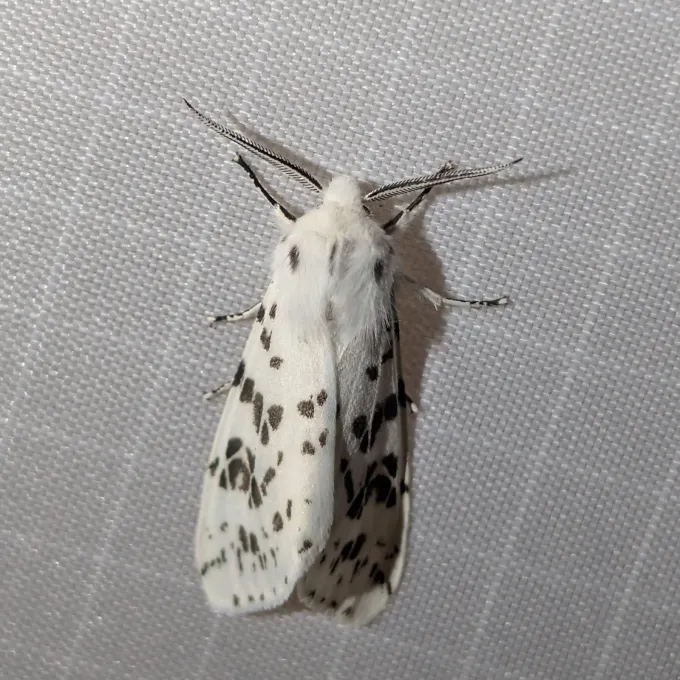
The fall webworm (Hyphantria cunea) is a moth species belonging to the Erebidae family. Adult moths typically have pure white wings, sometimes featuring small black or orange spots.
Their bodies are covered in thick white hair. The antennae of males are serrated or feathery, while those of females are simple and thread-like, allowing for gender identification.
Females deposit their eggs in large clusters on the underside of leaves, covering them with white, hair-like scales shed from their own bodies for protection.
The larvae, or caterpillars, go through several instars. Younger larvae are pale yellow, eventually turning into darker, hairy caterpillars with distinctive black or orange tubercles along their backs.
Pupae are deep brown and reside within loose, silk-like cocoons often hidden in tree bark crevices, leaf litter, or just below the soil surface for overwintering.
What it damages
This pest is highly polyphagous, attacking over 250 species of broad-leaved trees and shrubs. Common hosts include fruit trees like apple, cherry, and pear, as well as shade trees like maple.
The caterpillars feed gregariously within their webs, initially skeletonizing the leaves and eventually consuming entire leaf surfaces, leaving only the veins behind.
Severe infestations can lead to complete defoliation of the tree. This process stresses the plant, reducing its energy reserves, impairing fruit production, and lowering its cold hardiness.
Young trees are particularly vulnerable, as repeated defoliation by multiple generations in one season can lead to stunted growth or even the death of the sapling.
Beyond fruit production, the aesthetic value of ornamental plants is destroyed, as the webs and bare branches create an unattractive appearance in landscapes and urban gardens.
When it appears
Adult moths emerge in late spring or early summer, depending on regional temperatures, to begin the first of one or two generations per year.
The larvae of the first generation are active during early summer, feeding and growing until they pupate in the mid-summer period to emerge as the second generation.
The second generation, which typically occurs in late summer and early autumn, is often more numerous and can cause more extensive damage to the remaining foliage before winter.
Moths are nocturnal, meaning they are rarely seen by homeowners during the day. Their activity is mostly detected once the conspicuous web tents begin to appear in trees.
As temperatures decline in autumn, the final generation of larvae pupates and enters diapause, remaining in their protected cocoons throughout the winter months until spring.
Signs of infestation
The most recognizable sign of a fall webworm infestation is the large, messy, silken web tent constructed by the larvae at the tips of tree branches.
These tents start small but expand as the colony grows, encompassing larger portions of the branch and incorporating more foliage as the food supply is depleted.
The interior of the web becomes filled with brownish frass (caterpillar excrement) and skeletonized leaf fragments, making the tent easily identifiable from a distance.
Damage is characterized by the presence of bare branches inside the web, while the exterior edges of the foliage show clear evidence of tissue consumption.
After the leaves have fallen in autumn, the empty, greyish-white web tents often remain attached to the branches, serving as a reminder of the infestation site.
Control measures
For small trees, the most effective mechanical control is to prune and destroy the infested branches and webs immediately upon discovery to prevent further spread.
Biological control methods include applying insecticides containing Bacillus thuringiensis, which target caterpillars specifically without harming beneficial pollinating insects.
For larger infestations, chemical control using contact or systemic insecticides may be necessary. These are most effective when applied early in the caterpillar development stages.
Maintaining tree health through proper watering and fertilization can help the host plant recover from defoliation stress caused by the caterpillars during the active season.
- Monitor for early-season egg masses on leaves.
- Use pheromone traps to monitor adult moth activity.
- Clean away debris around the base of trees to reduce pupation sites.
Content graph
Connections · Fall webworm
Most often together:
Marketplace
Products · 6


Biology
Taxonomy
- Latin name
- Hyphantria
- Order
- Lepidoptera (butterflies)
- Family
- Erebidae
- EPPO code
- HYPHSP
Community
Discussion
No discussions yet — be the first.