
Achaea
Achaea
Description
How to identify
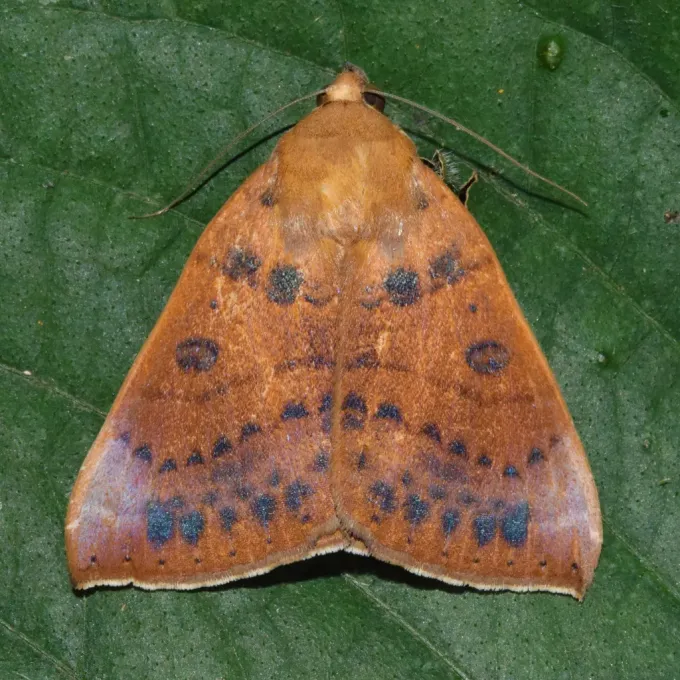
The genus Achaea belongs to the family Erebidae. These are moths with robust bodies and often intricate wing patterns that serve as camouflage against tree trunks or dead leaves during the day.
Adult moths typically have a wingspan ranging from 50 to 80 mm. They are nocturnal and highly active, with wings that often reveal distinct patterns or colors when in flight.
The larvae are typical caterpillars, which grow rapidly through several instars. They are often cryptically colored to blend in with the foliage or stems of their host plants.
Developmental stages include eggs, several larval stages (instars), a pupal stage usually occurring in the soil or protected leaf litter, and the winged adult moth.
The duration of the life cycle is highly dependent on environmental temperature, allowing for multiple generations per year in warmer climates.
What it damages
Achaea caterpillars are polyphagous pests, meaning they feed on a diverse range of botanical species including orchard trees, legumes, and several vegetable crops.
They are particularly known for causing significant defoliation in various agricultural systems, affecting the growth rate and overall vigor of the plants.
Damage is characterized by irregular chewing patterns on leaves. In severe infestations, the entire leaf blade may be consumed, leaving only the main veins.
Young caterpillars typically skeletonize leaves, whereas older, larger larvae consume large sections, causing immediate loss of photosynthetic capacity.
Beyond direct leaf consumption, feeding damage creates wounds that facilitate the entry of secondary pathogens, including fungi and bacteria.
Signs of infestation
The most prominent sign of an Achaea infestation is the rapid disappearance of leaf tissue and the presence of frass (caterpillar excrement) on the soil beneath the canopy.
Visual observation of the plants in the evening or night reveals the caterpillars feeding actively, as they tend to hide during the brightest hours of the day.
The presence of adults can be detected by using light traps, which effectively attract these moths during their nocturnal flight periods.
Stunted plant growth and significant leaf loss in localized patches are strong indicators that a larval population has established itself on the crop.
Frequent monitoring of the undersides of leaves for egg clusters is a proactive way to detect the start of a new generation before damage becomes severe.
Control measures
Biological control methods are highly recommended, specifically the use of formulations containing Bacillus thuringiensis, which target larvae without harming beneficial insects.
Mechanical control, such as soil cultivation around the base of trees, can disturb and destroy pupae, effectively reducing the emergence of the next moth generation.
Chemical applications should be timed carefully to coincide with the most vulnerable larval stages to maximize the effectiveness of the treatment.
Maintaining a clean field by removing alternative host weeds significantly reduces the availability of resources for the pest population.
Integrated Pest Management (IPM) practices, including the use of pheromone traps and biological predators, form the cornerstone of sustainable Achaea control.
Taxonomy
- Latin name
- Achaea
- Order
- Lepidoptera (butterflies)
- Family
- Erebidae
- EPPO code
- ACAESP
Discussion
No discussions yet — be the first.