
Black-lipped snail
Helix melanostoma
Description
How to identify
The black-lipped snail (Helix melanostoma) is a member of the Helicidae family, characterized by its distinct dark, almost black, color around the aperture of its shell. This morphological feature distinguishes it from many other common land snails.
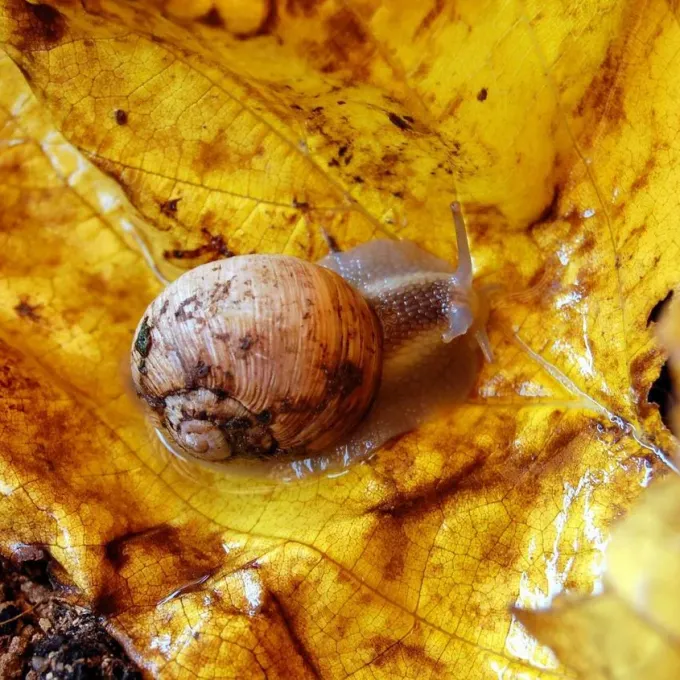
The shell is globular, consisting of 4 to 5 whorls, usually displaying a brownish or yellowish coloration with darker bands. An adult specimen typically measures between 3 and 4 centimeters in diameter, possessing a robust foot that enables it to climb and maneuver across various surfaces.
This species thrives in humid environments, preferring calcareous soils and areas with dense vegetation. It is highly adaptable, often colonizing gardens, vineyards, and coastal regions where it can find sufficient moisture and shelter from the elements.
The biological cycle is heavily influenced by humidity levels. During dry spells, these snails enter a state of aestivation, sealing their shells with an epiphragm to retain moisture and survive until favorable conditions return.
Reproduction involves the laying of eggs in moist soil. As hermaphrodites, they can reproduce efficiently, leading to rapid population growth under ideal environmental conditions. Their reproductive capacity makes them persistent pests in well-irrigated agricultural systems.
What it damages
This gastropod is a generalist feeder (polyphage), attacking a wide range of crops. It causes significant damage to leafy vegetables such as lettuce, cabbage, and spinach, as well as succulent crops like cucumbers, tomatoes, and eggplant.
Young fruit trees and nursery saplings are particularly vulnerable. The snails graze on tender buds, emerging leaves, and even the soft bark of young trees, which can severely stunt growth or kill the plant in extreme cases.
Vineyards face a specific threat, especially when the snail feeds on ripening grapes. The damage creates wounds on the berries, which subsequently become entry points for various fungal diseases like grey mold (Botrytis cinerea), severely reducing fruit quality.
Ornamental gardens are not spared, as the snail shows a preference for succulent flowers like hostas, lilies, and dahlias. Extensive feeding can ruin the aesthetic appeal of flower beds in just a few days of activity.
Beyond physical consumption, the damage includes the deposition of mucus trails on the plant surface. This mucus is not only unsightly but also contaminates the harvest, often making produce unmarketable due to hygiene and aesthetic standards.
When it appears
The activity period typically begins in early spring, once temperatures remain above 10-12°C and rainfall becomes frequent. This is when the snails emerge from their winter dormancy to feed and mate.
Peak damage generally occurs during the wet seasons—spring and early autumn. These periods provide optimal conditions for the snail's metabolic activity, allowing for sustained feeding and rapid population expansion.
During the peak of summer, if the weather is hot and dry, the snails enter aestivation. They seek refuge in cool, shaded areas, such as under heavy mulch, stones, or deep within dense ground cover, where they remain inactive to avoid dehydration.
In autumn, as cooler temperatures and rain return, a second peak of activity is often observed. The snails increase their feeding rates to build up energy reserves required for the upcoming winter hibernation period.
Winter is spent in deep dormancy. The snails burrow into the soil or find protected crevices where they are insulated from freezing temperatures, ensuring their survival to reappear during the following spring cycle.
Signs of infestation
The most prominent sign of an infestation is irregular, ragged-edged holes in the leaves. In cases of severe infestation, the snails may consume the entire leaf lamina, leaving only the primary veins behind.
Silver-colored, dried mucus trails on leaves, stems, and the surrounding soil are definitive indicators of snail activity. These trails are particularly noticeable during the early morning hours before they fade in the sunlight.
Finding the snails themselves under rocks, garden debris, or near the base of plants is a direct sign. In ornamental gardens, the sudden appearance of chewed-down seedlings overnight is a common symptom of a nighttime feeding attack.
Damaged fruit often shows distinct, small, circular excavations where the snail has rasped away the epidermis and flesh. On seedlings, entire plants may disappear or be reduced to small stumps near the soil level.
- Shimmering mucus trails on foliage and pathways.
- Ragged, irregular holes in leaves of vegetables and ornamentals.
- Deep grazing marks on fruit and soft vegetable skins.
- Presence of snails with dark-rimmed apertures under mulch or rocks.
- Young seedlings missing entirely near the soil surface.
Control measures
Cultural management is the primary line of defense. This includes regular weeding, clearing away garden debris, and removing piles of wood or stone that serve as daytime hiding spots for the snails.
Physical barriers can be highly effective for protecting high-value plants. Placing copper tape around containers, or spreading crushed eggshells or coarse gravel around seedlings, creates a tactile barrier that discourages the snails from crossing.
Chemical control may be necessary in severe infestations. Molluscicides containing metaldehyde can be used as baits placed in areas where snails congregate, though care must be taken to prevent contact with edible portions of crops.
Biological control involves maintaining a healthy ecosystem that supports natural predators such as hedgehogs, toads, frogs, and ground beetles. Avoiding broad-spectrum pesticides ensures these predators remain active in the garden.
Hand-picking remains the most effective and eco-friendly method for small gardens. Collecting snails by hand during the evening or early morning, or using trap boards (wet plywood or burlap) that provide enticing shelters for the snails, allows for easy manual disposal.
Taxonomy
- Latin name
- Helix melanostoma
- Order
- Molluscs
- Family
- Helicidae
- EPPO code
- HELXME
Discussion
No discussions yet — be the first.