
Helicigona lapicida
Helicigona lapicida
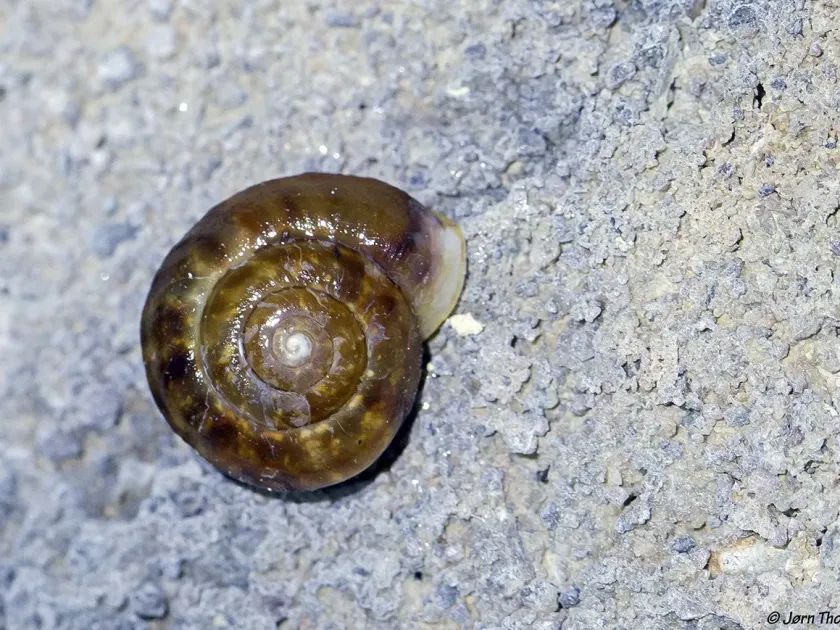
Description
How to identify
Helicigona lapicida, commonly known as the lapidary snail, belongs to the Gastropoda class and the Helicidae family. It is a terrestrial mollusk recognized by its distinctively flattened, lens-shaped shell, which typically measures between 12 and 20 mm in diameter.
The shell exhibits a brownish-grey color with darker markings, providing excellent camouflage against rocks, tree bark, and stone walls. Adult specimens are easily identified by the white, reflected lip of the shell opening.
The soft body of the snail is usually grey or brown. Unlike slugs, Helicigona lapicida retains its shell throughout its life cycle, which acts as a vital protective structure against desiccation and environmental hazards.
These snails thrive in humid, shaded environments, including limestone outcrops, rocky slopes, old stone walls, and neglected garden areas with substantial decaying organic matter or debris.
In agricultural settings, populations often congregate near building foundations, woodpiles, or rock gardens, utilizing these features as refuges to avoid heat and predation during the day.
What it damages
As a generalist herbivore (polyphage), this snail feeds on a wide variety of plant materials. In gardens, they can cause significant damage to ornamental shrubs, young vegetable seedlings, cabbage, lettuce, and legumes.
They pose the greatest risk to young seedlings, as they often consume the terminal buds or delicate cotyledons, which can lead to the total failure of the plant at the very beginning of the growing season.
In addition to leafy greens, these snails may feed on low-hanging fruits, such as strawberries, reducing crop yield and quality by leaving unsightly lesions that often become points of entry for rot-causing fungi.
On ornamental plants, damage presents as irregular holes or skeletonized leaves, where the soft tissue between the veins is consumed, which impairs the plant's ability to photosynthesize and survive.
The overall impact on crop production is most pronounced in seasons with high humidity, as these conditions favor rapid population growth and increased feeding activity by the snails.
When it appears
The life cycle and activity of Helicigona lapicida are deeply tied to moisture levels. They are most active during the spring and summer months, especially following periods of rain when the humidity allows for easier movement.
As hermaphroditic organisms, they are highly capable of reproduction even in small populations. Eggs are typically laid in moist soil or damp leaf litter, which provides the necessary hydration for the offspring to develop.
During hot, dry periods, the snails enter a state of estivation (a form of dormancy). They retreat into crevices or under bark and seal the shell aperture with a mucus layer to prevent water loss.
These snails are primarily nocturnal. During the day, they remain hidden in dark, cool, and moist areas, making them difficult to spot during routine garden inspections and requiring diligent searching to find them.
They overwinter in sheltered locations such as compost piles, deep soil cracks, or under piles of debris, which provide a stable microclimate to protect them from freezing winter temperatures.
Signs of infestation
The most obvious sign of an infestation is the presence of silvery, dried mucus trails on leaves, stems, or soil surfaces, indicating where the snails have traveled during their nightly feeding.
Plant leaves often display irregular holes or "lacy" patterns, as the snails feed on the soft leaf tissue while leaving the tougher veins intact, resulting in a distinct visual damage pattern.
Finding the snails themselves under rocks, boards, plant pots, or garden debris confirms their presence, especially if you search these areas during the day or early morning.
Affected fruits or berries will often show deep, crater-like cavities. These damaged areas often darken and begin to decay shortly after, as the broken tissue is prone to secondary microbial infections.
- Silvery, dried mucus trails on surfaces.
- Holes or skeletonized patterns on plant leaves.
- Presence of snail shells under garden debris.
- Damaged growing points on vegetable seedlings.
Control measures
The most effective management approach is to eliminate potential habitats. Gardeners should prioritize clearing away excess debris, such as piles of wood, stones, or decaying vegetation, that provide the damp shelters the snails prefer.
Physical barriers can be highly successful in protecting vulnerable plants. Creating strips of crushed eggshells, coarse gravel, or lime around vegetable beds can deter snails, as they are sensitive to dry or abrasive surfaces.
Manual collection during the evening or immediately after rain is an effective control measure for smaller areas. Collected snails should be disposed of humanely or removed from the garden area.
Promoting a healthy garden ecosystem by encouraging natural predators, such as frogs, toads, beetles, and ground-feeding birds, can help keep the snail population under natural control.
In cases of significant infestation, gardeners may use iron phosphate-based molluscicides. These are generally considered safer for pets and wildlife compared to older chemical alternatives like metaldehyde.
Taxonomy
- Latin name
- Helicigona lapicida
- Order
- Molluscs
- Family
- Helicidae
- EPPO code
- HLGNLA
Discussion
No discussions yet — be the first.