
Garden snail
Cryptomphalus aspersus
Description
How to identify
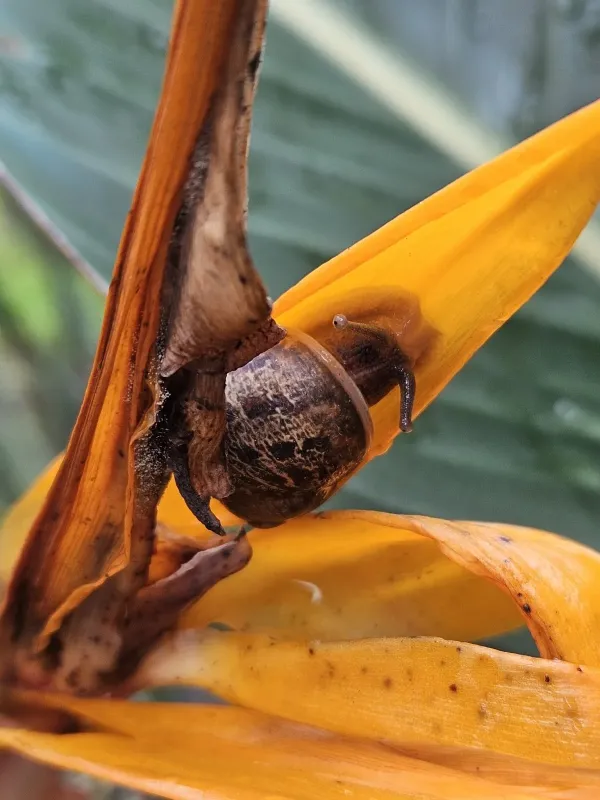
The garden snail (Cryptomphalus aspersus, formerly Helix aspersa) is a land-dwelling gastropod mollusk belonging to the Helicidae family. Its shell is globular, typically measuring 30–35 mm in diameter, with a brown color marked by darker stripes.
The snail's body is soft and covered in a layer of mucus, which is essential for movement and moisture retention. These creatures are hermaphroditic, allowing for rapid population growth under suitable environmental conditions.
Snails are most active in humid, shaded environments. They are sensitive to dehydration and seek refuge during dry or sunny periods to protect their delicate soft tissues.
The reproductive cycle involves laying clusters of white eggs into moist soil. These eggs hatch after several weeks, and the young snails begin feeding immediately, quickly maturing into adults.
They are well-adapted to garden environments, utilizing dense vegetation, piles of debris, or loose soil as shelter and breeding sites throughout the growing season.
What it damages
Garden snails are generalist herbivores, meaning they feed on a vast range of plant species. They cause severe damage to vegetables such as lettuce, cabbage, and spinach by consuming entire leaves.
Small fruits and berries, particularly strawberries, are highly susceptible to damage. Snails can hollow out the flesh of the fruit, leaving it unmarketable and prone to decay.
Ornamental plants are also targets, with hostas, marigolds, and dahlias often showing significant foliage damage due to the snails' nocturnal feeding habits.
In addition to foliage, snails can damage the bark of young tree saplings and stems of herbaceous plants, which can disrupt the plant's nutrient transport system.
- Vegetables (leafy greens, crucifers).
- Soft fruits (strawberries, raspberries).
- Ornamental flowers and hostas.
- Young tree bark and seedling sprouts.
When it appears
The activity level of garden snails is strongly linked to moisture availability. They become most active during spring and autumn, as well as during wet summer periods.
When the temperature ranges between 15°C and 25°C with high humidity, snails feed intensively. During hot or dry spells, they often enter a state of dormancy to prevent water loss.
Snails are primarily nocturnal animals, emerging from their hiding spots at dusk to forage and returning to shelters before the morning sun rises.
As temperatures drop in late autumn, snails seek wintering sites deep in the soil or under thick mulch layers, where they enter hibernation to survive the winter frost.
Their cycle is continuous throughout the warmer months, with overlapping generations often present, leading to a constant threat to sensitive garden plants.
Signs of infestation
The most recognizable sign of snail infestation is the presence of irregular, ragged holes in the leaves. In severe cases, only the main veins of the leaf remain.
Dried, silvery trails of dried mucus left on leaves, stems, and soil surfaces serve as a clear indicator that snails have been moving and feeding in the area.
Early morning inspections often reveal snails resting under the leaves of host plants or near the base of the plant stem, tucked away from direct light.
Fruit damage often appears as deep pits or cavities, which are frequently colonized by secondary pathogens like fungi or bacteria, leading to rapid rot.
Seedlings and young sprouts are particularly vulnerable, as a few snails can completely consume a small plant overnight, leaving no visible trace of the original crop.
Control measures
Cultural control involves keeping the garden tidy by removing weeds, wood piles, and plant debris where snails commonly hide during the day.
Physical barriers, such as copper tape, crushed eggshells, or coarse sand placed around the base of vulnerable plants, can deter snails from reaching the foliage.
Hand-picking snails at night or during damp mornings is highly effective for small-scale gardens and helps to keep the population under control.
Biological control methods encourage the presence of natural predators like ground beetles, frogs, toads, and birds, which naturally regulate snail populations.
Commercial molluscicides containing iron phosphate are safer alternatives to traditional baits, effectively targeting snails while minimizing harm to pets and wildlife when used correctly.
Taxonomy
- Latin name
- Cryptomphalus aspersus
- Order
- Molluscs
- Family
- Helicidae
- EPPO code
- HELXAS
Discussion
No discussions yet — be the first.