

Pest · Hemiptera (bugs, aphids, leafhoppers)
Melon aphid
Aphis gossypii
Description
How to identify
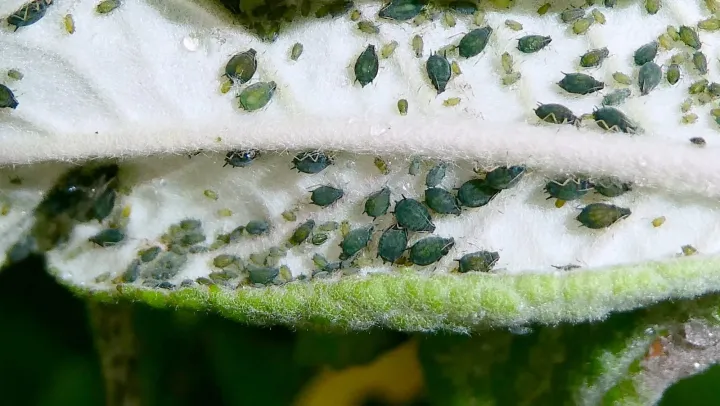
The melon aphid (Aphis gossypii) is a small sap-sucking insect belonging to the family Aphididae. Adults typically range from 1 to 2 mm in length and can vary in color from light yellow to dark green or black.
The life cycle of this species is remarkably fast, especially in warm climates where they can produce up to 20 generations per year. Both winged and wingless forms exist within the colony.
Winged females are responsible for dispersing the population to new host plants, often carrying plant viruses during their migratory flights between fields.
They overwinter as eggs on various weed hosts or in greenhouses, making the destruction of winter weeds a vital component of integrated pest management.
Melon aphids reproduce parthenogenetically, meaning females give birth to live nymphs without mating, allowing for explosive population growth in a very short time.
What it damages
This pest is a polyphagous insect that attacks a wide variety of plants including melons, cucumbers, watermelons, pumpkins, and squash.
It also causes significant economic damage to crops like cotton, okra, eggplant, peppers, and various ornamental plants in greenhouse settings.
By feeding on the phloem sap of young leaves and shoots, the aphids deplete the plant's resources, causing stunted growth and severe physiological stress.
The most dangerous aspect of their feeding is the transmission of systemic plant viruses, such as Cucumber Mosaic Virus (CMV), which can lead to total crop failure.
Furthermore, they excrete a sugary substance known as honeydew, which fosters the growth of sooty mold, blocking light and hindering photosynthesis.
Signs of infestation
The most common sign is the downward curling and deformation of young leaves, which often hide dense clusters of aphids on their undersides.
An increased presence of ants on the plants is a telltale sign of an aphid infestation, as ants protect the aphids to feed on their honeydew secretions.
Sticky, shiny patches on the upper surface of leaves, followed by black sooty patches, indicate that the colony has been active for some time.
Premature drop of blossoms and fruit set is frequently observed, as the plant loses too much vigor to support the development of reproductive parts.
The presence of white, discarded aphid skins (exuviae) on the leaves or soil surface confirms that the colony is actively molting and growing.
Control measures
Effective management begins with strict weed control, as many local weeds serve as year-round reservoirs for melon aphid populations.
Encouraging biological control agents, such as lady beetles, lacewings, and parasitic wasps, can keep aphid populations below economic injury levels.
In early stages, washing plants with water or mild insecticidal soaps can physically remove and kill the insects without harming beneficial species.
If chemical intervention is necessary, systemic insecticides should be used strategically to minimize harm to pollinators while ensuring effective control.
- Implement systematic monitoring using yellow sticky cards.
- Ensure proper irrigation to keep plants healthy and less susceptible to damage.
- Rotate crops to break the life cycle of the pest in the soil.
- Use reflective mulches to deter the landing of winged aphids.
Content graph
Connections · Melon aphid
Most often together:
Marketplace
Products · 4


Biology
Taxonomy
- Latin name
- Aphis gossypii
- Order
- Hemiptera (bugs, aphids, leafhoppers)
- Family
- Aphididae
- EPPO code
- APHIGO
Community
Discussion
No discussions yet — be the first.