
Description
How to identify
The stem nematode (genera Anguina and Ditylenchus) is a microscopic eelworm belonging to the order Tylenchida. These pests measure approximately 1 millimeter in length and are specialized in invading the internal tissues of higher plants.
Biologically, these nematodes are obligate parasites. They thrive in the film of moisture surrounding soil particles and plant surfaces, utilizing their stylets to puncture cell walls and extract cellular contents, which disrupts plant development.
Their life cycle is highly adaptive. When plants dry out or die, the nematodes can enter a state of cryptobiosis, in which they remain dormant for years until moisture triggers their reactivation and migration to a new host.
Reproduction is sexually driven, and a single generation can be completed in as little as three to four weeks under optimal conditions of moderate temperature and high humidity.
Dissemination is largely anthropogenic, caused by the movement of infested seeds, bulbs, and organic debris. Identifying the pest requires specialized laboratory extraction from tissue or soil samples.
What it damages
Stem nematodes affect a vast range of crops, most notably bulb vegetables (onions, garlic), tubers (potatoes), legumes, and various ornamental species including tulips, daffodils, and phlox.
Signs of infestation
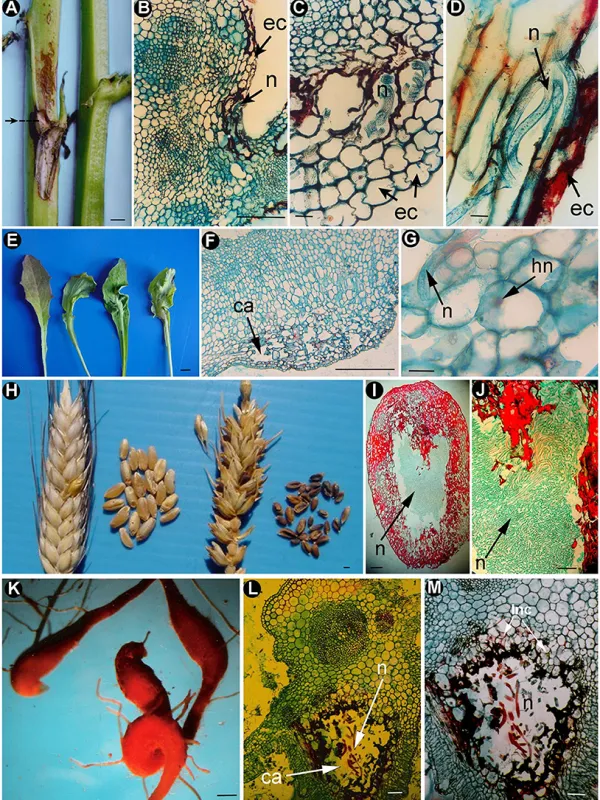
Typical symptoms include swelling of stems, dwarfing, and significant distortion of leaves. In advanced stages, the plant exhibits necrotic patches and overall stunting due to impaired nutrient transport.
On onion bulbs, the tissue becomes soft and spongy, often referred to as "bloat." The internal scales turn greyish-brown, and in late stages, the bulb may completely disintegrate during storage.
Potato tubers show external skin cracking and internal dry, brownish decay. The affected tissue lacks the characteristic structure of healthy plant cells, often appearing as a powdery or crumbly mass.
On strawberry plants, infestation leads to thickened, brittle petioles and malformed leaves, which significantly limits photosynthesis and leads to reduced fruit yield and plant vigor.
Control measures
Effective management includes the strict use of nematode-free certified seed and planting material. Long-term crop rotation with non-host plants is essential to starve the nematode population in the soil.
Chemical control via soil fumigation or the application of specialized nematicides is used in high-value horticultural systems. Additionally, hot-water treatments for bulbs can reduce initial inoculum levels.
Content graph
Connections · Stem nematode
Most often together:
Marketplace
Products · 1
Biology
Taxonomy
- Latin name
- Anguina
- Order
- Nematodes
- Family
- Anguinidae
- EPPO code
- ANGUSP
Community
Discussion
No discussions yet — be the first.