
Strawberry stem nematode
Afrina tumefaciens
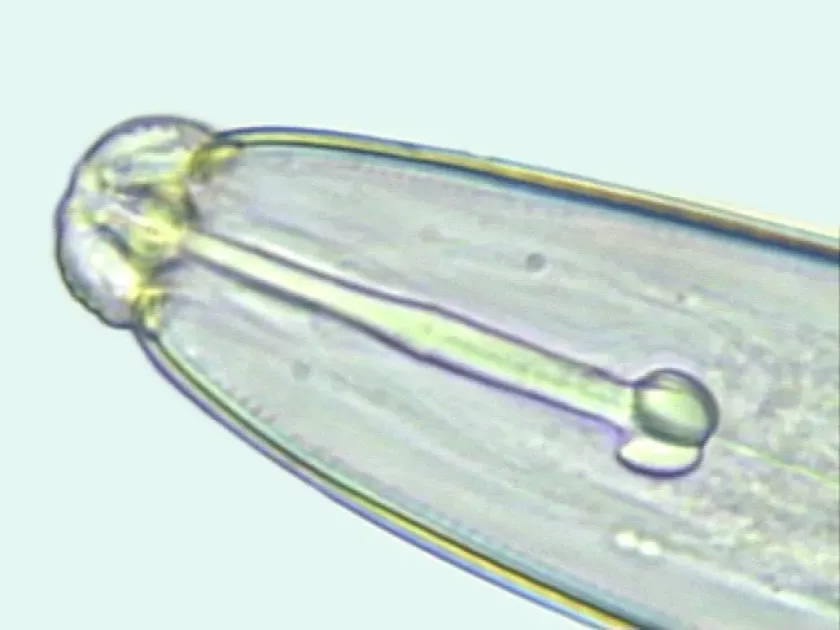
Description
How to identify
The strawberry stem nematode, scientifically known as Afrina tumefaciens, belongs to the order Tylenchida and the family Anguinidae. It is a microscopic roundworm that thrives within the stems and leaves of its host.
Visually identifying this pest is impossible without specialized laboratory equipment. Diagnosis usually involves processing plant tissue samples in a solution to extract the nematodes for microscopic examination.
The life cycle consists of the egg, four larval stages, and the adult stage. The survival and development of the nematode are heavily reliant on external environmental factors, particularly moisture levels in the plant tissue.
As an endoparasite, it penetrates the epidermis of the strawberry plant. It feeds by secreting enzymes that modify plant cells, leading to abnormal growth and tissue structure changes in the infected parts.
Transmission occurs primarily through the exchange of infested planting material. Because of their ability to survive in dormant stages within dry plant debris, they can persist on a site long after the removal of the original host plants.
What it damages
The primary host for Afrina tumefaciens is the cultivated strawberry (Fragaria x ananassa). The nematode targets the crown, petioles, runners, and flower stalks of the plant.
While strawberries are the main concern, these nematodes can also inhabit various weeds and nearby herbaceous plants, acting as a reservoir that keeps the pest population active within the agricultural environment.
Infected strawberry fields show patches of poor, stunted growth. Over time, the internal damage caused by the nematode disrupts the transport of water and nutrients, severely weakening the plant.
The economic impact is significant, often resulting in a substantial reduction in yield and fruit quality. If left unmanaged, a localized infestation can quickly spread to affect an entire strawberry plantation.
Damage to the plant tissue often acts as a precursor for secondary infections. Pathogenic fungi and bacteria frequently colonize the weakened tissues, leading to rot and further reducing the plant's chances of recovery.
Signs of infestation
The most common visible symptoms include the curling, thickening, and twisting of petioles. Affected leaves often appear crinkled or corrugated, significantly differing from the smooth texture of healthy leaves.
Flower stalks become distorted, short, and thickened. Often, these stalks split or fail to develop correctly, causing the flowers and fruits to wither or become stunted and misshapen.
General plant vigor declines as the infestation progresses. The overall size of the strawberry crown diminishes, and the plant may exhibit chlorotic (yellowish) patterns on the leaves.
Severe infestations can lead to the death of the main growing point. This triggers the emergence of multiple auxiliary buds, giving the plant a bushy or "witches' broom" appearance, which is often misidentified as a viral disease.
- Twisted and thickened petioles.
- Corrugated and distorted leaf blades.
- Stunted and malformed flower stalks.
- Overall loss of plant vigor.
- Bushy growth habit due to apex death.
Control measures
Prevention is the most effective management strategy. Always source strawberry planting stock from certified, nematode-free nurseries. Avoiding infected transplants is the single most important action a grower can take.
If an infestation is identified, remove and destroy all symptomatic plants immediately. It is essential to include the root zone and surrounding soil in the disposal process to eliminate the primary reservoir of the pest.
Implement a strict crop rotation schedule. Do not replant strawberries on the same plot for at least 4–5 years. During this interim, plant non-host cover crops to starve the remaining nematode population.
Chemical control options are limited due to the nematode's protected lifestyle inside the plant tissues. Integrated Pest Management (IPM) strategies, which prioritize prevention and sanitation, are far more effective than chemical treatments alone.
Hot water treatment is a specialized physical control method. Soaking dormant strawberry runners in water at 45–48°C for 10–15 minutes can effectively eliminate nematodes from the planting material, though it requires precise temperature control.
Taxonomy
- Latin name
- Afrina tumefaciens
- Order
- Nematodes
- Family
- Anguinidae
- EPPO code
- AFRNTU
Discussion
No discussions yet — be the first.