
Onion stem nematode
Afrina wevelli
Description
How to identify
The onion stem nematode (Afrina wevelli) is a microscopic worm belonging to the family Anguinidae, order Tylenchida. It is an obligate parasite that completes its life cycle primarily within plant tissues.
Adult nematodes are thread-like, measuring approximately 1–1.5 mm in length. Their translucent bodies make them invisible to the naked eye, necessitating microscopic examination for positive identification.
The nematode reproduces within the plant, where females deposit hundreds of eggs. Larvae develop through several stages, seeking fresh plant cells to feed upon as they grow.
In unfavorable environmental conditions, such as tissue dehydration, the nematode enters a state of diapause. In this state, it can remain viable in dry plant debris or stored bulbs for several years.
Spread of the pest occurs primarily through infested planting material, such as onion sets, seeds, or cloves, as well as soil movement on machinery and farm tools.
What it damages
Onion stem nematodes primarily affect Allium species, including common onion, garlic, leek, and shallot. The pest causes systemic damage throughout the entire growing season.
The nematode penetrates plant tissues via the basal plate or stomata, injecting enzymes that degrade cell walls, resulting in tissue deformation, softening, and subsequent decay.
Beyond direct damage, the nematode acts as a vector for secondary infections, including various bacterial soft rots and fungal pathogens, which further exacerbate the loss of plant vigor.
Severe infestations lead to massive yield losses, often ranging from 50% to 80%. Furthermore, infested bulbs show poor storability, often rotting completely during winter storage.
The pest can also survive in alternative hosts, such as weed species within the Amaryllidaceae family, which serve as reservoirs for future infestations on the site.
Signs of infestation
Early symptoms include stunted growth, twisted leaves, and noticeable thickening of the foliage. Infected seedlings often exhibit a pale, chlorotic appearance.
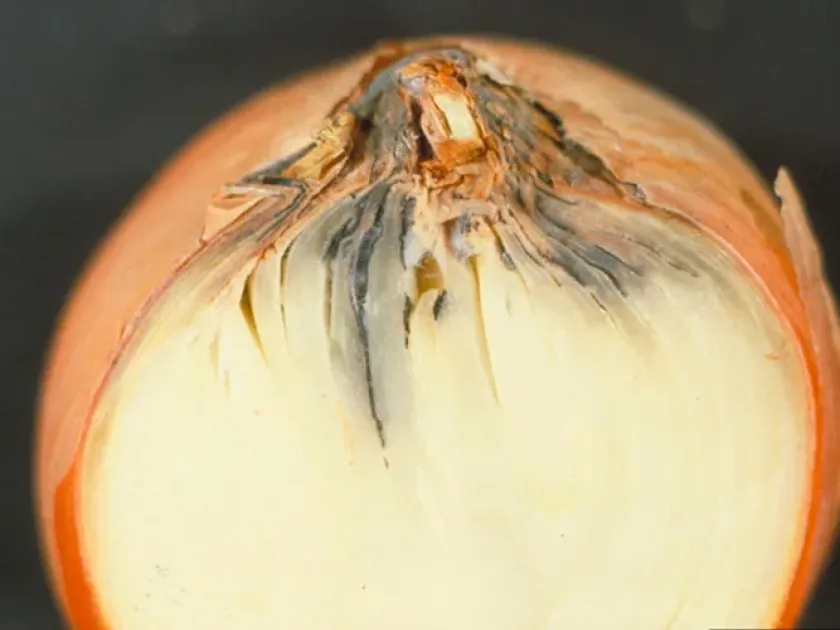
As the infection progresses, the basal plate becomes soft and spongy. The roots eventually wither and die, making it easy to pull the plant out of the soil.
When an infested bulb is cut open, one can observe the characteristic "mealy" or spongy texture of the scales, which separate easily from each other, often accompanied by dark, rotten patches.
In field conditions, heavily infested plants often collapse prematurely, yellowing and drying out long before the natural maturity of the crop.
- deformed and twisted leaves;
- spongy basal plate;
- separation of bulb scales;
- rotting odor;
- stunted growth and early wilting.
Control measures
The primary control strategy involves using healthy, certified planting material. Heat treatment of onion sets, specifically keeping them at 40-42°C for several hours, is effective in reducing nematode populations.
Strict crop rotation is essential. Allium crops should not be returned to the same area for at least 4 to 5 years to break the pest's life cycle in the soil.
Sanitation practices are vital, including the removal and destruction of all infested plants during the season to prevent the spread of the nematode to healthy areas.
Cultivating antagonistic crops, such as marigolds (Tagetes) or white mustard, as cover crops can help reduce nematode densities through the release of bio-active compounds in the soil.
Chemical control with nematicides is challenging due to the nematode's protected position within the plant tissues; therefore, integrated pest management is the most successful approach.
Taxonomy
- Latin name
- Afrina wevelli
- Order
- Nematodes
- Family
- Anguinidae
- EPPO code
- AFRNWE
Discussion
No discussions yet — be the first.