
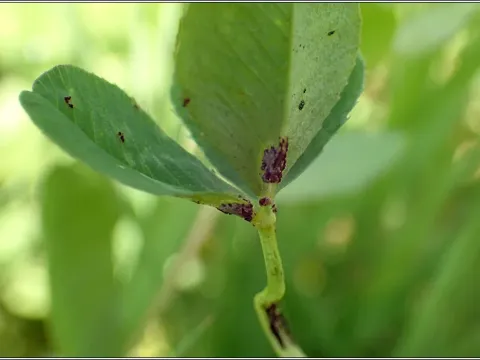
Clover rust
Uromyces trifolii-repentis
Clover rust is caused by the fungus Uromyces trifolii-repentis, which belongs to the order Pucciniales (Rust fungi). It is an obligate biotrophic parasite that requires living clover tissue to survive and reproduce.
What the section contains
Clover rust
The fungus develops its mycelium within the intercellular spaces of host plant tissues. It produces distinct reproductive structures called sori, which break through the epidermis to release masses of spores.
This pathogen specifically infects various species of the genus Trifolium. It is widely distributed across temperate regions worldwide, wherever clover is grown for forage or soil improvement.
The disease cycle involves several spore stages, including urediniospores (repeating stage) and teliospores (overwintering stage). The fungus can complete its entire life cycle on the same host plant.
Field identification is primarily based on the presence of orange-brown, powdery pustules on the undersides of leaves, which are symptomatic of a fungal rust infection.
The primary economic damage caused by clover rust is the reduction in forage quality and biomass yield. Severely infected leaves lose their nutritional value, making the crop less suitable for hay or silage.
Infection interferes with the plant's physiological processes, specifically photosynthesis and transpiration. As a result, the leaves become chlorotic, wither prematurely, and fall off, reducing the total harvestable mass.
Livestock may reject forage that is heavily infected with rust, leading to decreased feed intake and lower productivity in grazing systems. This is particularly problematic in intensive pasture management.
Seed production is also negatively impacted by the disease. Rust infection drains nutrients from the plant, leading to stunted seed development, lower seed weight, and reduced germination rates.
Furthermore, clover rust weakens the plants before the winter season. Stressed and weakened crops are more susceptible to winter-kill, which results in stand thinning and the subsequent invasion of weeds.
Clover rust development typically begins in late spring or early summer, following the onset of warmer weather. High humidity is a critical environmental factor for the successful infection process.
The pathogen thrives at temperatures between 15°C and 22°C. Frequent rainfall, morning dews, and high atmospheric humidity significantly accelerate the spread of urediniospores throughout the field.
The disease progress often peaks in mid-summer. During this time, multiple cycles of infection can occur in a single growing season if weather conditions remain conducive to fungal growth.
As the season progresses towards autumn, the fungus shifts from producing urediniospores to forming dark-colored teliospores, which are resistant structures designed for surviving the winter period.
Regrowth after the first hay cut is highly susceptible to rust, especially if the weather remains warm and humid. Rapid leaf development in the second cut often facilitates the fast spread of the fungus.
The initial signs of infection are the appearance of small, yellow aecial spots on the leaves. These quickly progress to the more conspicuous uredinial stage, characterized by rusty-brown pustules.
In the late stages of the season, the pustules turn dark brown or nearly black as teliospores develop. These structures represent the final stage of the fungus's lifecycle before winter dormancy.
Visible symptoms also include chlorosis, leaf curling, and the deformation of petioles. In extreme cases, the entire canopy may take on a brownish, withered appearance due to mass spore production.
- Presence of dusty, reddish-brown pustules on the leaf undersides.
- Yellowing (chlorosis) of leaflets and premature senescence.
- Reduced vigor and stunted plant growth.
- Formation of dark, blackish spore clusters as the season ends.
When examined closely, the rust spores can easily be rubbed off onto the fingers, indicating a high concentration of fungal inoculum present on the plant surface.
The most effective strategy for managing clover rust is the implementation of long-term crop rotation. Avoiding clover in the same field for at least 4 years significantly reduces soil inoculum levels.
Timely harvesting of the clover crop helps to remove the diseased biomass from the field before the rust spores spread extensively to new, healthy foliage or adjacent fields.
Breeding for genetic resistance is the most sustainable approach to controlling the disease. Selecting and cultivating resistant clover varieties helps mitigate the need for chemical intervention.
Maintaining optimal soil fertility, particularly through balanced phosphorus and potassium fertilization, helps plants maintain their natural vigor and improves their overall resistance to fungal pathogens.
In seed production fields, where disease pressure is high, the strategic application of fungicides may be necessary. It is crucial to follow local regulations and ensure proper timing to minimize economic losses.