
Clover yellow virus
Clover yellow
Description
How to identify
Clover yellow virus (CYV) is a significant plant pathogen belonging to the Potexvirus genus within the Alphaflexiviridae family. It is characterized by flexuous filamentous particles containing single-stranded RNA.
The virus acts as an obligate parasite, disrupting normal cellular functions and metabolic processes within the host plants. It can be transmitted through mechanical means, such as machinery, and via biotic vectors.
Scientific identification requires advanced techniques due to the viral nature of the pathogen. Diagnostics usually involve serological tests like ELISA or molecular approaches such as RT-PCR to detect the presence of specific viral sequences.
What it damages
The primary hosts of this virus are legumes, specifically clover (Trifolium spp.). However, the pathogen also impacts other crops, including alfalfa and various bean species, leading to substantial agricultural losses.
Infection results in reduced biomass production, which is particularly detrimental for forage-based agriculture. Furthermore, the longevity of the stand is significantly compromised, forcing farmers to perform premature reseeding.
When it appears
The life cycle of the virus is closely aligned with the growth cycle of perennial clover stands. Activity peaks during the spring and summer months when plants are actively growing and insect populations are high.
The virus survives the winter period within the root crowns and living tissues of the host plants. This reservoir ensures that the virus persists in the field year after year, posing a continuous threat to crop productivity.
Signs of infestation
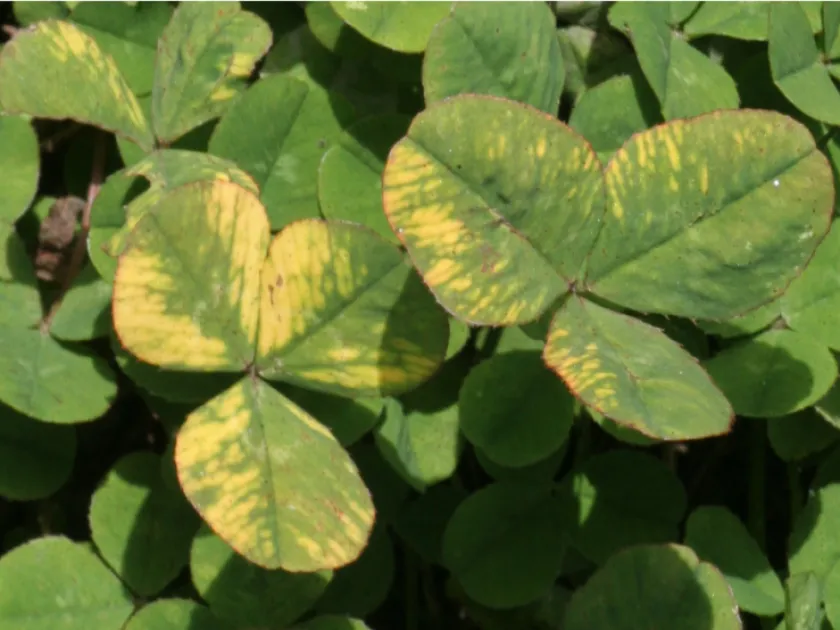
Symptoms typically manifest as yellowing (chlorosis) of the foliage, often appearing as distinct yellow patches or mottled patterns on leaves. Leaf curling and stunting of the entire plant are common outcomes.
Infected plants display reduced internode length, creating a bushy, stunted appearance. The overall vigor of the plant is diminished, leading to poor forage quality and reduced reproductive capacity during the flowering phase.
Control measures
Management focuses on preventive strategies, as curative treatments for viral infections in field crops are not viable. Using certified virus-free seeds and planting resistant or tolerant cultivars are the primary methods for disease mitigation.
Agricultural practices play a crucial role, including maintaining adequate spatial separation between newly planted crops and established, potentially infected fields. Crop rotation is also recommended to break the virus cycle.
Weed control is essential, as many common weeds serve as symptomless reservoirs for the virus. Additionally, managing insect vectors that facilitate the spread of the virus within and between fields is necessary to limit the extent of the outbreak.
Causes diseases · 1
Discussion
No discussions yet — be the first.