
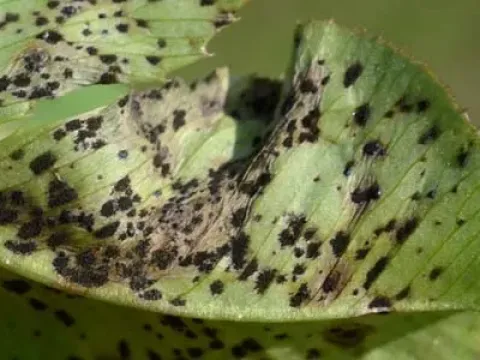
Clover leaf spot fungus
Polythrincium trifolii
Polythrincium trifolii is a specialized fungal pathogen responsible for the condition commonly known as clover leaf spot. It is classified within the Ascomycota division and is biologically linked to the teleomorph Cymadothea trifolii.
What the section contains
Clover leaf spot fungus
The fungus develops its mycelium internally within the host plant tissues, creating stromal structures beneath the leaf epidermis. These structures eventually rupture the surface to release conidia, which are the primary means of dispersal.
The pathogen is an obligate parasite, relying exclusively on living clover tissue to complete its life cycle. It has evolved specific biochemical mechanisms to extract nutrients while keeping the host tissue alive for as long as possible.
Microscopic examination of the black spots reveals dense clusters of dark-colored, two-celled conidia. These spores are highly pigmented, providing them with protection against environmental stressors like solar radiation.
The fungal structures are notably resilient and can remain viable in crop debris for extended periods, making the pathogen a persistent challenge in clover-producing regions.
The primary hosts of this pathogen are various species of clover (Trifolium spp.), which are essential for forage and nitrogen fixation in agriculture. The disease directly affects the yield and quality of the crop.
Heavy infections lead to significant defoliation, where leaves turn yellow, then brown, and eventually wither away. This reduction in foliage drastically lowers the biomass available for hay production.
Beyond the loss of green mass, the nutritional value of the remaining clover is diminished. Animals grazing on heavily infected fields may show reduced intake and lower performance due to the lack of palatability.
In seed production fields, the infection interferes with the plant's metabolic processes, leading to smaller, less viable seeds and reduced germination rates.
The cumulative effect of persistent infection is the weakening of the clover stand, leading to reduced winter hardiness and an increased risk of the crop being crowded out by weeds.
The disease activity typically begins in early summer as temperatures rise. The pathogen remains active and infectious throughout the entire growing season of the clover crop.
High humidity and moisture, such as frequent rains or heavy dews, are essential for the germination of the fungus. Water films on the leaf surface allow the spores to penetrate the plant tissues efficiently.
During a single growing season, the fungus can produce several generations of spores. This rapid polycyclic development allows the disease to spread quickly across an entire field under favorable weather conditions.
As the season ends and temperatures drop, the fungus enters a dormant state within fallen leaves and crop residues. This allows the pathogen to survive the winter without a living host.
When spring arrives, the overwintered fungal structures become reactivated by rising temperatures and moisture, serving as the primary source of inoculum for the new season's growth.
The most visible symptom is the appearance of dark spots on the leaf surface. Initially small and light, these spots quickly darken into characteristic soot-like black patches.
A dense, dark fungal mat is typically found on the undersides of the leaves, which is composed of massed conidia and conidiophores. This diagnostic feature is a hallmark of the infection.
- Dark, soot-colored spots appearing on the leaves.
- Merging of small lesions into large necrotic patches.
- Premature yellowing and shedding of the lower leaf tiers.
- Distortion of leaf shape during severe outbreaks.
- Presence of spots on leaf stalks (petioles) as the infection progresses.
As the disease progresses, the necrotic lesions spread to cover a larger surface area of the foliage, ultimately causing the leaves to drop prematurely and reducing the overall photosynthetic capacity of the plant.
Crop rotation is the most effective cultural practice for managing this disease. By avoiding clover on the same plot for several years, growers can effectively reduce the local spore pressure.
Deep plowing or incorporating crop residues into the soil after harvest helps to bury the infected plant material, accelerating its decay and preventing the survival of the fungal spores.
Selecting and planting resistant or less susceptible clover varieties is a proactive measure that provides long-term protection and reduces the need for chemical intervention.
Timely harvesting of the clover crop can help to avoid the period of peak spore production, effectively removing the biomass before it becomes heavily infested and ensuring a cleaner harvest.
While fungicides are available, their use is generally reserved for high-value seed crops. In standard forage production, integrated management through sanitation and rotation remains the preferred strategy.