
Thielaviopsis basicola
Thielaviopsis basicola
Thielaviopsis basicola is a widespread soil-borne fungal pathogen, currently recognized in many taxonomical systems as Berkeleyomyces basicola. It belongs to the order Microascales and is known as the causal agent of black root rot.
What the section contains
Thielaviopsis basicola
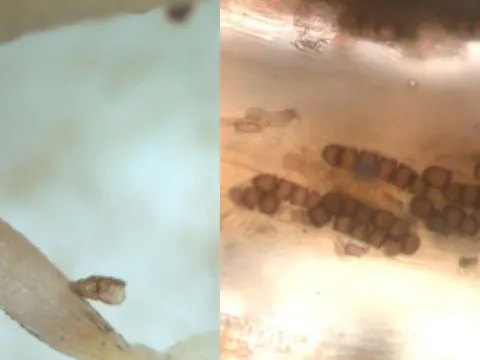
The fungus produces two distinct types of spores: hyaline endoconidia, which facilitate rapid spread, and dark, thick-walled chlamydospores that provide long-term persistence in the soil.
These chlamydospores can remain viable for several years in the soil even in the absence of a host, which makes this pathogen extremely difficult to eradicate from affected fields.
The biological cycle of the fungus is highly adapted to infecting root tissues, where it produces mass amounts of resting spores that give the characteristic black appearance to infected roots.
It thrives in a wide range of environments, though it is particularly prevalent in soils that are neutral to slightly alkaline and have high moisture levels.
Thielaviopsis basicola has a very broad host range, infecting over 100 species of plants, including important crops like tobacco, cotton, soybeans, and various greenhouse vegetables.
The pathogen attacks the root system, causing severe necrosis. As the infection progresses, the roots become stunted, blackened, and eventually rot, leading to plant collapse.
In greenhouses, this fungus can cause catastrophic damage, leading to significant stunting of seedlings and reducing the overall quality of production for ornamental plants.
Economic losses arise not only from total plant mortality but also from the reduced yield and vigor of infected plants that survive but are unable to thrive.
Because it hampers nutrient and water uptake, the plant essentially suffers from chronic drought stress even when soil moisture is adequate.
The hallmark sign of the infection is black root rot, where roots turn dark brown or coal-black due to the dense accumulation of fungal chlamydospores on the root surface.
Above-ground symptoms are non-specific and often include chlorosis (yellowing of leaves), severe stunting, and wilting during the heat of the day.
Lesions can also appear on the lower stem near the soil line, characterized by dark, sunken areas that may eventually girdle the stem, leading to plant death.
Infected seedlings often show "black shank" or hypocotyl rot, which prevents normal development and results in poor stand establishment in the field.
Microscopic examination of the affected root tissues will reveal the presence of branched conidiophores and the distinct, dark-pigmented chains of chlamydospores.
Integrated Pest Management (IPM) is essential. Crop rotation with non-host species for at least 3 years is the most effective way to reduce the inoculum levels in the soil.
Soil pH management is a critical factor: the fungus is most active at a neutral or slightly alkaline pH. Lowering the pH (acidifying) the soil can inhibit its growth.
Strict sanitation protocols must be followed in greenhouse operations, including the use of steam-sterilized soil and the thorough disinfection of benches, tools, and pots.
The use of fungicides can provide suppression of the disease, especially when applied as a soil drench at the time of planting or seeding to protect the developing root system.
Selecting resistant cultivars or varieties where available is a vital component of a long-term control strategy to minimize the impact of this stubborn soil pathogen.