
Thanatophorus cucumeris
Thanatophorus cucumeris
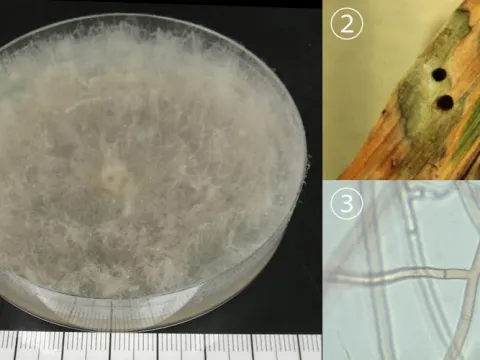
Thanatophorus cucumeris is a basidiomycetous fungus, better known in its anamorph (asexual) stage as Rhizoctonia solani. It is one of the most destructive soil-borne plant pathogens globally.
What the section contains
Thanatophorus cucumeris
The fungus survives in the soil primarily as sclerotia—hardened, dark-brown, or black masses of mycelium that can withstand extreme environmental conditions for several years.
T. cucumeris does not produce conidia. It spreads through the growth of hyphae through the soil or by the movement of infected soil particles via water, farm equipment, or contaminated seeds and tubers.
Under specific conditions of high humidity and moderate temperatures, the fungus can form a sexual stage that manifests as a thin, whitish, crust-like growth on stems or near the soil line.
The species is complex and consists of numerous anastomosis groups (AGs), which differ in their host range and the specific diseases they cause on various agricultural crops.
This pathogen has a very wide host range, attacking many economically important crops including potatoes, tomatoes, cucumbers, rice, sugar beets, and various ornamental plants.
The fungus typically causes damping-off of seedlings, root rot, stem rot, and tuber blemishes. It invades tissues through natural openings or directly through the epidermis.
In potato cultivation, T. cucumeris is responsible for 'black scurf', a condition where black sclerotia attach to tubers, significantly reducing their marketability.
In vegetable crops like cucumbers and tomatoes, it leads to basal stem rot, where a brown lesion develops at the soil line, eventually causing the plant to wilt and collapse.
Economic damage is substantial, often leading to patchy stands, reduced yields, and increased production costs due to the need for chemical or biological intervention.
The pathogen becomes active in the spring when soil temperatures rise, typically between 10°C and 15°C (50-59°F), triggering the germination of resting sclerotia.
High soil moisture and cool to moderate temperatures are ideal for the rapid colonization of host roots and stems during the early stages of plant growth.
The fungus maintains its pathogenic activity throughout the summer months, especially in poorly drained soils where organic matter levels are high.
Spreading is often exacerbated during rainy periods, which facilitate the movement of infectious mycelium from infested soil to the healthy tissues of the crop.
As temperatures drop in the autumn, the fungus shifts its metabolic activity to the production of new sclerotia, preparing the population to survive the coming winter months.
Typical field symptoms include poor seedling emergence and scattered patches of stunted or dying plants, often referred to as 'damping-off' of young seedlings.
Stems at the soil line often show sunken, dark brown, or reddish-brown lesions that can eventually girdle the stem, leading to plant death.
Roots show symptoms of browning and decay, which weakens the plant's structural integrity and ability to uptake water and nutrients from the soil.
Tubers and fruit that come in contact with the soil may develop lesions or, in the case of potatoes, become covered in hard, black sclerotia that look like dry soil particles.
Severe infestations frequently result in chlorosis of the lower leaves, followed by wilting that occurs most prominently during the hottest parts of the day.
Integrated management is essential, starting with crop rotation using non-host species to help break the disease cycle in the soil over several years.
Ensuring the use of certified, disease-free seed and treating planting material with fungicides are critical first steps in preventing an initial outbreak.
- Utilizing biological control agents such as Trichoderma species to antagonize the pathogen in the soil.
- Planting in well-drained soils and avoiding excessive irrigation that promotes fungal growth.
- Maintaining proper soil aeration through timely cultivation between crop rows.
- Removing and destroying infected plant debris after harvest to reduce the inoculum load.
- Balancing soil fertility, as excessive nitrogen can sometimes increase susceptibility to root rot.